Butter Bolete Care (Butyriboletus appendiculatus)

Also known as: Oak Bolete
Butter Bolete

About Butter Bolete

Butter bolete, Butyriboletus appendiculatus, is a fleshy, mycorrhizal mushroom, not a green houseplant. It forms a symbiotic partnership with tree roots, helping both partners exchange water and nutrients.

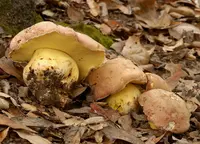
The fruiting bodies have a smooth, buttery yellow spongy underside instead of gills and a brown to tan cap, often appearing in small groups on forest floors. It is naturally found in temperate woodlands of Europe and parts of North America, usually with oaks or other broadleaf trees.

Because it relies on specific tree partners and soil fungi networks, it is difficult to cultivate reliably at home. Those who want to learn how to care for Butter Bolete should focus on replicating stable woodland conditions with undisturbed, moist, well-drained soil rich in organic matter.

Main Plant Requirements

Care Difficulty

Hard Care

Light Preference

Partial Shade

Water Requirements

Keep Soil Moist

Temperature Preference

Cool Climate

Hardiness Zone

5–9

Soil Texture

Loamy, Silty, Organic-rich

Soil pH

Acidic (5.5–6.5), Slightly acidic (6.5–7.0)

Soil Drainage

Moist but well-drained

Fertilization

Minimal (feed rarely)

Get Personalized Care Plan

Scan your plant to receive care tips personalized for your specific plant

Available on iOS and Android

How to Care for the Butter Bolete

This mycorrhizal mushroom favors bright, dappled woodland light rather than open, direct sun.

  • Site Butyriboletus appendiculatus under deciduous trees where it receives 2–4 hours of gentle morning sun and filtered light the rest of the day.
  • Avoid strong midday or afternoon sun; exposed grass edges can dry the soil and mycelium, reducing fruiting and causing caps to crack.
  • In summer, increased canopy shade is acceptable, but complete deep shade often reduces mushroom production, while lightly broken shade supports steadier crops.

This ectomycorrhizal fungus depends on evenly moist, well-drained soil around its host tree roots.

  • Aim for soil that stays lightly moist to 5–8 cm depth; if the top 2–3 cm are dry and leaves nearby look slightly wilted, recent rainfall or irrigation is likely low.
  • Use soil rich in organic matter with good drainage; prolonged puddling, sour odor, or mushrooms rotting at the base indicate chronic overwatering or poor drainage.
  • In dry summers, supplement rainfall so the soil does not bake hard or fully dry between rains; in cool, wet seasons, avoid extra watering to limit rot and bacterial issues.

This species fruits best in mild to warm conditions and is sensitive to hard frost and extreme heat.

  • Optimal fruiting occurs around 60–75°F (16–24°C), especially when paired with moist soil and stable humidity under host trees.
  • Growth slows below about 50°F (10°C), and repeated drops near 32°F (0°C) can damage young fruiting bodies and end the season.
  • Short hot spells up to about 86°F (30°C) are tolerated if soil moisture stays stable, but sustained heat above this often dries the substrate and sharply reduces fruiting.

Humidity is not a primary factor for Butyriboletus appendiculatus development compared with temperature, host trees, and soil conditions.

This mycorrhizal fungus requires specific outdoor ground conditions rather than conventional potting soil preparation.

  • Fruiting bodies usually appear in well-structured, loose loamy soil with high organic matter under suitable host trees, often beech or oak.
  • Soil must drain freely yet hold consistent moisture; avoid compacted clay or areas where water stands after rain.
  • A slightly acidic pH around 5.0–6.5 favors growth; avoid strongly alkaline, limed, or heavily disturbed substrates.
  • To encourage Butyriboletus appendiculatus, allow a natural leaf-litter layer to accumulate instead of using bark mulches, plastic sheeting, or weed fabric.

This species is not realistically suitable for container growing because it depends on stable mycorrhizal associations with mature tree roots in undisturbed ground.

This ectomycorrhizal fungus relies mainly on its host tree and soil nutrients, so direct feeding is usually unnecessary.

Butyriboletus appendiculatus does not require pruning, since the visible mushroom is only the fruiting body of an underground fungus.

This species is not suited to typical pot culture, so focus on careful site establishment rather than repotting.

  • Transplant only young host trees already colonized by the fungus, ideally in cool, moist weather during early fall or early spring.
  • Choose a site with similar soil type, drainage, and light conditions to minimize shock and maintain mycorrhizal function.
  • Move the root ball with as much native soil as possible to preserve fungal hyphae around the roots.
  • Water thoroughly after transplanting and keep soil evenly moist, not waterlogged, until the tree re-establishes.

Reproduction of this ectomycorrhizal fungus is specialized and not practical for routine home propagation.

This fungus is cold hardy in temperate climates and needs no specific winter care beyond maintaining a stable woodland environment.

Care Tips

Use Host Trees

Establish the fungus in soil near compatible host trees such as oak, beech, or chestnut, since this species is ectomycorrhizal and relies on tree roots for nutrients and long-term survival.

Minimize Soil Disturbance

Avoid digging, tilling, or heavy foot traffic in the colonized area so the underground mycelium network stays intact and can fruit reliably over several years.

Leaf-Litter Mulching

Maintain a loose layer of hardwood leaf litter around host trees to keep the upper soil layer cool and moist while still allowing air exchange for healthy mycelium growth.

Targeted Water Management

If rainfall is irregular, apply gentle, low-pressure irrigation to the root zone of the host tree rather than directly onto emerging mushrooms, reducing mechanical damage and limiting rot.

Seasonal Marking Strategy

Discreetly mark productive fruiting spots with small, inert markers during the season so you can monitor changes over time and adjust caring for Butter Bolete, such as modifying mulching or access paths, without disturbing the site.

Common Pests and Diseases

Mycetophilid larvae

This pest targets the developing mushroom primordia and pore surface, tunneling through the soft tissue. Symptoms include water-soaked spots, internal galleries, and premature decay of caps and stipes.

Solution

Remove and discard infested fruiting bodies immediately and maintain clean, debris-free litter to reduce breeding sites. Use fine-mesh netting over cultivation beds, reduce excess moisture, and apply biological controls such as Bacillus thuringiensis israelensis to the substrate surface according to label directions.

Sciarid fly infestation

These insects lay eggs in moist substrates around the bolete, and the larvae feed on young fruit bodies and mycelium. Symptoms include distorted or stunted mushrooms and small entry holes near the stem base or tube layer.

Solution

Improve drainage and avoid constantly saturated soil or cultivation substrate, since sciarid flies thrive in overly wet conditions. Use sticky traps to monitor adults, reduce decaying organic material near the site, and treat the substrate with a biological control like beneficial nematodes that target fly larvae.

Slug and snail feeding

This pest rasps at the cap margin and pore surface, leaving irregular holes, slime trails, and exposed tube tissue. Symptoms include overnight damage to otherwise healthy fruiting bodies and rapid loss of marketable quality.

Solution

Hand-pick slugs and snails during damp evenings, and reduce hiding spots such as boards, dense debris, and thick ground cover near the mushrooms. Use copper barriers, iron phosphate bait placed away from the actual fruiting bodies, and maintain moderate, not excessive, surface moisture to lower activity levels.

Parasitic Hypomyces infection

This disease is caused by a parasitic fungus that overgrows bolete caps and pores, forming a whitish to yellowish crust that eventually deforms and hardens the fruiting body. Symptoms include loss of spore production, discoloration, and a chalky or granular texture on affected areas.

Solution

Remove and destroy infected mushrooms and any adjacent fruit bodies showing early signs of crust formation to limit spore spread. Avoid disturbing contaminated material into nearby sites, and in managed settings rotate collection or cultivation spots so that heavily contaminated patches have time to decline naturally.

Bacterial blotch

This disease affects the cap surface, producing greasy, dark, or water-soaked spots that may spread and cause soft rot. Symptoms include a sour odor and tissue collapse, especially in warm, humid conditions.

Solution

Harvest fruit bodies promptly once they reach usable size to reduce time in high humidity. Improve air movement around the mushrooming area, avoid overhead watering on caps, and remove and discard blotched specimens so bacterial inoculum does not build up in the surrounding litter; these practices form the core of practical Butter Bolete care instructions for small-scale foragers and growers.

Interesting Facts

Blue bruising reaction

The fresh yellow pores and flesh typically turn blue when bruised or cut due to rapid oxidation of pigmented compounds, a diagnostic feature used by mycologists to separate it from similar boletes that do not stain or stain weakly.

Mycorrhizal oak specialist

This species forms ectomycorrhizal associations with broadleaf trees, especially oaks and beeches, exchanging mineral nutrients and water for sugars from the host roots and contributing to forest soil health and tree vigor.

European-centered distribution

It is mainly known from temperate Europe, where it occurs in warm, often calcareous broadleaf woodlands, and it is considered local or uncommon in many regions rather than a widespread generalist mushroom.

Botan icon

Did you know?

In several European countries this species is red-listed or considered of conservation concern because of habitat loss, forest management changes, and possible sensitivity to environmental pollution, making its well-preserved oak and beech habitats particularly important for long-term population survival.

FAQs about Butter Bolete

This species is considered a good edible mushroom when correctly identified, cooked, and harvested from unpolluted areas. It can be confused with toxic look-alikes, so beginners should always consult local experts or reliable field guides before consuming any wild mushrooms.

Grow Healthy Plants with Botan Care

Keep your plants happy and healthy with plant identification, disease detection, and easy care guidance.

Botan plant care app — identify plants on mobile

Explore More Plants