welsh onion Care (Allium fistulosum)

Also known as: Japanese Bunching Onion
welsh onion

About welsh onion

Welsh onion, Allium fistulosum, is a clump-forming perennial onion grown for its hollow green stems and mild, onion-flavored leaves. It does not form large bulbs like common onions. Plants usually grow in tight clusters, sending up tubular leaves and occasional white, globe-shaped flower heads. The neat, upright habit makes it suitable for vegetable beds and mixed edible borders. Allium fistulosum originates from East Asia but is now widely cultivated in home gardens around the world. It is generally easy to grow, as long as it has sun, moderately fertile, well-drained soil, and steady moisture. Understanding how to care for welsh onion helps keep clumps productive for several years.

Main Plant Requirements

Care Difficulty

Easy Care

Light Preference

Full Sun

Water Requirements

Moderate Water

Temperature Preference

Cold Hardy

Hardiness Zone

4–9

Soil Texture

Sandy, Loamy, Organic-rich

Soil pH

Acidic (5.5–6.5), Slightly acidic (6.5–7.0)

Soil Drainage

Moist but well-drained

Fertilization

Light (every 4–6 weeks)

Get Personalized Care Plan

Scan your plant to receive care tips personalized for your specific plant

Available on iOS and Android

How to Care for the welsh onion

Allium fistulosum grows best with ample direct light to fuel leaf production.

  • Provide 6–8 hours of direct sun daily; morning sun with light afternoon shade suits most climates.
  • In hot regions, protect welsh onion from harsh afternoon sun using partial shade or neighboring taller plants to reduce scorch risk.
  • In cool or cloudy seasons, choose the sunniest spot available; plants in too much shade grow thin, flop over, and develop weaker flavor.

Allium fistulosum prefers evenly moist, well-drained soil without prolonged saturation.

  • Allow the top 2–3 cm of soil to dry slightly before watering; use your finger to check rather than a fixed schedule.
  • During active growth in spring and early summer, maintain consistent moisture, but reduce frequency once growth slows or before expected heavy rain.
  • Watch for yellowing, soft bases or a sulfur smell as signs of overwatering; limp, folding leaves and dry, cracked soil suggest underwatering.

This onion tolerates a wide temperature range but has a clear preference for cool to mild conditions.

  • Optimal growth occurs around 55–75°F (13–24°C), which supports steady leaf production and root activity.
  • Plants tolerate light frost down to about 20–25°F (-7 to -4°C); mulch crowns in colder regions to protect from deeper freezes.
  • In hot summers above 85–90°F (29–32°C), growth slows; provide extra water, light afternoon shade, and avoid heat-reflecting hard surfaces nearby.

Allium fistulosum tolerates a wide humidity range and rarely needs special humidity management indoors or outdoors.

Allium fistulosum prefers loose, well‑drained, moderately fertile soil for steady leaf production.

  • Use a loamy or sandy‑loam structure with plenty of small pores so water drains yet roots stay evenly moist.
  • Aim for slightly acidic to neutral pH around 6.0–7.0, which supports nutrient availability for leafy growth.
  • Mix garden soil with compost (20–30%) plus coarse sand or perlite to improve aeration and prevent waterlogging.
  • Avoid heavy clay, compacted, or constantly wet sites, which promote root rot and stunted, yellowing foliage.

This species grows well in containers when given adequate root depth and drainage control.

  • Choose a pot at least 20–25 cm deep so the narrow root system can anchor firmly and support repeated cuttings.
  • Use a heavier material like ceramic or terracotta outdoors to reduce tipping from tall, clustered foliage in wind.
  • Fill the pot to just below the rim to reduce overflow when watering, which helps maintain even moisture across the root zone.

Allium fistulosum benefits from modest, steady nutrition rather than heavy feeding.

  • Use a balanced, water-soluble NPK fertilizer at half strength every 3–4 weeks during active growth in spring and summer.
  • Alternatively, top-dress with a thin layer of mature compost to support growing welsh onion in beds or containers.
  • Rinse foliage after liquid feeding to avoid leaf spotting, especially in sunny conditions.
  • Stop or greatly reduce feeding in late fall and winter when growth slows or foliage dies back.

Pruning Allium fistulosum focuses on harvesting and hygiene rather than shaping.

  • Harvest leaves by cutting outer, mature stalks near the base with clean scissors or a sharp knife, leaving inner shoots to regrow.
  • Remove yellowing, damaged, or diseased leaves as soon as noticed to reduce pest and disease pressure.
  • Thin crowded clumps in late summer or early fall to improve air flow and maintain stronger, thicker shoots.
  • Deadhead spent flower stalks at the base if seed is not needed, which helps direct energy back to vegetative growth.

Allium fistulosum is usually transplanted in beds or raised planters rather than repotted often indoors.

  • Transplant seedlings or divided clumps in early spring or early fall, when temperatures are mild and soil is workable.
  • Look for slow growth, roots circling inside cell packs, or tight container spacing as signs plants need more room.
  • Space clumps 10–15 cm apart in loose, well-drained soil, firm gently, and water thoroughly to settle roots with minimal air gaps.
  • Shade transplants lightly for a few days and keep soil evenly moist to reduce transplant shock and support new root growth.

Allium fistulosum is commonly propagated by division and by seed for kitchen and garden use.

  • Divide mature clumps in early spring or early fall, lifting carefully and separating sections with several shoots and healthy roots.
  • Replant divisions at the same depth in loose, well-drained soil, water well, and keep evenly moist until new growth resumes.
  • Sow seeds in early spring in trays or directly outside, covering lightly and maintaining 60–75°F and consistent moisture for germination.
  • Thin seedlings to avoid crowding so each plant has space to form strong, upright leaves and a sturdy base.

Allium fistulosum is generally cold hardy and needs minimal winter care in most temperate climates.

  • In-ground clumps tolerate light to moderate frost, especially in well-drained soil that does not stay waterlogged.
  • Apply a 2–5 cm layer of straw, leaf mold, or compost around the base in late fall to insulate the root zone.
  • Move container plants to a sheltered, frost-free spot or unheated greenhouse in very cold regions to prevent root damage.

Care Tips

Staggered Clump Planting

Plant in small clumps at slightly different depths and ages so that when you harvest outer stalks from one clump, others are maturing, giving a continuous supply without bare gaps in the bed.

Blanching For Tender Stems

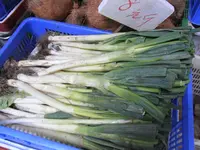
To get longer, mild white shanks, mound clean soil or use short sections of opaque tubing around the lower stems as they grow, making sure the covered area stays dry enough to prevent rot.

Divide And Rejuvenate

Every 2–3 years, lift crowded clumps, split them into smaller divisions with 3–5 shoots each, and replant at proper spacing to maintain strong growth and reduce disease buildup in old, congested plants.

Targeted Onion Maggot Control

Use fine insect netting over newly planted rows, practice strict crop rotation away from other alliums, and promptly remove any soft, yellowing plants to limit onion maggot and related pest pressures.

Cut‑And‑Come‑Again Harvesting

Harvest by cutting green leaves 2–3 cm above the base instead of pulling whole plants, rotating between clumps so each has time to regrow, which is an efficient approach when growing welsh onion in small spaces.

Common Pests and Diseases

Onion thrips

This pest feeds by scraping and sucking plant juices from leaves, causing silvery streaks, tiny black specks, and gradual leaf weakening.

Solution

Monitor leaf bases and inner sheaths regularly, then spray plants thoroughly with a strong jet of water to dislodge insects and use an insecticidal soap or neem oil, repeating every 5–7 days during outbreaks; reduce nearby grassy weeds that shelter thrips.

Onion maggot

This pest is the larval stage of a fly that tunnels into roots and lower stems, leading to yellowing, stunted growth, and rotting bulbs or clumps.

Solution

Use floating row covers from planting time in outdoor beds, rotate plantings away from previous allium beds for at least 2–3 years, promptly remove and discard infested plants, and keep soil surface clean of plant debris to reduce egg-laying sites.

Downy mildew

This disease causes pale, elongated patches on leaves that may develop a gray-violet fuzzy growth in humid conditions, followed by leaf collapse.

Solution

Improve air circulation with wider spacing, avoid overhead watering, remove and discard affected leaves, and in outdoor plantings consider using a copper-based or other labeled fungicide preventively during cool, humid weather as part of broader Allium fistulosum care.

Purple blotch

This disease produces small, water-soaked spots on leaves that enlarge into purple-brown lesions with yellow halos, often causing tips to die back.

Solution

Remove and discard infected leaves, water at soil level early in the day to keep foliage dry, improve spacing and airflow, and rotate crops with non-allium species for at least 2–3 years to lower inoculum in garden soil.

Neck rot (Botrytis)

This disease primarily affects stored stems and pseudobulbs, where symptoms include soft, sunken tissue at the neck that becomes gray and moldy over time.

Solution

Harvest only healthy plants, cure them in a dry, well-ventilated place before storage, keep storage conditions cool and dry, and promptly discard any softened or moldy clumps to prevent spread to neighboring material.

Interesting Facts

Perennial clump former

Unlike common bulb onions, this species forms perennial clumps of hollow leaf stalks and does not develop a large underground bulb, so the same plant can be divided and harvested for many years.

Cold-hardy growth cycle

Allium fistulosum tolerates frost and can resume growth very early in spring, which makes it valuable in cooler climates where fresh green onions are scarce at other times of the year.

Distinct hollow leaves

The leaves are cylindrical and hollow, with a fistular (tube-like) structure that gives the species its name and results in a texture and flavor different from flat-leaved alliums such as garlic chives.

Botan icon

Did you know?

In parts of East Asia, long-day and short-day cultivars of Allium fistulosum have been selectively bred for centuries to match regional daylength and temperature patterns, leading to highly localized landraces adapted to very specific growing conditions.

FAQs about welsh onion

Yellowing leaves usually result from older foliage aging, waterlogged soil, nutrient depletion, or hot, compacted conditions. Improve drainage, avoid standing water, feed lightly with balanced fertilizer, and remove oldest yellow leaves to encourage fresh, green growth.

Grow Healthy Plants with Botan Care

Keep your plants happy and healthy with plant identification, disease detection, and easy care guidance.

Botan plant care app — identify plants on mobile

Explore More Plants