Wire Trellis Training
Install a sturdy wire or cable trellis early and fan out 3–5 main shoots along it, then regularly tie in new growth with soft ties so the vine forms a manageable fruiting wall instead of a tangled mass.


Vitis tiliifolia, commonly called West Indian grape, is a vigorous woody vine native to tropical and subtropical regions of the Caribbean, Central America, and northern South America. It climbs using tendrils and can form dense tangles over trees or supports.
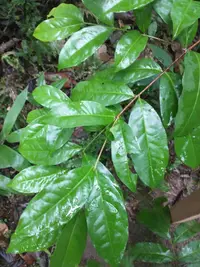
The plant has broad, slightly heart-shaped leaves and produces clusters of small grapes that are often used locally for juice, fermentation, or wildlife food. It is generally robust and tolerant of heat and humidity, but needs space and strong support as it can grow aggressively.
To care for West Indian grape, provide warm conditions, full sun to light shade, and reasonably moist, well-drained soil to keep growth controlled and healthy.

Care Difficulty
Moderate Care

Light Preference
Full Sun

Water Requirements
Regular Water

Temperature Preference
Tropical / Frost Sensitive

Hardiness Zone
10–12

Soil Texture
Sandy, Loamy, Organic-rich

Soil pH
Acidic (5.5–6.5), Slightly acidic (6.5–7.0)

Soil Drainage
Moist but well-drained

Fertilization
Minimal (feed rarely)
Scan your plant to receive care tips personalized for your specific plant
Available on iOS and Android
This vigorous tropical vine needs abundant sun to fruit well but tolerates some shade.
This species prefers consistently moist, well-drained soil rather than extremes of drought or saturation.
This tropical grape grows best in warm, frost-free conditions with moderate seasonal change.
This vigorous vine tolerates a wide humidity range but grows best with moderately moist air.
Vitis tiliifolia prefers deep, well-drained, moderately fertile soil that still holds some moisture.
This species can be grown in containers if provided with ample root volume and strong structural support.
This vigorous native vine usually grows well in the ground with minimal feeding, but light fertilization can support fruiting in lean soils.
Pruning Vitis tiliifolia controls its vigorous growth, maintains structure, and improves light and air flow.
This vine is usually grown in the ground, so focus on transplanting young plants rather than frequent repotting.
Vitis tiliifolia is most often propagated from cuttings or layered stems to maintain desired traits.
Mature vines are fairly cold hardy in mild to warm climates and often need only basic winter preparation.

Plant Health Check
Not sure what's wrong with your plant? Check your plant's health inside the app.
This species is a vigorous liana native to lowland and premontane forests from Mexico through Central America to northern South America, where it scrambles over trees at the forest edge and in secondary growth.
Compared with many domesticated grapevines, this species shows notable tolerance to seasonal drought and high humidity in tropical climates, which is why it is often discussed as a genetic resource for breeding stress‑resistant grapes.
The small, acidic berries are eaten by birds and mammals in the Neotropics, helping disperse the seeds and allowing the vine to colonize disturbed sites and forest gaps.

Genetic studies have identified Vitis tiliifolia as a distinct New World lineage within the grape family, and plant breeders regard it as a potentially valuable source of resistance genes against fungal diseases that affect cultivated grapevines.
This species spreads vigorously through fast-growing vines and abundant seed. In warm, moist climates it can overtake nearby vegetation and natural areas. Regular pruning and strict boundary control are essential to prevent unwanted spread in gardens or landscapes.
Keep your plants happy and healthy with plant identification, disease detection, and easy care guidance.

-200x150.webp)