Japanese Ivy Care (Hedera rhombea)

Japanese Ivy

About Japanese Ivy

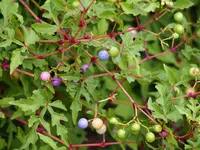
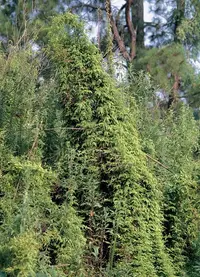
Japanese ivy (Hedera rhombea) is a woody, evergreen climbing vine grown for its dense foliage and reliable coverage. It typically has glossy, rhombus-shaped leaves that may vary in size and color pattern, depending on the form. In nature, it occurs in East Asia, especially in Japan, Korea, and nearby regions, where it climbs trees or spreads as groundcover in forests and rocky areas.

The plant is vigorous and adaptable, which makes it relatively easy to manage in suitable conditions. It tolerates pruning well and can adjust to a range of light levels, though it performs best with bright, indirect light and evenly moist, well-drained soil. Understanding how to care for Japanese Ivy helps prevent it from becoming leggy or invasive in mild climates.

Main Plant Requirements

Care Difficulty

Moderate Care

Light Preference

Partial Shade

Water Requirements

Moderate Water

Temperature Preference

Cool Climate

Hardiness Zone

6–9

Soil Texture

Loamy, Sandy, Organic-rich

Soil pH

Acidic (5.5–6.5), Slightly acidic (6.5–7.0)

Soil Drainage

Moist but well-drained

Fertilization

Light (every 4–6 weeks)

Get Personalized Care Plan

Scan your plant to receive care tips personalized for your specific plant

Available on iOS and Android

How to Care for the Japanese Ivy

Hedera rhombea grows best in bright, indirect light with some shade during the hottest hours.

  • Provide 2–4 hours of gentle morning sun or bright, filtered light under trees or shade cloth for strong growth.
  • Allow partial to full shade in hotter climates; 4–8 hours of dappled light helps prevent leaf scorch while supporting steady vigor in Japanese Ivy.
  • Avoid harsh afternoon sun, which can cause leaf bleaching and crispy edges, but also avoid deep, sunless corners that lead to stretched, sparse vines.

Watering for Hedera rhombea aims to keep the root zone slightly moist but never saturated.

  • Before watering, let the top 2–4 cm of soil dry; check by pressing a finger into the soil rather than following a fixed schedule.
  • In spring and summer, expect to water more often as growth and evaporation increase; reduce frequency in fall and winter while preventing the soil from becoming bone dry for long periods.
  • Watch for yellowing, mushy leaves as a sign of overwatering and root stress, and crisp, drooping leaves plus very light, shrinking soil as a sign of underwatering; soil must drain freely.

This ivy prefers cool to mild conditions and tolerates some cold once established.

  • Aim for active growth in the range of 55–75°F (13–24°C), where foliage remains dense and leaves maintain good color.
  • Mature, outdoor plants can handle short drops to around 15–20°F (-9 to -6°C), but young or recently planted vines benefit from protection during hard freezes.
  • In hot summers above 85°F (29°C), provide shade and consistent soil moisture to reduce heat stress, and avoid planting where reflected heat from walls or pavement builds up.

This species prefers moderate humidity and benefits from slightly moister air than very arid homes provide.

  • Aim for 40–60% humidity to keep foliage of Japanese Ivy firm and reduce leaf edge browning.
  • It tolerates short dry-air periods, but prolonged humidity below 30% can cause crispy tips and increased spider mite issues.
  • Increase humidity with a nearby pebble tray or grouped plants rather than frequent misting, which adds only brief surface moisture.

Hedera rhombea grows best in loose, moist but sharply draining soil that does not stay waterlogged.

  • Use a loamy mix containing roughly 2 parts peat or coco coir, 1 part compost, and 1–2 parts perlite or fine bark for structure and aeration.
  • Ensure the mix drains freely; water should flow through in seconds and the surface should not stay glossy-wet for more than a few minutes.
  • Target a slightly acidic to neutral pH around 6.0–7.0, which supports nutrient availability and stable growth.
  • Avoid heavy clay-based mixes or pure garden soil in pots, as these compact, limit oxygen around roots, and promote rot.

This ivy adapts well to container culture for both indoor and sheltered outdoor settings.

  • Choose a pot that is wider than it is deep to accommodate spreading roots and improve stability for trailing or climbing growth.
  • Select a container material that matches your climate, such as heavier ceramic to keep moisture steadier in hot, dry conditions.
  • Ensure large, unobstructed drainage holes so excess water exits quickly, preventing soggy pockets that favor root rot in dense root zones.

Hedera rhombea grows well with modest feeding that supports steady foliage production without forcing soft, weak growth.

  • Use a balanced liquid fertilizer (around 10-10-10 or 20-20-20) at 1/2 strength every 4–6 weeks during spring–summer for Japanese Ivy indoor care.
  • Optionally supplement with a thin layer of mature compost on the soil surface in spring for container or outdoor plants.
  • Skip feeding in late fall–winter, when growth slows, to avoid salt buildup and leggy, tender shoots.
  • Flush pots with plain water every few months to reduce excess fertilizer salts and maintain healthy root function.

Pruning Hedera rhombea helps manage its vigorous growth, maintain shape, and keep vines healthy and dense.

  • Carry out main pruning in late winter or early spring before strong new growth starts.
  • Use clean, sharp hand pruners or scissors to remove dead, damaged, or diseased stems back to healthy tissue.
  • Thin congested and overly long vines to improve light penetration and airflow, encouraging bushier side shoots.
  • Trim trailing or climbing stems to the desired length and outline to control spread on walls, trellises, or in pots.

Hedera rhombea tolerates slightly tight roots but benefits from timely repotting or transplanting when clearly outgrown.

  • Check for roots circling the pot, pushing through drainage holes, or notably slowed growth as cues to move the plant.
  • Plan to repot or transplant every 2–3 years in early spring, when conditions favor quick root recovery.
  • Shift into a container 1–2 in wider with fresh, well-drained mix, keeping the root ball at the same soil level.
  • Water thoroughly after moving, keep out of harsh sun and strong wind for 1–2 weeks, and avoid heavy feeding until new growth appears.

Hedera rhombea is commonly propagated from stem cuttings and layering, both of which root reliably under the right conditions.

  • Take 7–10 cm tip cuttings in spring–early summer, each with 2–3 leaf nodes, and remove the lowest leaves.
  • Insert cuttings into moist, well-drained medium, keeping at 65–75°F with bright, indirect light and high humidity.
  • Optional use of a rooting hormone powder or gel can speed root initiation and improve success rates.
  • For simple layering, peg a still-attached stem node onto moist soil until rooted, then cut and pot the new plant.

Hedera rhombea is generally cold hardy but container plants benefit from some winter protection, especially in colder regions.

  • In-ground plants tolerate light to moderate frost; mulch 5–8 cm around the root zone in late fall, keeping mulch off stems.
  • For containers, move pots to a sheltered, unheated but frost-free spot such as a cold frame or protected porch.
  • Reduce watering in winter, keeping soil slightly moist but never waterlogged to prevent root rot in cool conditions.

Care Tips

Provide climbing support

Install a sturdy trellis, mesh, or moss pole close to the pot and loosely tie young vines with soft plant ties so the plant can anchor and develop stronger, more controlled vertical growth.

Control spread early

Regularly direct and shorten fast-growing runners before they reach walls, gutters, or nearby plants to prevent unwanted adhesion and make long-term structural management much easier.

Encourage denser foliage

Pinch or trim back just above a leaf node on leggy stems to stimulate branching, creating a fuller curtain of growth rather than a few long, sparse vines.

Practice clean propagation

When taking stem cuttings, use a sterile, sharp tool and remove the lowest leaves so that only bare nodes sit in water or moist substrate, which reduces rot and speeds rooting for growing Japanese Ivy.

Monitor for structural damage

On outdoor plantings, inspect masonry, wood, and gutters at least once or twice a year, and gently detach or cut back any vines starting to lift paint, enter cracks, or interfere with rooflines.

Common Pests and Diseases

Spider mites

This pest often appears on indoor or sheltered vines, causing fine stippling on leaves and fine webbing along stems and leaf undersides. Symptoms include dull, dusty-looking foliage that may yellow and drop if the infestation is severe.

Solution

Rinse foliage thoroughly with a firm but gentle stream of water, focusing on leaf undersides, and repeat every few days until populations drop. For ongoing Hedera rhombea care, increase ambient humidity, improve air movement, and use insecticidal soap or horticultural oil labeled for spider mites, applied according to directions and kept off stressed or very dry plants.

Scale insects

These insects attach to stems and leaf veins as small, rounded or oval bumps and feed on sap. Symptoms include sticky honeydew, sooty mold on leaves, and gradual decline in vigor.

Solution

Physically remove visible scales with a cotton swab dipped in alcohol or by gently scraping with a fingernail, then prune heavily infested stems. Follow up with repeated applications of horticultural oil to coat remaining scales and newly hatched crawlers, and monitor new growth closely to catch reinfestations early.

Leaf spot (Xanthomonas)

This disease causes angular, water-soaked spots on leaves that turn dark brown to black, often with a yellow halo. Symptoms include distorted foliage and premature leaf drop in warm, humid conditions.

Solution

Remove and discard affected leaves promptly and avoid overhead watering so foliage dries quickly. Improve airflow around vines, keep leaves dry, and if the problem persists, use a copper-based bactericide labeled for ornamental foliage plants, following all label safety and interval instructions.

Anthracnose

This disease produces irregular tan to dark brown lesions along leaf edges and veins, sometimes causing blighted tips and dieback on young shoots. Symptoms include thinning foliage and an overall scorched appearance, especially during cool, wet periods.

Solution

Prune out and discard infected leaves and shoot tips, disinfecting pruning tools between cuts, and avoid wetting the foliage when watering. Improve drainage and air circulation around the plant, and if needed apply a fungicide labeled for anthracnose on ornamental vines, treating both upper and lower leaf surfaces.

Aphids

These insects cluster on soft new growth and the undersides of leaves, feeding on sap and distorting young shoots. Symptoms include curled or puckered leaves, sticky honeydew, and sometimes the presence of ants tending the insects.

Solution

Spray the plant with a strong stream of water to knock aphids off tender shoots, and repeat every few days as needed. For persistent infestations, use insecticidal soap or horticultural oil on all shoot tips and leaf undersides, and reduce excess nitrogen fertilization, which encourages overly soft, aphid-prone growth.

Interesting Facts

East Asian specialty

This species is naturally native to Japan, Korea, and parts of coastal China, where it grows in temperate forests, cliffs, and rocky coastal habitats rather than being widespread across Europe like common English ivy.

Distinctive diamond leaves

The leaves are typically rhomboid to broadly diamond-shaped with a thick, leathery texture and often visible pale veins, which helps distinguish it from other Hedera species with more deeply lobed or triangular foliage.

Berries and bird dispersal

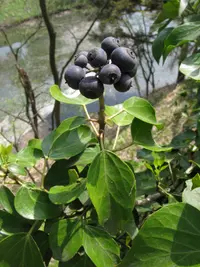
It produces small dark berries that are eaten by birds in its native range, and the seeds are then dispersed through bird droppings, helping the plant colonize new rocky slopes and forest edges.

Botan icon

Did you know?

In Japan, this species has been traditionally used on garden walls and stonework in coastal and temple landscapes because it tolerates salt-laden winds better than many other ivies, making it a valued choice in exposed seaside plantings.

FAQs about Japanese Ivy

This species is a vigorous woody vine that both climbs and spreads. It climbs using aerial roots that cling to rough surfaces and also trails along the ground, rooting at nodes where stems touch soil or debris.

Grow Healthy Plants with Botan Care

Keep your plants happy and healthy with plant identification, disease detection, and easy care guidance.

Botan plant care app — identify plants on mobile

Explore More Plants