Control Plant Spread
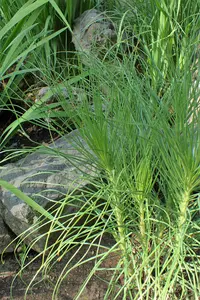
Remove unwanted offsets and outer shoots in late winter or early spring so the clump does not become overcrowded, which keeps the central rosettes vigorous and flowering well.

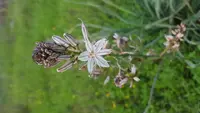
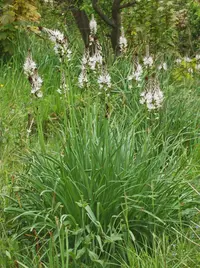
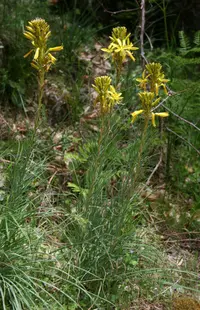
Branched asphodel, Asphodelus ramosus, is a clump-forming perennial often grown in mild, dry climates and Mediterranean-style gardens. It produces tall, branched flower spikes above narrow, grass-like leaves. White star-shaped flowers with brownish midribs open in succession along the stems, creating a loose, airy display in late winter to spring. The plant dies back in summer heat, then regrows from its fleshy roots. It naturally occurs in rocky, sun-exposed habitats around the Mediterranean Basin, so it tends to prefer full sun, well-drained, rather poor soils, and moderate to low moisture. These traits make it relatively low-maintenance once established, and understanding this dry, open habitat is the key to how to care for Branched Asphodel.

Care Difficulty
Easy Care

Light Preference
Full Sun

Water Requirements
Low Water

Temperature Preference
Cold Hardy

Hardiness Zone
7–10

Soil Texture
Sandy, Loamy, Rocky

Soil pH
Slightly acidic (6.5–7.0), Slightly alkaline (7.0–7.5)

Soil Drainage
Well-drained

Fertilization
Minimal (feed rarely)
Scan your plant to receive care tips personalized for your specific plant
Available on iOS and Android
Asphodelus ramosus thrives in bright, open sites with strong sun exposure.
Asphodelus ramosus prefers infrequent, deep watering in fast-draining soil.
This Mediterranean perennial handles a wide temperature range but dislikes prolonged hard frost or extreme heat stress.
Asphodelus ramosus handles a wide humidity range and rarely needs special adjustment indoors or outdoors.
Asphodelus ramosus prefers lean, mineral, fast-draining soil that mimics its native Mediterranean habitats.
This species can grow in containers if the pot is deep and the substrate stays sharply drained.
Asphodelus ramosus grows in poor soils and needs only light, targeted feeding in cultivation.
Asphodelus ramosus needs minimal pruning, mainly to keep clumps tidy and flowering well.
This species is usually grown in the ground, so focus on careful transplanting rather than frequent repotting.
Asphodelus ramosus is most often propagated by seed or division under open, sunny conditions.
Established plants are fairly cold hardy and usually need only simple winter care in temperate climates.

Plant Health Check
Not sure what's wrong with your plant? Check your plant's health inside the app.
This species often colonizes open, rocky ground in Mediterranean regions and can resprout from its thick underground rootstock after fire, helping it persist in frequently burned landscapes.
The white flowers carry a distinct dark central stripe on each tepal (petal-like segment), creating a star-like pattern that helps distinguish it from closely related asphodel species.
The plant contains toxic compounds, and ingestion of its fresh leaves or shoots can cause poisoning in grazing animals such as sheep and goats, so it is generally considered a troublesome species in overgrazed pastures.

In ancient Greek culture, plants of this group were strongly associated with the afterlife, and this particular species is still found growing wild on many archaeological sites in Greece, where it contributes to the characteristic spring flora around ancient ruins.
The flowers are rich in nectar and pollen, so they strongly attract bees, hoverflies, and various butterflies. Planting it in sunny, open spots helps support local pollinators and increases overall garden biodiversity.
Keep your plants happy and healthy with plant identification, disease detection, and easy care guidance.