Arthrophaga myriapodina Care

Arthrophaga myriapodina

About Arthrophaga myriapodina

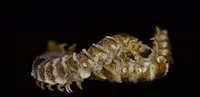
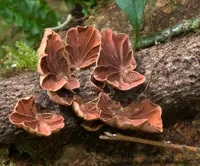
Arthrophaga myriapodina is not a true plant but a parasitic fungus that infects millipedes, so it is not suitable for home cultivation like ornamental houseplants. It forms dark, fungus-covered growth on the host’s body and spreads by releasing spores when conditions are humid.

This species occurs in natural habitats where millipedes are present, often in forest floors rich in decaying organic matter. Its life cycle depends entirely on its invertebrate host, which makes it very different from green, photosynthesizing plants.

Because it is a host-specific parasite, there is no practical way to care for Arthrophaga myriapodina in a typical home or garden setting, and it is mainly of scientific interest.

Main Plant Requirements

Care Difficulty

Moderate Care

Light Preference

Partial Shade

Water Requirements

Moderate Water

Temperature Preference

Warm Climate

Hardiness Zone

Unknown

Soil Texture

Loamy

Soil pH

Slightly acidic (6.5–7.0)

Soil Drainage

Well-drained

Fertilization

Minimal (feed rarely)

Get Personalized Care Plan

Scan your plant to receive care tips personalized for your specific plant

Available on iOS and Android

How to Care for the Arthrophaga myriapodina

This fungus relies on stable low-light conditions rather than direct sun exposure.

  • Position host habitat in full shade or very deep dappled shade, avoiding direct sun at all times, especially between 10 a.m. and 4 p.m.
  • Aim for indirect light levels similar to a shaded forest floor; consistent low light supports more stable development on millipede hosts such as Arthrophaga myriapodina.
  • In outdoor settings, use tree canopy, shade cloth, or north-facing aspects to buffer bright summer light and reduce drying and temperature swings.

Moisture conditions should mimic a consistently damp forest floor rather than a wet or flooded site.

  • Maintain evenly moist leaf litter or topsoil around the habitat, allowing only the upper 1–2 cm to dry slightly between natural rain or supplemental misting.
  • Avoid standing water and soggy substrates; prolonged saturation encourages anaerobic conditions, foul odor, and loss of millipede hosts needed by Arthrophaga myriapodina.
  • During hot, dry periods, increase light misting or gentle watering to prevent complete surface drying, monitoring for shriveled invertebrates as a sign of excessive drought stress.

Temperature should stay within a mild, forest-like range with limited extremes.

  • Target an active range of 60–77°F (16–25°C), where fungal growth and host activity tend to be most stable.
  • Protect the habitat from cold below about 40°F (4°C), since repeated chilling and freeze–thaw cycles can damage both fungal tissue and invertebrate hosts.
  • Limit exposure to sustained heat above 86°F (30°C) by providing shade, deeper leaf litter, and ventilation to reduce thermal stress and drying of the surface layer.

Humidity is a significant factor and should be moderately high for healthy growth.

  • Aim for 60–80% humidity, as Arthrophaga myriapodina likely favors consistently moist air similar to sheltered forest habitats.
  • Expect curled, crisping leaf edges or stalled growth as possible signs of humidity stress in air below about 50%.
  • Increase humidity by clustering plants, using a room humidifier, or placing pots above (not in) a shallow tray of water and stones.

Soil should stay evenly moist yet well aerated to support this moisture-loving species.

  • Use a loose, organic-rich mix such as 50% fine compost, 25% coco coir or peat, and 25% perlite or fine bark for structure and air space.
  • Ensure rapid drainage so water does not pool; the mix should darken and moisten through when watered, then shed excess within a few minutes.
  • Keep pH slightly acidic to neutral, around 6.0–7.0, to support nutrient availability and stable microbial activity around the roots.
  • Avoid heavy clay, compacted, or constantly waterlogged substrates, which reduce oxygen around roots and encourage rot and fungal problems.

This species can be grown in containers if moisture and stability are carefully managed.

  • Choose a pot wide enough to support surface-spreading roots, since shallow but broad containers help keep moisture even without deep waterlogging.
  • Select a heavier material such as ceramic if the top growth becomes tall or uneven, to reduce tipping in wind or accidental bumps.
  • Elevate the container slightly on feet or grids so drainage holes remain clear and excess irrigation or rainwater can escape freely.

This species is adapted to low-nutrient conditions, so feeding should stay light and infrequent.

  • Use a diluted balanced liquid fertilizer (around 10-10-10), mixed at 1/4–1/2 strength, only during active spring–summer growth.
  • Apply no more than every 6–8 weeks and skip if growth and color look strong without feeding.
  • Avoid fertilizing in late fall and winter to prevent weak, elongated growth.
  • If soil seems poor, incorporate a thin layer of well-rotted compost on the surface instead of heavier chemical feeding.

Pruning needs are modest and focus on sanitation rather than shaping Arthrophaga myriapodina.

  • Carry out any pruning in late winter or early spring before strong new growth starts.
  • Remove dead, diseased, or damaged stems first, then thin crowded or crossing branches to improve air flow.
  • Use clean, sharp bypass pruners and make cuts just above a healthy bud or branch junction.
  • Limit cutting to small sections each year to avoid stressing the plant and to maintain its natural form.

Container culture is uncommon, so management usually focuses on careful outdoor transplanting.

  • Transplant in early spring or early fall when temperatures are mild and soil is workable.
  • Look for signs such as slow growth, stunted shoots, or roots circling a pot as indicators a plant needs more space.
  • Move up only 1 pot size or replant into a prepared bed with similar soil texture to reduce transplant shock.
  • Water thoroughly after planting, then keep soil evenly moist for several weeks and shade lightly if sun is intense.

Propagation is possible but not typically done on a large scale for this species.

  • Use fresh seed where available, sowing in late winter to early spring in a sterile, well-drained mix.
  • Maintain 65–75°F, bright indirect light, and lightly moist conditions for germination.
  • If division is feasible, divide only established clumps in early spring, keeping each section with healthy roots and shoots.
  • Handle roots gently, replant at the original depth, and reduce sun and wind exposure until new growth resumes.

Arthrophaga myriapodina is expected to handle cool conditions reasonably well and usually needs minimal winter intervention.

  • In climates with freezing winters, apply a 5–8 cm mulch layer around the root zone, keeping mulch off stems.
  • For container-grown plants, move pots into a sheltered, frost-free but cool area once nights drop near freezing.
  • Water sparingly in winter, keeping soil just barely moist to prevent root rot in cold, slow-drying media.

Care Tips

Monitor host activity

Track millipede behavior and density around infected individuals so you can anticipate when new fruiting bodies will emerge and adjust containment or observation schedules accordingly when growing Arthrophaga myriapodina.

Use dedicated tools

Reserve forceps, brushes, and cutting tools only for handling infected hosts and fungal material, and disinfect them with 70% isopropyl alcohol between sessions to reduce cross-contamination to other cultures or environments.

Control microclimate zones

Create small, covered microhabitats over selected host areas using clear vented containers so you can fine-tune airflow and moisture around fungal structures without altering conditions in the entire room or enclosure.

Stage development records

Photograph and log dates for first infection signs, emergence of fungal structures, and spore release to build a timeline that helps refine future timing for sampling, observation, or containment.

Managed waste disposal

Collect spent hosts, substrate, and visibly sporulating material in sealed bags and dispose of them with household trash rather than compost to limit uncontrolled spread into local millipede populations.

Common Pests and Diseases

Entomophthoralean infection

This disease is the natural fungal infection caused by Arthrophaga myriapodina on millipede hosts, not on plants themselves. Symptoms include behavioral changes and visible fungal growth on infected millipedes rather than damage to nearby vegetation.

Solution

There is no plant-directed treatment, since this fungus is an entomopathogen that targets millipedes. Management focuses on accepting its ecological role or, if necessary, reducing millipede habitat near sensitive areas by removing excess leaf litter and keeping the environment drier, as there is no need for typical Arthrophaga myriapodina plant care.

Secondary saprophytic molds

These fungi may appear on decomposing millipede cadavers colonized by Arthrophaga myriapodina, creating fuzzy or discolored growth on the remains and nearby organic debris. Symptoms include small patches of mold on dead invertebrates or on very close surrounding detritus, not as a primary plant disease.

Solution

Remove and dispose of heavily colonized millipede remains and adjacent decaying organic material to reduce mold buildup. Improve air circulation and avoid excessive moisture accumulation in leaf litter around ornamental plantings if the appearance of mold is undesirable.

Interesting Facts

Zombie millipede infection

This parasitic fungus infects living millipedes, gradually taking control of their behavior before killing them and using the body as a platform to release spores. It is an example of an entomopathogenic fungus, a group that specifically infects arthropods such as insects and millipedes.

Host-specific adaptation

The species is highly specialized on millipede hosts and is not known to complete its life cycle on other arthropods. This narrow host range suggests a long coevolutionary history between the fungus and particular millipede lineages.

Visible spore masses

After the host dies, the fungus produces conspicuous spore-bearing structures that emerge from the millipede body. These structures release spores into the environment, where they can infect new millipedes under suitable humidity and temperature conditions.

FAQs about Arthrophaga myriapodina

Current scientific information on this species is extremely limited, and no reliable toxicity data exist. Treat it as potentially unsafe: avoid ingestion, keep it away from children and pets, and wash hands after handling plant material.

Grow Healthy Plants with Botan Care

Keep your plants happy and healthy with plant identification, disease detection, and easy care guidance.

Botan plant care app — identify plants on mobile

Explore More Plants