Greasy Green Brittlegill Care (Russula heterophylla)

Greasy Green Brittlegill

About Greasy Green Brittlegill

Greasy green brittlegill, Russula heterophylla, is a woodland mushroom rather than a traditional garden plant. It forms mycorrhizal partnerships with trees, meaning its underground fungal threads connect with roots and help both partners access nutrients.

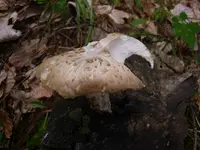
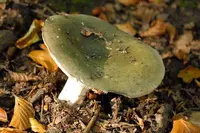
The fruiting body shows a smooth, often slightly greasy green to olive cap, with white brittle gills and a stout, pale stem. It appears mainly in summer and autumn in broadleaf and mixed forests across Europe and parts of North America.

Because it depends on living trees and specific soil fungi, it is not straightforward to cultivate at home. For those who want to care for Greasy Green Brittlegill, focus instead on maintaining healthy, undisturbed woodland-style conditions outdoors.

Main Plant Requirements

Care Difficulty

Hard Care

Light Preference

Partial Shade

Water Requirements

Regular Water

Temperature Preference

Cool Climate

Hardiness Zone

Unknown

Soil Texture

Loamy, Sandy, Organic-rich

Soil pH

Acidic (5.5–6.5)

Soil Drainage

Moist but well-drained

Fertilization

Minimal (feed rarely)

Get Personalized Care Plan

Scan your plant to receive care tips personalized for your specific plant

Available on iOS and Android

How to Care for the Greasy Green Brittlegill

This woodland mushroom thrives in dappled, forest-like light rather than open, direct sun.

  • Provide 2–5 hours of gentle morning sun with bright, filtered light for the rest of the day under trees or shrubs for Greasy Green Brittlegill.
  • Favor partial shade where moving foliage creates shifting light; avoid exposed south-facing sites that receive strong midday or afternoon sun.
  • In summer, ensure a leaf-litter canopy or similar cover to prevent caps from drying, while in spring and autumn slightly more open light can support healthy fruiting.

This ectomycorrhizal mushroom relies on consistently moist, not waterlogged, forest soil.

  • Aim for soil that stays evenly damp 5–10 cm below the surface; the top layer may dry slightly between rains but should not turn powdery.
  • Encourage drainage with loose leaf litter and well-structured soil; standing water or sour, swampy smells indicate overwatering and can prevent Russula heterophylla from fruiting.
  • In hot, dry weather, maintain moisture with mulched organic matter; pale, cracking caps and very dry leaf litter signal that the site is becoming too dry.

This species favors mild, temperate conditions typical of shaded woodlands.

  • Optimal fruiting usually occurs around 55–70°F (13–21°C), especially when soil moisture is stable and light remains filtered under trees.
  • It tolerates cooler spells down to about 40°F (4°C), but sustained hard frost below 32°F (0°C) typically stops fruiting until conditions warm.
  • Prolonged heat above 80°F (27°C), particularly when combined with dry soil, can halt new mushrooms and cause existing caps to soften, fade, or decay more quickly.

Humidity is not a major factor for Russula heterophylla, which typically grows in outdoor woodland environments rather than controlled indoor settings.

Russula heterophylla grows in forest soil, so replicating loose, well-aerated ground conditions is essential if attempting cultivation.

  • Use a loose, humus-rich mix with fine bark, leaf mold, and a small amount of loam to mimic woodland litter.
  • Aim for slightly acidic soil, around pH 5.0–6.5, since this matches typical broadleaf and mixed woodland conditions.
  • Ensure rapid drainage by avoiding heavy clay and adding coarse sand or fine grit so water does not pool around developing mycelium.
  • Avoid compacted, heavily fertilized, or peat-free mixes that stay wet for long periods, as these conditions can suppress mycorrhizal growth.

This mycorrhizal fungus is not suitable for container growing, since it depends on living tree roots and complex soil ecosystems.

Russula heterophylla grows as a wild mycorrhizal mushroom and usually does not need any fertilizer when associated with healthy host trees.

Russula heterophylla does not require pruning because the visible part is a temporary mushroom fruiting body, not a long-lived plant structure.

This species is not suited to typical repotting, as it lives in symbiosis with tree roots in soil rather than in containers.

  • Transplant only as intact woodland soil blocks if part of scientific or conservation work, not for casual cultivation.
  • Avoid disturbing tree roots or breaking up the mycelium network, which is the true body of the fungus.
  • If moving soil, keep it cool, shaded, and slightly moist to limit shock to the fungal mycelium.
  • Time any movement for cool, moist conditions, avoiding hot, dry weather that stresses both trees and fungi.

Practical home propagation of this mycorrhizal fungus is difficult, so caring for Greasy Green Brittlegill focuses on conserving its woodland habitat instead of active multiplication.

Russula heterophylla is adapted to natural outdoor climates in its range and normally needs no special winter care.

Care Tips

Host tree matching

Select or confirm suitable host trees such as oak, beech, or hazel, since this ectomycorrhizal fungus fruits best when its mycelium is partnered with compatible roots in undisturbed soil.

Leaf litter management

Maintain a thin, continuous layer of mixed hardwood leaf litter over the soil, topping up lightly each autumn rather than raking bare, to protect mycelium from drying and to buffer temperature and moisture swings.

Soil disturbance control

Limit digging, heavy foot traffic, and pet activity in the fruiting area so the fine mycelial network is not physically broken, which can reduce or stop mushroom production for several seasons.

Targeted moisture zoning

Install a simple drip line or soaker hose ring outside the tree trunk zone and run it on low flow, so the upper 5–10 cm of soil around the tree’s root zone stays evenly moist without waterlogging the mycelium.

Long-term site monitoring

Map and photograph fruiting spots each season, then keep notes on weather, tree health, and any ground disturbance to refine how to take care of Greasy Green Brittlegill in that specific location over several years.

Common Pests and Diseases

Mycophagous springtails

These insects feed on the fruiting body surface and gills, creating small pits or roughened areas on caps and stems of the mushroom. This pest is usually most active in moist litter around the base of the fungus.

Solution

Lift and discard heavily infested fruiting bodies and reduce thick, wet leaf litter directly around collection or display areas to lower springtail numbers. For cultivation or display setups, improve drainage and airflow, avoid overwatering the substrate, and use fine mesh barriers around the base to limit movement onto developing mushrooms.

Fungus gnat larvae

This pest tunnels into caps and stems, causing soft, water-soaked areas, collapse of parts of the fruiting body, and internal browning. Symptoms include small entry holes and blackish larvae inside the tissue when cut open.

Solution

Remove and dispose of infested mushrooms and reduce standing moisture around the site, as gnats breed in very wet organic matter. In semi-controlled settings, use yellow sticky traps for adults, cover substrate with fine mesh or breathable fabric to block egg-laying, and allow the upper substrate layer to dry slightly between waterings without letting it fully desiccate.

Slug feeding

These mollusks rasp away tissue from the cap and gills, leaving irregular holes, slime trails, and sometimes complete loss of young fruiting bodies. Damage is more severe in damp, shaded forest patches or gardens with dense ground cover.

Solution

Hand-remove slugs during evening or early morning and avoid leaving boards, rocks, or heavy mulch that shelter them directly around the desired mushroom area. For garden or educational displays, use copper tape barriers, coarse grit rings, or targeted slug traps set a short distance away from the mushrooms to draw feeding away from fruiting sites.

Moldy parasitic fungi

This disease appears as white, gray, or greenish mold patches on caps and stems that spread over time, causing distortion, softening, and premature decay of the fruiting bodies. Symptoms include fuzzy or powdery growth that may overgrow the gills and reduce spore production.

Solution

Promptly remove and destroy affected mushrooms and any obviously moldy debris nearby to limit spore spread. In cultivation or display environments, lower humidity slightly, increase air movement, avoid overhead wetting, and sanitize tools or containers so that Russula heterophylla care instructions can focus on healthy, clean fruiting conditions.

Bacterial soft rot

This disease causes wet, foul-smelling, slimy decay that often starts at wounds or contact points with saturated soil or litter. Symptoms include rapid collapse of caps and stems and a greasy, discolored surface that quickly attracts insects.

Solution

Discard all affected mushrooms and avoid handling healthy fruiting bodies with contaminated hands or tools. Reduce prolonged surface wetness by improving drainage, spacing fruiting clusters where possible, and watering substrate at soil level rather than directly on emerging mushrooms in any managed or semi-cultivated setting.

Interesting Facts

Green but variable cap

The cap typically shows soft green tones but often has mottled areas of grey, yellow, or olive, making it more variable than many other green brittlegills. This variability, along with its greasy surface, is a key character used by field mycologists to separate it from similar Russula species.

Important ectomycorrhizal partner

This species forms ectomycorrhizae, a mutual partnership where its hyphae wrap around fine tree roots and exchange mineral nutrients for sugars. It is especially associated with oaks and beeches in temperate woodlands, contributing to forest nutrient cycling and tree health.

Diagnostic brittle gills

The gills break cleanly and crisply, a hallmark of the Russula genus caused by spherical cells called sphaerocysts in the flesh. In R. heterophylla the gills are usually pale cream to light ochre and fairly crowded, features that help distinguish it in the field.

Botan icon

Did you know?

Although considered an edible species in traditional European field guides, Russula heterophylla is notoriously difficult to distinguish from several toxic greenish Russula species, so modern mycologists generally advise against collecting it for food unless identification is confirmed by an expert.

FAQs about Greasy Green Brittlegill

This mushroom is considered edible when correctly identified, but it resembles several unpalatable or mildly toxic Russula species. Only experienced foragers should collect it, and all specimens must be cooked thoroughly and harvested from unpolluted areas.

Grow Healthy Plants with Botan Care

Keep your plants happy and healthy with plant identification, disease detection, and easy care guidance.

Botan plant care app — identify plants on mobile

Explore More Plants