Deep root establishment
For young trees, apply less frequent but thorough soakings in the root zone to encourage deep rooting, which improves drought tolerance and wind stability when growing Tawa in open ground.

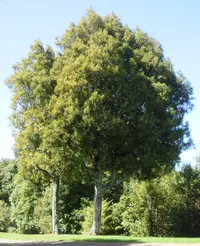
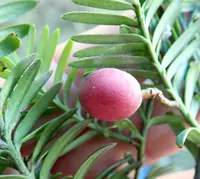
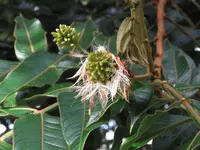
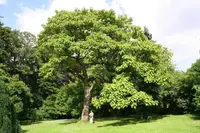
Beilschmiedia tawa, commonly called tawa, is an evergreen tree from New Zealand’s native forests. It belongs to the laurel family and forms a tall, straight trunk with a dense, rounded crown. The foliage is glossy green with simple, leathery leaves, and mature trees produce small flowers followed by dark, plum-like fruits that attract birds. In cultivation it is mainly grown in mild, frost-free climates or larger sheltered gardens. Tawa prefers consistent moisture, well-drained soil, and protection from extreme heat or cold. Its size, slow early growth, and climate needs mean it is more suitable for dedicated growers who want to learn how to care for Tawa over the long term.

Care Difficulty
Moderate Care

Light Preference
Partial Shade

Water Requirements
Moderate Water

Temperature Preference
Warm Climate

Hardiness Zone
9–11

Soil Texture
Loamy, Silty, Organic-rich

Soil pH
Acidic (5.5–6.5)

Soil Drainage
Moist but well-drained

Fertilization
Minimal (feed rarely)
Scan your plant to receive care tips personalized for your specific plant
Available on iOS and Android
This New Zealand forest tree prefers bright, indirect light with some protection from intense sun.
This species prefers consistently moist, well-drained soil and does not tolerate waterlogged conditions.
This tree prefers mild, frost-free conditions with limited temperature extremes.
This species prefers moderately moist air but adapts to a range of outdoor humidity levels.
Beilschmiedia tawa prefers deep, moist, well-drained, organic-rich soil for stable growth.
This tree is only moderately suitable for container growing and typically stays healthiest when kept small and temporary in pots.
This New Zealand forest tree typically needs little feeding when grown in the ground on suitable soils.
Beilschmiedia tawa needs minimal pruning, mainly to maintain structure and remove problem wood.
This species is mainly grown as a forest or landscape tree, so care focuses on careful transplanting of young plants.
Beilschmiedia tawa is usually propagated from seed, which can be slow and requires fresh, viable material.
This evergreen tree is suited to mild, frost-free or light-frost climates and usually needs limited winter care in the ground.

Plant Health Check
Not sure what's wrong with your plant? Check your plant's health inside the app.
Tawa dominates many lowland forests in New Zealand’s North Island and produces oily fruits that are a major food source for native birds such as kererū, which in turn disperse its seeds over long distances.
The large seeds are primarily dispersed by fruit-eating birds; without these birds swallowing and excreting the seeds, natural regeneration of tawa-dominated forest can be severely reduced.
Young tawa plants can survive for many years in deep shade under a closed forest canopy, slowly building reserves until a tree fall or canopy gap provides enough light for rapid height growth.

Tawa wood was historically one of the most commonly used native timbers in New Zealand for flooring and furniture because its pale, fine-textured hardwood is relatively easy to work yet reasonably durable indoors.
This species is slow to moderate growing. In good conditions young trees may add 20–40 cm of height per year, then slow as they mature. Growth is often slower in dry, windy, or very exposed sites.
Keep your plants happy and healthy with plant identification, disease detection, and easy care guidance.