Staggered Succession Sowing
Sow small patches every 2–3 weeks in early spring and again in late summer so that flowering and seed set are spread out, which stabilizes self-seeding and reduces bare periods in the bed.

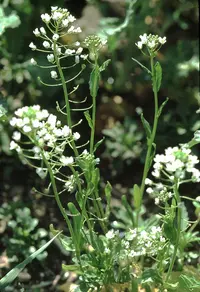
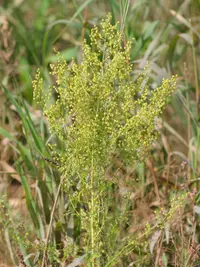
Field pennycress (Thlaspi arvense) is a small annual herb in the mustard family, often found in fields, roadsides, and disturbed soils. It forms upright stems with small white flowers and distinctive flat, round seed pods that resemble tiny coins.
This species is native to Eurasia but is now widespread across North America as both a wild plant and an emerging cover crop. It grows quickly, tolerates poor soils, and self-seeds readily, which makes it easy to establish but sometimes weedy. In general, it prefers full sun, moderately moist soil, and good drainage, and these basics help guide how to care for field pennycress.

Care Difficulty
Easy Care

Light Preference
Full Sun

Water Requirements
Moderate Water

Temperature Preference
Cold Hardy

Hardiness Zone
3–8

Soil Texture
Sandy, Loamy, Clay

Soil pH
Slightly acidic (6.5–7.0), Slightly alkaline (7.0–7.5)

Soil Drainage
Well-drained

Fertilization
Minimal (feed rarely)
Scan your plant to receive care tips personalized for your specific plant
Available on iOS and Android
This annual prefers open, bright positions typical of agricultural fields and disturbed ground.
This species is adapted to relatively dry, well-drained soils and does not need frequent irrigation once established.
This cool-season annual is quite hardy and thrives in temperate climates with cold winters.
Humidity is not a major factor for Thlaspi arvense, which adapts well to typical outdoor air levels.
Thlaspi arvense prefers mineral, well-drained ground and tolerates relatively poor soils if not waterlogged.
This species can be grown in containers, mainly for experimental, ornamental, or breeding uses rather than long-term display.
This annual generally needs little feeding, especially in fertile garden soil.
Pruning for Thlaspi arvense is minimal and mainly supports tidy growth and seed management.
This species is usually grown in the ground or as a short-term cover crop rather than as a long-term container plant.
New plants are most commonly raised from seed rather than by vegetative methods.
This cold-hardy annual typically needs little dedicated winter care in temperate climates.

Plant Health Check
Not sure what's wrong with your plant? Check your plant's health inside the app.
Field pennycress often germinates in late summer or fall, overwinters as a rosette, and is among the first annuals to bolt and set seed in spring, giving it a strong advantage in disturbed fields and roadsides.
The plant produces flat, round, winged seedpods with a deep notch at the tip, which inspired the common name pennycress and makes it easy to distinguish from many other mustard family weeds.
Field pennycress is being actively studied as an oilseed crop for aviation biofuel because its seeds contain high levels of oil and can be grown as a winter cover crop between main cash crops.

Field pennycress is a hyperaccumulator candidate for some metals, and has been investigated for phytoremediation, where plants are used to extract contaminants from polluted soils.
The leaves, young shoots, and seeds are technically edible but taste pungent and can accumulate heavy metals from contaminated soils. Use only plants from clean sites, in small amounts, and avoid foraging near roads, industry, or treated fields.
Keep your plants happy and healthy with plant identification, disease detection, and easy care guidance.