Early structural training
In the first 3–5 years, select 3–4 well-spaced scaffold branches and remove steep, crossing, or rubbing shoots to build a strong, open canopy that can support future fruit load.

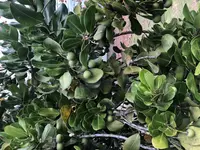
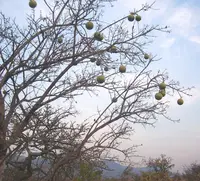
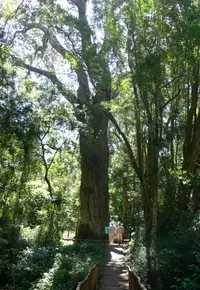
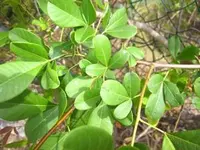
Mimusops coriacea is a tropical evergreen tree known for its dense, rounded crown and glossy, dark green leaves. It can develop fragrant, small flowers followed by fleshy, edible fruits. Native to coastal regions of East Africa and nearby islands, it is typically found in warm, humid climates and sandy or well-drained soils. Its relatively slow growth and strong structure make it a long-lived landscape tree where space and suitable climate are available. The main challenges in how to care for Mimusops coriacea are providing enough warmth, sun, and consistent moisture, especially in areas outside its natural tropical range.

Care Difficulty
Moderate Care

Light Preference
Full Sun

Water Requirements
Moderate Water

Temperature Preference
Tropical / Frost Sensitive

Hardiness Zone
10–12

Soil Texture
Sandy, Loamy, Organic-rich

Soil pH
Slightly acidic (6.5–7.0), Neutral (7.0)

Soil Drainage
Moist but well-drained

Fertilization
Minimal (feed rarely)
Scan your plant to receive care tips personalized for your specific plant
Available on iOS and Android
This coastal tree prefers strong light and performs best in warm, bright locations outdoors.
This drought-tolerant species prefers deep, infrequent watering once established.
This tropical coastal tree prefers warm, frost-free conditions throughout the year.
This coastal species handles a wide humidity range but benefits from moderately humid air when young or container-grown.
Mimusops coriacea prefers deep, well-drained, slightly sandy to loamy soil that still retains moderate moisture.
This species can be grown in containers when young, though it eventually prefers in-ground planting for full size and fruiting.
This coastal tree benefits from modest, steady nutrition rather than heavy feeding.
Pruning helps maintain structure and safety without spoiling this tree’s natural form.
This species is typically grown in-ground, so focus on correct planting and minimal disturbance once established.
Propagation is generally done from seed and can be slow, so it suits patient growers and nursery production more than casual home attempts.
This is a warmth-loving tree that dislikes prolonged cold and needs protection outside frost-free climates.

Plant Health Check
Not sure what's wrong with your plant? Check your plant's health inside the app.
This evergreen tree is naturally associated with lowland coastal forests of eastern Africa, Madagascar, and islands of the western Indian Ocean, where it tolerates salty winds and sandy, nutrient-poor soils.
The bark and young parts contain a white, milky latex typical of the Sapotaceae family, which helps seal wounds and protect the plant from herbivores and pathogens.
Its small, creamy-white, tubular flowers are strongly scented and rich in nectar, attracting a wide range of nocturnal and diurnal pollinators in its native range.

Mimusops coriacea produces a dense, fine-textured hardwood that is locally valued in some parts of East Africa and the western Indian Ocean region for durable construction and tool handles, reflecting its slow, solid wood formation over many years.
This species is evergreen in warm climates, holding its leaves year-round rather than dropping them seasonally. In marginal, cooler areas, some partial leaf loss can occur after cold or drought stress, but healthy plants generally stay leafy.
Keep your plants happy and healthy with plant identification, disease detection, and easy care guidance.