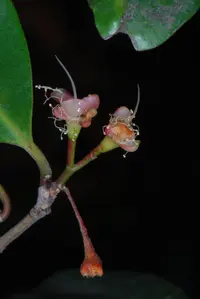
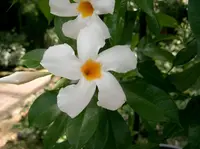
pithraj tree Care (Aphanamixis polystachya)

pithraj tree

About pithraj tree

The pithraj tree, Aphanamixis polystachya, is a medium to large evergreen tree valued for its dense canopy and straight trunk. It belongs to the mahogany family and is often used as a timber and shade tree in warm climates.

This species is native to South and Southeast Asia, where it grows in moist tropical and subtropical forests. Its glossy, compound leaves and upright growth habit give it a formal, architectural look in larger landscapes.

It is relatively hardy once established but needs warmth and consistent moisture when young, so care for pithraj tree focuses on avoiding cold, drought, and waterlogged soil. It prefers bright light, deep, well-drained soil, and protection from severe frost.

Main Plant Requirements

Care Difficulty

Moderate Care

Light Preference

Partial Shade

Water Requirements

Moderate Water

Temperature Preference

Tropical / Frost Sensitive

Hardiness Zone

11–12

Soil Texture

Loamy, Sandy, Organic-rich

Soil pH

Acidic (5.5–6.5), Slightly acidic (6.5–7.0)

Soil Drainage

Moist but well-drained

Fertilization

Minimal (feed rarely)

Get Personalized Care Plan

Scan your plant to receive care tips personalized for your specific plant

Available on iOS and Android

How to Care for the pithraj tree

Aphanamixis polystachya grows best as a sun-loving tropical tree with some tolerance for partial shade.

  • Provide 6–8 hours of direct to lightly filtered sun daily, ideally with morning sun and light afternoon shade in hot climates.
  • Young pithraj tree plants benefit from dappled or filtered light under taller trees to prevent leaf scorch, especially in their first 2–3 years.
  • Watch foliage color and density: sparse, elongated shoots indicate insufficient light, while brown, crisp leaf edges suggest too much intense afternoon sun.

Aphanamixis polystachya prefers evenly moist, well-drained soil that never stays waterlogged for long periods.

  • Before watering, let the top 3–5 cm of soil dry; in warm, rainy seasons, rely on natural rainfall unless the soil surface feels dry and leaves begin to lose turgor.
  • Ensure deep watering that soaks the root zone, then drains freely; sloping ground or amended soil with organic matter helps excess water move away from the trunk.
  • Watch for yellowing, soft leaves and persistent wet soil as signs of overwatering, while curling, dull leaves and dry, shrinking soil indicate underwatering.

This tropical tree thrives in warm, frost-free climates with only moderate seasonal fluctuations.

  • Aim for an optimal growing range of 70–90°F (21–32°C), where shoot growth and leaf expansion remain steady.
  • Protect Aphanamixis polystachya from temperatures below 40°F (4°C); light frost can damage young growth, and hard frost may kill small trees.
  • Mature trees tolerate brief heat up to about 100°F (38°C) if soil moisture is maintained, but young plants need mulch and partial shade during hot, dry periods.

This species prefers moderately humid air but usually adapts to typical household levels.

  • Aim for 40–60% humidity for steady growth, especially on young pithraj tree plants or newly established specimens.
  • Expect leaf-edge browning, curled new leaves, and slow growth under very dry air below about 30%.
  • Increase humidity with grouped plants, a pebble tray under the container, or a room humidifier rather than misting leaves heavily.

This tree prefers deep, well-structured, free-draining, slightly acidic to neutral soil.

  • Use a loamy mix with 40–50% mineral content (garden loam or sandy loam) and 50–60% organic matter such as composted bark or leaf mold.
  • Ensure rapid drainage; incorporate coarse sand or fine gravel plus 10–20% perlite to prevent water stagnation around the roots.
  • Target pH 6.0–7.0; mix in composted leaf mold or pine-based materials to gently acidify overly alkaline ground.
  • Avoid heavy, compacted clay, waterlogged sites, or pure sand; work in organic matter and coarse particles to improve both aeration and moisture balance for Aphanamixis polystachya.

This species can be grown in containers for early stages, though long-term growth is easier in the ground.

  • Select a tall, weighty container that lowers the center of gravity, as the developing tree becomes top-heavy and can tip in strong wind.
  • Choose a pot made from thick terracotta or concrete-like materials to moderate moisture swings in warm climates.
  • Use a container wide enough for lateral root spread, leaving some empty volume for root expansion without compressing the mix.

Aphanamixis polystachya responds to moderate, balanced nutrition in cultivation, though established trees in fertile soil often need little extra feeding.

  • Use a balanced slow-release fertilizer (for example 10-10-10) or well-rotted compost at the start of the warm growing season.
  • Apply light doses 1–2 times per growing season around the drip line, keeping granules off the trunk.
  • Reduce or stop feeding in cooler months or winter when growth slows, especially in marginal climates or containers.
  • For container-grown pithraj tree, use a half-strength balanced liquid feed every 4–6 weeks during active growth and flush soil occasionally to avoid salt buildup.

Pruning Aphanamixis polystachya is mainly corrective, guiding structure and removing weak tissue rather than shaping tightly.

  • Carry out pruning at the end of the cool season or early spring, before strong new growth begins.
  • Remove dead, diseased, or storm-damaged branches first, cutting back to healthy wood with clean, sharp tools.
  • Thin crowded interior shoots to improve light penetration and airflow, which supports stronger canopy structure.
  • Limit height or spread by shortening overly long branches to a lateral side branch, maintaining the tree’s natural form.

This species is usually grown as a landscape tree, so care focuses on safe transplanting of young specimens rather than frequent repotting.

  • Transplant in late winter to early spring when soil is workable and before vigorous new growth, choosing a mild, overcast day if possible.
  • Look for roots circling the container or dense root mass at the drainage holes as signs a nursery plant is ready to move into the ground.
  • Handle the root ball gently, loosening only the outer circling roots, then plant at the same depth with a wide, well-drained planting hole.
  • Water deeply after planting, keep soil evenly moist for the first season, and use organic mulch to reduce root stress and temperature swings.

Aphanamixis polystachya is usually propagated from seed, which demands warmth and patience rather than rapid turnaround.

  • Collect ripe seed from healthy trees and clean off any fleshy coating, which can inhibit germination.
  • Sow seeds in warm conditions, around 75–85°F, in a free-draining, slightly moist medium and keep humidity stable.
  • Provide bright, indirect light and avoid waterlogging to prevent rot during the slow germination period.
  • For experimental propagation, semi-hardwood cuttings may be tried in high humidity with rooting hormone, though success rates are often low.

This tropical to subtropical tree has low frost tolerance and needs protection in climates with cold winters.

  • In regions with light frost, apply a 5–8 cm mulch layer over the root zone in late fall, keeping it away from the trunk.
  • Young or marginally hardy trees benefit from wrapping the lower trunk with breathable frost cloth during cold snaps.
  • Container-grown plants in cooler climates should be moved indoors or into a frost-free greenhouse before temperatures fall near 40°F.
  • Reduce watering in winter, keeping soil just slightly moist, especially for plants kept under cover with lower light.

Care Tips

Early structural training

In the first 3–5 years, select 1 strong central leader and remove competing upright shoots annually to build a stable, straight trunk that will better support the tree’s eventual height and canopy spread.

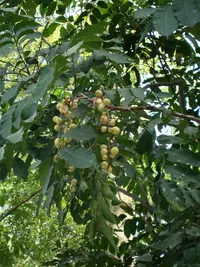
Wind and stake management

In open or windy sites, use 2–3 low, flexible stakes for only the first 1–2 years, checking ties every 2–3 months so the trunk can flex slightly and develop strong taper rather than becoming weak and girdled.

Mulch for root health

Maintain a 5–8 cm ring of coarse organic mulch over the root zone, kept 5–10 cm away from the trunk, to moderate soil temperature, reduce weed competition, and protect fine feeder roots from drying out.

Dry-season root watering

In prolonged dry periods, give a single deep soak to the full root zone every 2–4 weeks rather than frequent light watering, encouraging deeper rooting and greater drought resilience when growing pithraj tree in warm climates.

Preventing trunk damage

Protect the lower trunk from mechanical injury by lawn tools and strong sun by keeping a vegetation-free, mulched circle and, in very hot exposed sites, using a breathable trunk guard during the first 2–3 summers.

Common Pests and Diseases

Red-banded thrips

This pest feeds on young leaves and tender shoots, causing silvery streaks, curling, and distortion of new growth on pithraj trees in nurseries and plantations.

Solution

Prune and destroy heavily infested shoot tips, then use a targeted contact or systemic insecticide labeled for thrips on tree crops, applied in the early morning or late afternoon; avoid overhead irrigation that splashes insects between plants and monitor new flushes regularly for renewed activity.

Bark-boring beetles

These insects tunnel into the trunk and branches, leading to small round exit holes, frass (wood dust) on the bark, branch dieback, and general decline, especially in stressed trees.

Solution

Cut out and destroy badly affected branches, improve tree vigor through adequate watering and soil health, and apply a suitable bark spray or stem injection where permitted to protect remaining wood; remove and dispose of dead wood from around the planting site to reduce breeding sites.

Leaf spot

This disease causes small brown to dark lesions on leaf blades that may expand and coalesce, especially in humid monsoon climates where foliage stays wet for long periods.

Solution

Collect and destroy fallen leaves, improve canopy airflow by pruning congested branches, and, if spotting progresses, apply a copper-based or other registered foliar fungicide during wet periods while avoiding overhead watering that prolongs leaf wetness.

Anthracnose

This disease leads to irregular dark brown to black patches on leaves and young twigs, sometimes with blighting of shoot tips in nursery plants or young field trees.

Solution

Remove and burn or dispose of infected leaves and twigs, avoid tight spacing that keeps foliage humid, and use a protectant fungicide program during warm, wet weather; start applications at first symptoms and repeat according to label directions to protect new growth.

Interesting Facts

Meliaceae family link

This species belongs to the mahogany family Meliaceae and shares structural traits with timber trees such as compound leaves and a typically straight trunk.

Bitternut-flavored seeds

The seeds are notably bitter and oily, and in some regions they have been experimentally explored as a non-edible oil source because of their high lipid content.

Evergreen monsoon specialist

In its native range of South and Southeast Asia, this tree stays evergreen and is especially common in moist, evergreen and semi-evergreen forests that experience strong monsoon seasons.

Botan icon

Did you know?

The fine-grained, moderately heavy wood of Aphanamixis polystachya has long been used locally for construction, furniture, and carved items, and in some areas it has been selectively logged as a secondary timber species due to its workable yet durable heartwood.

FAQs about pithraj tree

Growth is moderate rather than fast. Young trees may put on about 30–60 cm of height per year in warm, moist climates, slowing as the canopy fills out and root competition or limited space increases.

Grow Healthy Plants with Botan Care

Keep your plants happy and healthy with plant identification, disease detection, and easy care guidance.

Botan plant care app — identify plants on mobile

Explore More Plants