Jack Pine Care (Pinus banksiana)

Also known as: Black Pine, Hudson Bay Pine, scrub pine, gray pine
Jack Pine

About Jack Pine

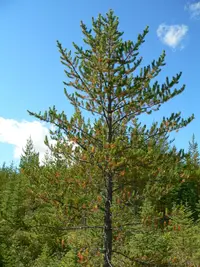
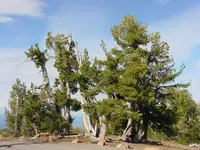
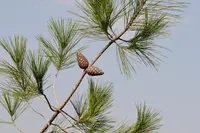
Jack pine, Pinus banksiana, is a hardy evergreen conifer native to northern North America. It typically grows as a small to medium tree with an irregular, often wind-shaped crown and short, twisted needles in pairs.

In nature it thrives on poor, sandy soils and exposed sites where many other trees struggle, which makes it a resilient option in tough landscapes. Its tolerance of cold, wind, and low fertility means it can be relatively easy to manage if light and drainage are suitable.

These traits guide how to care for Jack Pine, favoring full sun, well-drained soil, and moderate to low moisture rather than rich, wet conditions.


Main Plant Requirements

Care Difficulty

Moderate Care

Light Preference

Full Sun

Water Requirements

Low Water

Temperature Preference

Cold Hardy

Hardiness Zone

2–6

Soil Texture

Sandy, Loamy, Rocky

Soil pH

Strongly acidic (4.5–5.5), Acidic (5.5–6.5)

Soil Drainage

Well-drained

Fertilization

Minimal (feed rarely)

Get Personalized Care Plan

Scan your plant to receive care tips personalized for your specific plant

Available on iOS and Android

How to Care for the Jack Pine

This sun-loving conifer performs best in open, exposed sites with strong light.

  • Provide full sun for 6–10 hours daily; Jack Pine develops denser branching and better cone production in unobstructed light.
  • Tolerates light, dappled shade for part of the day, but prolonged shade causes sparse growth, thin needles, and increased disease susceptibility.
  • In summer, full sun is suitable even in hot regions if soil is not extremely dry; in winter, no shading is needed, as low-angle sun improves cold hardiness.

This species is drought-tolerant and prefers slightly dry, well-drained soil once established.

  • At planting, water deeply, then allow the top 5–8 cm of soil to dry before watering again; after the first 1–2 years, rely mostly on rainfall except in severe drought.
  • Use sharply drained, sandy or gravelly soil; poor drainage and standing water lead to root rot, yellowing needles, and dieback.
  • During hot, dry periods, watch for drooping or browning needle tips as a cue to irrigate Pinus banksiana thoroughly, then let the soil dry back.

This hardy pine is adapted to cold climates with hot summers and does not require winter protection outdoors.

  • Optimal active growth occurs around 55–75°F (13–24°C), but the tree continues functioning outside this range in typical temperate climates.
  • Mature plants tolerate extreme cold down to about -50°F (-46°C); young trees benefit from wind protection their first 1–2 winters.
  • Handles summer heat up to about 90–95°F (32–35°C) if soil moisture is not extremely low; prolonged heat with drought can cause needle scorch and tip dieback.

This species tolerates a wide humidity range and usually does not need special humidity management.

  • Target 30–60% relative humidity, similar to most outdoor conditions in temperate regions.
  • Jack Pine handles dry air well, so low indoor winter humidity rarely causes damage.
  • If tips brown while soil moisture and light are adequate, check for extreme heated indoor air and move the plant away from direct hot airflow.

Pinus banksiana prefers dry, nutrient-poor, sharply drained soil that mimics its native sandy habitats.

  • Use a sandy, gritty mix such as 50–60% coarse sand or grit with the rest low-organic potting soil or loam to keep roots aerated.
  • Aim for slightly acidic soil, roughly pH 5.0–6.5, and avoid adding lime unless a soil test shows strong acidity below this range.
  • Avoid heavy clay, peat-heavy, or compacted mixes that hold water for long periods, since this encourages root rot and poor growth.
  • Improve drainage by mixing in coarse materials like pumice, crushed granite, or fine bark chips rather than more peat or compost.

This species can be grown in containers for several years, especially as a small outdoor specimen or bonsai.

  • Choose a wide, low, and heavy container so the shallow-rooted plant stays stable in strong winds as the canopy develops.
  • Select unglazed clay or other porous material to allow moisture to evaporate faster and prevent prolonged root wetness.
  • Raise the pot on feet or bricks so drainage holes stay clear and water cannot pool under the container after rain or irrigation.

This pine usually needs little feeding, especially in native or poor soils.

  • For young or container Jack Pine, use a balanced slow-release fertilizer (such as 10-10-10) at half label rate in early spring.
  • Apply only once per growing season in the ground; container plants may need a light second dose in midsummer.
  • Avoid high-nitrogen lawn fertilizers near the root zone to prevent overly lush, weak growth.
  • Do not fertilize in late fall or winter, as this can stimulate tender growth vulnerable to cold.

Pruning Pinus banksiana is minimal and focuses on safety, structure, and removing defective growth.

  • Carry out any structural pruning in late winter or very early spring before new growth starts.
  • Remove dead, diseased, crossing, or storm-damaged branches with clean, sharp bypass pruners or a pruning saw.
  • Limit cuts to smaller branches, maintaining the natural form rather than forcing a tight, formal shape.
  • Avoid cutting into old bare wood; shorten only the current or recent growth to preserve healthy foliage.

This species is usually grown in the ground, so transplanting is more relevant than repotting.

  • Transplant in early spring or early fall when temperatures are mild and soil is workable.
  • Move only when necessary, such as poor site placement or waterlogging, since mature roots dislike disturbance.
  • Look for signs like slow growth, yellowing needles, or obvious root girdling if grown in a container.
  • Dig a wide root ball, replant at the same depth, water deeply, and mulch lightly to reduce transplant shock.

Pinus banksiana is mainly propagated from seed rather than vegetative methods.

  • Collect ripe cones in late summer to fall and dry them so the scales open and release seeds.
  • Cold-stratify seeds in moist sand or vermiculite at 34–41°F for 6–8 weeks to improve germination.
  • Sow in spring in a free-draining, sandy mix, barely covering the seeds and keeping the medium evenly moist.
  • Place trays in bright, cool conditions and thin seedlings to reduce overcrowding and damping-off disease.

This hardy pine usually needs no special winter care in its suitable climate range.

  • Mature in-ground trees tolerate deep freezes common in northern regions without extra covering.
  • Apply 5–8 cm of organic mulch around the root zone, keeping it away from the trunk, to moderate soil temperature.
  • For container plants in very cold areas, group pots in a sheltered spot and insulate containers with burlap or foam.

Care Tips

Salt-tolerant siting

Use this species as a windbreak or pioneer tree in exposed, sandy, or roadside sites where salt spray and wind stress limit other conifers, but still plant at least 15–20 ft from heavily salted pavement to reduce long-term salt buildup around the root zone.

Form-shaping pruning

On young trees, remove or shorten competing leaders and narrow V-shaped forks in late winter to encourage a single dominant trunk and reduce future storm breakage, making only small, clean cuts just outside the branch collar.

Low-input establishment

During the first 2–3 years, keep competing turf and weeds cleared in a 2–3 ft radius mulch ring around the tree instead of relying on fertilizer, which allows roots to colonize the surrounding soil more quickly.

Firewise fuel spacing

In fire-prone regions, maintain generous spacing between trees and avoid dense lower-branch thickets by removing dead twigs and ladder fuels up to 3–6 ft from the ground, while keeping live green foliage intact near the crown.

Cone and seed management

If natural regeneration is not desired near buildings or paths, periodically rake and remove cones from the ground before they open and consider using this species away from high-traffic areas, since serotinous cones can persist for years and release seed after high heat exposure.

Common Pests and Diseases

Jack pine budworm

This pest is a caterpillar that feeds heavily on needles and male flowers, causing thin crowns, sparse foliage, and branch dieback. Symptoms include reddish-brown chewed needles and visible webbing during outbreaks.

Solution

Monitor new growth in late spring and early summer for larvae and webbing, and prune out and destroy heavily infested branch tips on small trees. For larger or high-value trees, consult a local forester or arborist about timing targeted Bacillus thuringiensis (Bt) sprays when larvae are small, and avoid stressing trees with unnecessary pruning or drought.

Pine needle rust

This disease is caused by fungi that produce orange or yellow pustules on needles, leading to premature needle drop and a thinned canopy. Symptoms include discolored, spotted needles that may shed in mid to late summer.

Solution

Rake and remove fallen needles to reduce fungal spores, and maintain good spacing and air flow around trees to help foliage dry quickly. In areas with repeated severe infections, consider removing alternate host plants if identified by a local extension service, and only use fungicides if recommended for significant landscape or nursery trees.

Scleroderris canker

This disease attacks shoots and branches, causing curled, brown needles and sunken cankers on stems that can girdle and kill branches. Symptoms include flagging (dead) branch tips and resin flow around cankered areas.

Solution

Prune out and destroy infected shoots and branches during dry weather, cutting well below visible symptoms, and disinfect tools between cuts with alcohol. Avoid planting susceptible pines in low, cold, or poorly drained sites, and seek local forestry or extension guidance before considering any fungicide program as part of broader Pinus banksiana care instructions.

Warren root collar weevil

This pest damages the lower stem and root collar where larvae feed under the bark, disrupting water flow and causing yellowing needles, stunting, and possible tree death. Symptoms include resin at the base of the trunk and loose, chewed bark just below soil level.

Solution

Inspect the root collar area for bark damage and resin, and remove and destroy severely infested young trees to prevent further spread. Plant trees at the proper depth with the root collar just above soil level, avoid mechanical injury from mowers or trimmers, and keep grass and weeds cleared from the trunk base to reduce habitat for adults.

Pine needle cast

This disease causes older needles to yellow or redden, then turn brown and drop, giving the tree a thin, tufted appearance on branch tips. Symptoms include dark bands or tiny black fruiting bodies on affected needles before they fall.

Solution

Improve air movement by proper spacing and by removing dense competing vegetation, and clean up and discard fallen needles to reduce the source of infection. In chronically affected landscape or nursery plantings, consult local extension recommendations on timing of preventive fungicide sprays directed at newly emerging needles in spring.

Interesting Facts

Fire-locked cones

Many jack pine populations produce serotinous cones that stay sealed with resin and only open after exposure to high heat from wildfire, releasing seeds onto freshly cleared, sunny ground.

Kirtland’s warbler habitat

Jack pine forms dense, even-aged stands that create the specific low, scrubby forest structure required by the endangered Kirtland’s warbler for nesting in parts of Michigan and nearby regions.

Cold-tolerant pioneer

This species colonizes nutrient-poor, sandy, and often very cold sites across the northern Great Lakes and Canadian Shield, acting as a pioneer tree that stabilizes soils and prepares conditions for later forest species.

Botan icon

Did you know?

Fossil pollen and macrofossil evidence show that jack pine persisted in North America through major post-glacial climate shifts, indicating a long evolutionary history of adaptation to both cold climates and recurrent fire regimes.

FAQs about Jack Pine

It can be container-grown when young, using a deep, well-drained pot and gritty soil. Expect slow to moderate growth and eventual root restriction. Plan to transplant into the ground within a few years for long-term health.

Grow Healthy Plants with Botan Care

Keep your plants happy and healthy with plant identification, disease detection, and easy care guidance.

Botan plant care app — identify plants on mobile

Explore More Plants