Formative crown shaping
In the first 5–7 years, remove or shorten competing leaders and very steep branches in late winter so a single straight leader and well-spaced main branches form a stable, wind-resistant crown.

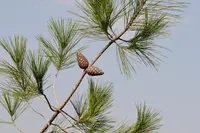
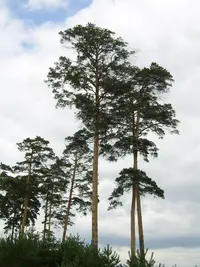
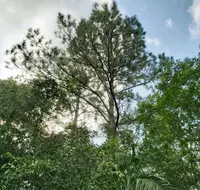
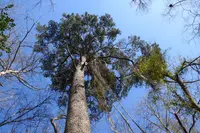
Turkish pine, Pinus brutia, is a fast-growing coniferous tree known for its tall, straight trunk and open, irregular crown. It keeps its needle-like leaves year-round, giving reliable structure and color. Native to the eastern Mediterranean, it naturally grows in hot, dry, and often rocky sites, showing strong tolerance to drought and poor soils. This resilience makes it an option for larger landscapes and coastal areas where other trees struggle. It is generally considered hardy and adaptable, but needs full sun and well-drained soil to thrive, which influences how to care for Turkish Pine in gardens or managed plantings.

Care Difficulty
Moderate Care

Light Preference
Full Sun

Water Requirements
Low Water

Temperature Preference
Warm Climate

Hardiness Zone
8–10

Soil Texture
Sandy, Loamy, Rocky

Soil pH
Acidic (5.5–6.5), Slightly acidic (6.5–7.0)

Soil Drainage
Well-drained

Fertilization
Minimal (feed rarely)
Scan your plant to receive care tips personalized for your specific plant
Available on iOS and Android
Pinus brutia needs high light to develop dense, healthy growth in open landscapes.
Pinus brutia prefers drier, well-drained conditions once established.
This pine is adapted to warm, dry climates but tolerates a notable range of temperatures.
Pinus brutia handles low humidity well and usually does not need special air-moisture management in typical US outdoor conditions.
Pinus brutia prefers freely draining, mineral soils that do not stay wet after rain or irrigation.
This species can be grown in containers for several years, especially as a young tree or for patio use.
Pinus brutia grows best in moderately fertile, well-drained soil and usually needs only light supplemental feeding.
Pinus brutia needs only light, deliberate pruning to maintain health and structure.
Pinus brutia is usually grown in the ground; transplanting is more common than container repotting.
Pinus brutia is mainly propagated from seed, which is reliable but not fast.
Pinus brutia is fairly cold hardy in mild to moderate winter climates and usually needs little special winter care.

Plant Health Check
Not sure what's wrong with your plant? Check your plant's health inside the app.
This species has thick bark and seed cones that often open after exposure to high heat, allowing it to rapidly colonize burned areas in its native eastern Mediterranean range.
Populations of this pine show marked variation in cone size, needle length, and growth form across Turkey, Cyprus, and surrounding regions, reflecting local adaptation to different coastal and inland climates.
In many lowland and coastal sites, it forms open forests above dense Mediterranean shrubland known as maquis, shaping light, soil conditions, and microclimate for many understory species and wildlife.

Pinus brutia was one of the key native pines used in large-scale reforestation and erosion control projects around the eastern Mediterranean in the 20th century, especially in Turkey, where it helped stabilize degraded slopes and protect watersheds.
This species is generally fast-growing, often adding 30–60 cm of height per year in suitable conditions. Growth slows with age, poor soil, drought, or root restriction. Good site preparation is essential for strong early development when growing Turkish Pine.
Keep your plants happy and healthy with plant identification, disease detection, and easy care guidance.