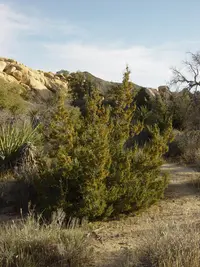
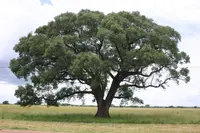
Young plant staking
Stake young plants with a low, flexible tie in windy sites for the first 2–3 years to prevent root rock and help the developing root system anchor deeply.

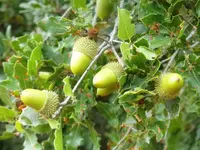
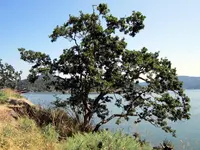
Kermes oak, Quercus coccifera, is a slow-growing evergreen shrub or small tree from the Mediterranean region. It usually forms dense, rounded thickets with many branches. Leaves are small, tough, and often spiny-edged, giving it a compact, defensive appearance that tolerates wind, drought, and poor, rocky soils. This species is naturally adapted to hot, dry summers and mild, wetter winters, which makes it well suited to low-water landscapes and coastal conditions. It prefers full sun and well-drained soil, and it generally grows slowly but steadily once established. For gardeners who want to care for Kermes Oak successfully, the main needs are good drainage, plenty of light, and avoiding overly rich, wet conditions.

Care Difficulty
Moderate Care

Light Preference
Full Sun

Water Requirements
Low Water

Temperature Preference
Cold Hardy

Hardiness Zone
7–10

Soil Texture
Sandy, Loamy, Rocky

Soil pH
Slightly acidic (6.5–7.0), Slightly alkaline (7.0–7.5)

Soil Drainage
Well-drained

Fertilization
Minimal (feed rarely)
Scan your plant to receive care tips personalized for your specific plant
Available on iOS and Android
This Mediterranean evergreen shrub thrives in bright, open conditions with long hours of sun.
This drought-tolerant shrub prefers infrequent, deep watering once established.
This evergreen shrub is adapted to warm, dry climates but withstands notable cold once established.
This Mediterranean evergreen oak tolerates a wide humidity range and usually does not need special humidity management.
This shrub prefers lean, mineral soils that drain quickly and do not stay wet.
This species can be grown in containers for many years, especially as a patio shrub or small standard.
This Mediterranean evergreen shrub or small tree needs only light feeding in most garden soils.
Quercus coccifera responds well to light structural pruning rather than heavy cutting.
This species is usually grown in the ground, so focus on careful transplanting rather than frequent repotting.
Propagation of Quercus coccifera is most reliable from seed, though it can be slow.
Mature plants are quite cold hardy in mild to moderate climates and usually need little winter care.

Plant Health Check
Not sure what's wrong with your plant? Check your plant's health inside the app.
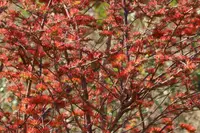
This oak is the classic host of the kermes scale insect (Kermes vermilio), historically harvested around the Mediterranean as a red dye source long before synthetic dyes existed.
Its dense, low, often multi-stemmed growth and ability to resprout strongly from the root crown after burning make it a characteristic, fire-resilient component of Mediterranean scrublands.
The small, thick, very spiny leaves are evergreen and sclerophyllous, an adaptation that reduces water loss and herbivory in hot, dry, and nutrient-poor Mediterranean environments.

In traditional Mediterranean livestock systems, its acorns and tough foliage have long been used as emergency fodder for goats and sheep during droughts or winter scarcity, giving the species notable value in low-input pastoral landscapes.
Yes, this species adapts well to containers if given a deep pot, very well-drained mineral-rich substrate, and full sun. Container plants need more frequent monitoring, pruning, and watering than those in open ground when growing Quercus coccifera.
Keep your plants happy and healthy with plant identification, disease detection, and easy care guidance.