Shelterbelt positioning
Site trees behind a windbreak or hedge on exposed land to reduce wind scorch and branch damage, especially in coastal areas where this species is often planted.

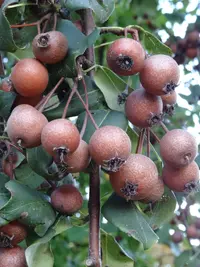
Plymouth pear, Pyrus cordata, is a small deciduous tree or large shrub from the pear family, typically forming a rounded crown with dense branching. It carries small, rounded leaves and clusters of white spring flowers, followed by hard, tiny pear-like fruits that are mainly valued for wildlife rather than eating. This species is native to western Europe, with wild populations in parts of southwest England and Brittany, often in hedgerows and woodland edges. It tends to be slow-growing and somewhat particular about site conditions, which can make it a little challenging to establish. It generally prefers full sun, moderately fertile, well-drained soil, and shelter from harsh exposure when you care for Plymouth Pear.

Care Difficulty
Moderate Care

Light Preference
Full Sun

Water Requirements
Moderate Water

Temperature Preference
Cold Hardy

Hardiness Zone
6–9

Soil Texture
Sandy, Loamy, Clay

Soil pH
Acidic (5.5–6.5), Slightly acidic (6.5–7.0)

Soil Drainage
Moist but well-drained

Fertilization
Minimal (feed rarely)
Scan your plant to receive care tips personalized for your specific plant
Available on iOS and Android
This small deciduous tree thrives in cool, bright outdoor conditions with moderate direct sun.
This species prefers consistently moist, well-drained soil rather than very dry or saturated conditions.
This hardy tree is adapted to cool temperate climates with cold winters and mild to warm summers.
This temperate woodland species tolerates a broad range of outdoor humidity and usually does not need special humidity management.
Pyrus cordata grows best in moderately fertile, well-structured mineral soils with reliable drainage.
This species can be grown in containers for several years, although it ultimately performs best in the ground.
This wild pear is adapted to low-nutrient soils and usually needs only light feeding in cultivation.
Pyrus cordata benefits from light, structured pruning to maintain a healthy, stable crown.
This small wild pear is usually grown in the ground, so transplanting timing and technique matter more than container repotting.
Pyrus cordata is usually propagated by seed or grafting and is considered moderately challenging for home growers.
This species is generally cold hardy in temperate climates and needs little special winter care once established.

Plant Health Check
Not sure what's wrong with your plant? Check your plant's health inside the app.
The wild fruits are very small, often only pea-sized, and usually hard and astringent, providing food mainly for birds and small mammals rather than for people.
This species is native to a narrow Atlantic fringe of western Europe, including parts of southwest England and Brittany, where it grows in exposed hedgerows, woodland edges, and scrub on acidic or neutral soils.
In the UK it is considered one of the rarest native trees, with very few naturally occurring populations, so existing stands are of high conservation interest and are monitored and sometimes managed through targeted Pyrus cordata care projects.

Genetic studies show that Pyrus cordata is distinct from the domesticated pear Pyrus communis, suggesting that, although related, it did not play a major direct role in the ancestry of modern cultivated dessert and cooking pears.
Poor flowering usually comes from insufficient light, heavy pruning of 1–2-year-old wood, or nutrient imbalance. Ensure full sun, avoid hard pruning in late winter, and use a balanced fertilizer if soil tests show deficiency.
Keep your plants happy and healthy with plant identification, disease detection, and easy care guidance.