white birch Care (Betula papyrifera)

Also known as: Canoe birch, Silver birch, White birch, American white birch, Paper White White Birch, paper-bark birch
white birch

About white birch

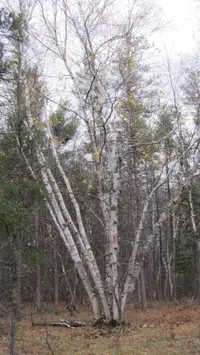
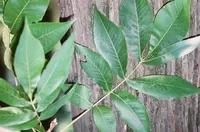
White birch, Betula papyrifera, is a medium-sized deciduous tree best known for its striking white peeling bark and fine, airy crown. It has triangular, serrated leaves that turn clear yellow in autumn, giving strong seasonal interest.

This species is native to cooler regions of North America, where it often grows in mixed forests, along lakeshores, and on well-drained slopes. It grows quickly but tends to be shorter-lived, and it dislikes heat, drought, and compacted urban soils.

Gardeners who care for white birch usually focus on providing cool roots, consistent moisture, and full sun to light shade in loose, slightly acidic soil.


Main Plant Requirements

Care Difficulty

Moderate Care

Light Preference

Full Sun

Water Requirements

Regular Water

Temperature Preference

Cold Hardy

Hardiness Zone

2–7

Soil Texture

Sandy, Loamy, Silty

Soil pH

Strongly acidic (4.5–5.5), Acidic (5.5–6.5)

Soil Drainage

Moist but well-drained

Fertilization

Minimal (feed rarely)

Get Personalized Care Plan

Scan your plant to receive care tips personalized for your specific plant

Available on iOS and Android

How to Care for the white birch

Betula papyrifera thrives as a full-sun, cold-climate tree with some tolerance for light shade.

  • Provide 6–8 hours of direct sun daily; morning to early afternoon sun promotes dense crowns and bright white bark on mature white birch.
  • Allow light or dappled shade in hotter regions, especially after 2–3 pm, to reduce leaf scorch and stress during summer heat waves.
  • Avoid deep shade, which leads to sparse growth and weak branches; give young trees an open site, increasing sun exposure as surrounding plants grow.

This species prefers consistently moist, cool soil and reacts quickly to both drought and prolonged saturation.

  • Water when the top 5–8 cm of soil feels barely moist, not dry and cracking; check near the drip line where feeder roots are most active.
  • During hot, dry periods, increase deep watering and mulch 5–8 cm thick to stabilize moisture; reduce added water in cool, rainy seasons.
  • Watch for wilting, curling, or yellowing leaves as signs of drought, and for leaf drop or dark, sour-smelling soil as signs of overwatering or poor drainage around Betula papyrifera roots.

This cold-hardy tree is adapted to cool climates but can struggle in prolonged summer heat.

  • Optimal growing temperatures are about 60–75°F (16–24°C) in the growing season, with cool nights that help reduce stress and improve vigor.
  • Dormant trees tolerate winter lows near -40°F (-40°C); established specimens handle repeated freezes without protection in suitable climates.
  • Heat above 85–90°F (29–32°C), especially with dry soil, can cause leaf scorch; provide mulch and adequate moisture during hot spells to limit stress and decline.

This species tolerates a wide humidity range outdoors, so humidity is rarely a limiting factor in typical landscapes.

This species prefers cool, moist, well-drained mineral soils that stay evenly damp but not waterlogged.

  • Use a deep, loamy soil with a mix of sand, silt, and organic matter to support extensive roots and steady moisture.
  • Aim for slightly acidic to neutral pH, around 5.0–7.0, which supports nutrient uptake and overall Betula papyrifera plant care.
  • Blend in compost or leaf mold to increase organic content while keeping texture crumbly, not sticky or compacted.
  • Avoid heavy clay, hardpan, or sites with standing water; improve drainage with coarse sand or fine gravel if soil stays saturated.

This species is generally unsuited to long-term container growing, except as a very short-term juvenile specimen.

  • Select an extra-deep, heavy container to reduce tipping risk as the trunk and canopy gain height and wind load.
  • Use a sharply draining, bark-based mix to limit waterlogging while still holding enough moisture for the fine roots.
  • Position the container where natural rainfall can supplement watering, but shield it from intense reflected heat that bakes the root zone.

Betula papyrifera usually grows well in average soil, but light fertilization can support young or stressed trees.

  • Use a balanced slow-release fertilizer (for example 10-10-10) or a thin layer of compost over the root zone in early spring.
  • Feed once each spring for landscape trees; container-grown white birch may benefit from a second light feeding in midsummer.
  • Apply at half the label rate for established trees to avoid excess, which can increase pest and drought stress.
  • Stop feeding by late summer so new growth hardens before winter dormancy.

Pruning Betula papyrifera focuses on safety, structure, and removal of weak wood rather than heavy shaping.

  • Schedule pruning in late fall or midwinter when sap flow is low, avoiding heavy cuts in early spring.
  • Remove dead, diseased, crossing, or storm-damaged branches first to improve air flow and reduce breakage risk.
  • Thin crowded interior branches lightly to maintain a single strong leader and balanced crown outline.
  • Use clean, sharp bypass pruners or a pruning saw, making cuts just outside the branch collar without leaving stubs.

Paper birch is rarely kept long term in containers, so management focuses on careful outdoor transplanting.

  • Transplant young trees in early spring or early fall when soil is cool and moist, avoiding hot, dry periods.
  • Choose a permanent site with full sun, cool moist soil, and good drainage to reduce future stress and decline.
  • For container seedlings, transplant when roots circle the pot or growth slows, gently loosening outer roots.
  • Water deeply before and after planting, keep the root ball at the same depth, and mulch 5–8 cm to limit shock.

Propagation of Betula papyrifera is most reliable from seed, with cuttings being more challenging for most growers.

  • Collect mature seeds from catkins in late summer to fall and store dry and cool until sowing.
  • Provide cold stratification at about 34–41°F for 6–8 weeks to break dormancy and improve germination.
  • Surface-sow seeds on a sterile, moist mix under bright light, as they need light exposure to sprout.
  • Keep the medium evenly moist, not waterlogged, and grow on in trays until seedlings are sturdy enough to plant out.

Mature paper birch is cold hardy in much of North America and usually needs minimal winter care once established.

  • Young trees benefit from 5–8 cm of organic mulch over the root zone, kept away from the trunk.
  • In windy or exposed sites, use a breathable trunk wrap on young stems to reduce sunscald and bark splitting.
  • Container-grown specimens in very cold climates should be sunk into the ground or moved into a sheltered, unheated area.

Care Tips

Establish a nurse canopy

Plant young trees on the north or east side of existing taller trees or structures to provide partial shelter from hot sun and wind during the first 3–5 years, then gradually thin surrounding vegetation to acclimate the birch to brighter conditions.

Protect shallow roots

Create and maintain a wide mulch ring at least 1.5–2 m across, keeping mulch 5–8 cm deep and pulled back 5–8 cm from the trunk, to shield the very shallow root system from mowing damage, soil compaction, and moisture loss.

Monitor bronze birch borer

Inspect upper branches and trunk yearly for dieback, D-shaped exit holes, and canopy thinning, and remove and destroy infested branches promptly while considering preventive trunk injections in regions where this pest is established.

Manage trunk sunscald

In open, reflective, or south-facing sites, wrap the trunk with breathable tree wrap from late fall to early spring or use a temporary shade barrier to reduce bark temperature swings that can cause cracking.

Plan short-lived replacements

Because many landscape white birches decline after 20–30 years, plan staggered plantings every 8–10 years so that new trees are establishing before older specimens begin to fail, which is a practical long-term strategy for growing white birch in designed landscapes.

Common Pests and Diseases

Bronze birch borer

This pest is a metallic wood-boring beetle whose larvae tunnel under the bark, causing thinning foliage, dieback from the top down, and eventual death of stressed trees.

Solution

Improve vigor with regular watering during dry periods and 5–8 cm of mulch over the root zone, avoid trunk injury, and promptly prune and destroy infested branches showing D-shaped exit holes or dead tops. In high-risk areas, certified arborists may use systemic insecticides timed to adult emergence, combined with long-term Betula papyrifera care focused on reducing heat and drought stress.

Birch leafminer

These insects are sawfly larvae that feed between the upper and lower surfaces of leaves, causing pale, blotchy mines that can merge and brown large parts of the leaf.

Solution

Rake and destroy fallen leaves to reduce overwintering populations, and prune out and discard branches with heavy, repeated damage. For active infestations, use targeted systemic or contact insecticides labeled for leafminers, applied in early spring when new leaves are expanding, or consider beneficial nematodes and parasitoid wasps where available.

Aphids

These insects cluster on young shoots and leaf undersides, sucking sap and causing curling leaves, sticky honeydew, and sometimes sooty mold on bark and foliage.

Solution

Spray colonies off with a strong stream of water, and encourage natural predators such as lady beetles by minimizing broad-spectrum insecticides. For persistent infestations, use insecticidal soap or horticultural oil thoroughly on affected shoots, repeating every 5–7 days until populations collapse.

Canker diseases

This disease group, often caused by fungi such as Cytospora species, produces sunken, discolored patches on bark that girdle branches and cause dieback above the infection site.

Solution

Prune out infected branches at least 15–20 cm below visible cankers during dry weather, disinfecting tools between cuts, and dispose of all removed material. Reduce stress by avoiding drought, soil compaction, and mechanical injury to trunks, and ensure good spacing and airflow to keep bark drier.

Leaf spot

Symptoms include small brown to black spots on leaves, sometimes with yellow halos, which may merge and lead to premature defoliation in humid seasons.

Solution

Remove and discard infected fallen leaves to lower the source of fungal spores, and avoid overhead watering that keeps foliage wet for long periods. In severe, recurring cases, apply a registered copper or other labeled fungicide at bud break and repeat as directed, focusing on good airflow through selective pruning to reduce future infection pressure.

Interesting Facts

Natural fire starter

The bark peels in thin, papery layers rich in natural oils that ignite even when damp, which led many Indigenous peoples and early explorers to use it as reliable tinder in cold northern forests.

Pioneer of cold forests

This species is one of the first trees to colonize recently disturbed or burned boreal sites, tolerating low temperatures and poor, exposed soils where many other trees fail to establish.

Key moose forage

In northern North America, moose heavily browse the twigs and saplings of this tree, and dense birch thickets can form important winter feeding areas for these large herbivores.

Botan icon

Did you know?

Indigenous cultures in northern North America traditionally used the white, waterproof bark of this tree to build lightweight, durable birchbark canoes and storage containers, taking advantage of the bark’s resistance to rot and its ability to be peeled in large, flexible sheets without killing the tree when harvested carefully.

FAQs about white birch

This species is generally fast-growing, often adding 30–60 cm per year in suitable conditions. Growth is quickest in cool climates with consistent moisture and slows significantly in hot, dry, or compacted urban sites.

Grow Healthy Plants with Botan Care

Keep your plants happy and healthy with plant identification, disease detection, and easy care guidance.

Botan plant care app — identify plants on mobile

Explore More Plants