Leaf harvest timing
Harvest outer leaves when they reach 8–15 cm, leaving the dense center rosette intact so the plant can keep photosynthesizing and produce new growth over a longer season.

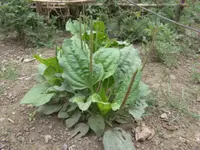
Greater plantain, Plantago major, is a hardy perennial herb often found in lawns, paths, and disturbed soil. It forms low rosettes of broad, oval leaves with parallel veins and short flower spikes on upright stalks.
This species is native to Europe and Asia but is now naturalized across much of North America and other temperate regions. It tolerates foot traffic, compacted soil, and urban conditions, which makes it very resilient.
Plantago major prefers sun to light shade and moderately moist, well-drained soil, yet it adapts to many sites. These traits make it easy to establish and explain how to care for Greater Plantain in simple garden settings.

Care Difficulty
Easy Care

Light Preference
Full Sun

Water Requirements
Moderate Water

Temperature Preference
Cold Hardy

Hardiness Zone
3–9

Soil Texture
Sandy, Loamy, Clay

Soil pH
Slightly acidic (6.5–7.0), Slightly alkaline (7.0–7.5)

Soil Drainage
Moist but well-drained

Fertilization
Minimal (feed rarely)
Scan your plant to receive care tips personalized for your specific plant
Available on iOS and Android
Plantago major thrives in open sites with ample light but tolerates some shade.
Plantago major prefers consistently moist, not saturated, soil.
This hardy perennial tolerates a wide temperature range once established.
This species is highly tolerant of a wide humidity range and rarely needs special humidity management.
Plantago major adapts to many soils but grows best in loose, moderately fertile substrates.
This species is suitable for container growing if the pot setup prevents waterlogging and compaction.
This hardy wild perennial usually performs well in average soil and needs only minimal feeding.
Pruning Plantago major is simple and mainly aimed at tidiness and seed control.
This species is usually grown in the ground, with transplanting more common than container repotting.
Plantago major is most often propagated from seed, though division is also possible.
This hardy perennial is cold tolerant and generally needs no special winter care in most temperate climates.

Plant Health Check
Not sure what's wrong with your plant? Check your plant's health inside the app.
This species, native to Eurasia, now grows on every continent except Antarctica, largely because it was unintentionally spread by European settlers in disturbed soils and along travel routes.
Plantago major thrives in heavily compacted, trampled ground due to its low rosette form and tough fibrous roots, which allow it to anchor in hard soil where many other herbs cannot survive.
Its flower spikes produce large numbers of tiny seeds with a sticky coating that helps them adhere to soil and surfaces, aiding local spread after rain and making grow Plantago major easy in disturbed habitats.

Indigenous peoples in North America noted that Plantago major appeared wherever Europeans settled and called it a settler’s or white man’s footprint, because the plant so reliably followed human movement and land disturbance.
This species spreads mainly by seed and can form dense patches in open soil or lawns. Regular mowing, removing seed spikes before they mature, and maintaining a thick turf help limit unwanted spread in managed areas.
Keep your plants happy and healthy with plant identification, disease detection, and easy care guidance.