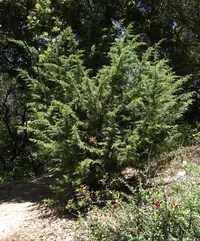
Italian Cypress Care (Cupressus sempervirens)

Also known as: Mediterranean Cypress, pencil cypress, common cypress
Italian Cypress

About Italian Cypress

Italian cypress, Cupressus sempervirens, is a long-lived coniferous tree valued for its very narrow, upright columnar shape. It keeps dense, scale-like evergreen foliage arranged tightly along slender vertical branches.

This species is native to the eastern Mediterranean region, where it grows in hot, dry summers and mild, wetter winters. Its natural adaptation to poor, rocky soils and drought makes it relatively undemanding once established.

In gardens and landscapes it is used for vertical accents, formal allees, and screening. It prefers full sun, well-drained soil, and low to moderate moisture, and understanding these conditions is key to how to care for Italian Cypress.

Main Plant Requirements

Care Difficulty

Moderate Care

Light Preference

Full Sun

Water Requirements

Low Water

Temperature Preference

Cold Hardy

Hardiness Zone

7–11

Soil Texture

Sandy, Loamy, Rocky

Soil pH

Slightly acidic (6.5–7.0), Slightly alkaline (7.0–7.5)

Soil Drainage

Well-drained

Fertilization

Minimal (feed rarely)

Get Personalized Care Plan

Scan your plant to receive care tips personalized for your specific plant

Available on iOS and Android

How to Care for the Italian Cypress

This species needs abundant direct sun to maintain dense, upright growth.

  • Provide 6–8 hours of direct sunlight daily; full sun exposure is ideal for healthy foliage and strong columnar form in Italian Cypress.
  • Tolerates light partial shade, especially in the afternoon, but prolonged shade leads to sparse growth, thinner crowns, and increased disease risk.
  • In hot summers, young plants benefit from morning sun with some protection from harsh late-afternoon sun to reduce leaf scorch and moisture stress.

Cupressus sempervirens prefers evenly moist but never waterlogged soil once established.

  • Water when the top 3–5 cm of soil is dry; newly planted trees may need deep watering every 5–7 days during the first growing season, depending on heat and rainfall.
  • Ensure sharply drained soil; watch for yellowing, dropping foliage and persistent soggy ground as signs of overwatering and possible root rot.
  • Mature trees are drought tolerant; in summer droughts, give a slow, deep soak when foliage dulls or lower sprays begin browning, then allow soil to dry between soakings.

This conifer thrives in warm, dry climates with mild winters.

  • Optimal growth occurs around 65–85°F (18–29°C), with strongest extension in warm springs and early summers when soil is not waterlogged.
  • Hardy down to about 10–15°F (-12 to -9°C) once established; young plants benefit from wind protection and mulching in colder zones to reduce root freezing.
  • Tolerates summer heat up to about 100°F (38°C) if soil is not saturated; avoid planting in frost pockets or areas with frequent freeze–thaw cycles that stress roots and bark.

This species prefers relatively dry air and usually adapts well to typical outdoor humidity in temperate regions.

  • Target 30–50% humidity; avoid persistently above 70% as this promotes fungal problems on foliage.
  • Dry indoor air is usually tolerated, but combined with heat it can cause browning tips and increased needle drop.
  • If foliage browns from dry air, group plants outdoors in a sheltered spot or use a shallow pebble tray nearby to gently raise humidity.

This conifer needs sharply drained, mineral-rich soil to prevent root problems and maintain compact growth.

  • Use a sandy or sandy-loam mix with high mineral content and only moderate organic matter to keep the root zone firm and aerated.
  • Ensure fast drainage by blending coarse sand or fine gravel with a basic potting mix at roughly 2:1, avoiding peat-heavy, water-retentive substrates.
  • Aim for slightly alkaline to neutral pH (around 7.0–7.8), which suits typical Cupressus sempervirens habitats and reduces nutrient imbalance risks.
  • Avoid compacted clay, chronic wet spots, or any site where water pools after rain, since low-oxygen conditions quickly damage fine roots.

This species can be grown in containers for several years if the pot and placement are managed for stability and drainage.

  • Choose a tall, heavy container that resists tipping, since the narrow, columnar canopy becomes top-heavy in strong wind.
  • Select thick-walled terracotta or concrete pots outdoors to moderate root temperature swings and prevent rapid drying around the root ball.
  • Fill the base with a shallow layer of coarse gravel only if the pot is very tall, to add weight without creating a perched water table.

Cupressus sempervirens benefits from light, controlled feeding rather than heavy fertilization.

  • Use a balanced slow-release fertilizer (for example 10-10-10 or 14-14-14) in spring for in-ground trees, or a diluted balanced liquid feed for containers.
  • Apply once at the start of the growing season; mature landscape trees in fertile soil often need no additional fertilizer.
  • For container-grown Italian Cypress, feed every 4–6 weeks in spring–summer at 1/2 strength to avoid root burn.
  • Stop feeding in late summer and avoid fertilizing in fall–winter to prevent tender, frost-sensitive growth.

Pruning Cupressus sempervirens is mainly for maintaining a narrow form and removing damaged growth.

  • Carry out light pruning in late winter to early spring before active growth starts.
  • Remove only dead, diseased, crossing, or storm-damaged shoots, cutting back to healthy wood with sharp bypass pruners or loppers.
  • Trim young green tips lightly to refine the columnar outline; avoid cutting back into old brown wood, which rarely resprouts.
  • Limit cuts to the outer foliage shell so the tree keeps dense coverage and natural vertical character.

Cupressus sempervirens is usually grown in the ground, so transplanting technique matters more than frequent repotting.

  • Transplant in late winter to early spring while growth is slow and soils are workable.
  • Move young trees when roots begin circling the container or growth slows, typically every 2–3 years in pots.
  • Prepare a hole 2–3× wider than the root ball, set the tree at the same soil depth, and backfill with native soil, not rich potting mix.
  • Water thoroughly after planting, keep soil evenly moist for the first season, and use mulch over the root zone to reduce stress.

Cupressus sempervirens is most commonly propagated from semi-hardwood cuttings or seeds in controlled conditions.

  • Take semi-hardwood cuttings in late summer, 8–12 cm long, from healthy, non-flowering shoots.
  • Remove lower foliage, dip the base in rooting hormone, and insert into a free-draining mix of sand and peat or perlite.
  • Maintain high humidity and bright, indirect light at 65–75°F; bottom heat speeds rooting.
  • Sow fresh seeds in autumn or spring in a gritty mix, providing stratification if recommended by the seed source.

Cupressus sempervirens is moderately cold hardy but young or potted plants benefit from basic winter care.

  • Established trees tolerate light to moderate frost but may be damaged by prolonged freezes below about 10–15°F, depending on cultivar and exposure.
  • Apply 5–8 cm of mulch over the root zone in late fall, keeping it slightly away from the trunk base.
  • Shelter young trees from drying winter winds using windbreak fabric or nearby structures to limit desiccation.
  • Move container plants to a sheltered, unheated but frost-free area with good light, and water sparingly to keep the root ball just moist.

Care Tips

Stake Young Trees

Install a single, sturdy stake on the windward side of newly planted trees and use soft, flexible ties set low on the trunk, then remove all staking after 1–2 years so the trunk can strengthen naturally.

Wind-Tunnel Spacing

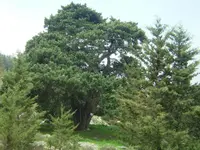
When planting a row, offset trees slightly rather than in a perfectly straight line and keep consistent gaps between them to reduce wind tunneling that can twist or snap tall, narrow crowns.

Salt And Drought Shield

In exposed or roadside sites, apply a 5–8 cm layer of inert mulch such as gravel or bark over the root zone, keeping it a few cm away from the trunk, to buffer roots from salt spray and water stress.

Root Flare Check

At planting and every few years, gently pull back soil or mulch to expose the root flare where the trunk widens, keeping this area just at or slightly above the finished soil line to prevent rot and instability when growing Italian Cypress.

Targeted Pest Monitoring

From spring through early fall, inspect interior foliage monthly for webbing, scale bumps, or browning sprays, and if present, clip out and dispose of affected twigs early to reduce the need for broad chemical treatments.

Common Pests and Diseases

Cypress aphids

These insects feed on the sap of young stems and foliage, causing yellowing, browning, and progressive dieback from the inside of the canopy outward.

Solution

Prune out and dispose of heavily infested shoots, then rinse foliage with a strong stream of water to knock off aphids. For persistent infestations, apply a horticultural oil or insecticidal soap thoroughly to the foliage, repeating as needed and monitoring nearby plants, as part of careful Cupressus sempervirens care instructions.

Cypress canker

This disease is caused by several Seiridium fungi and leads to sunken cankers on stems, resin bleeding, and dieback of individual branches, often in scattered patches along the tree.

Solution

Remove and destroy infected branches well below visible cankers, disinfecting pruning tools between cuts. Improve tree vigor with correct watering and mulch, avoid mechanical damage and overhead irrigation, and in high-risk areas space trees to improve airflow and reduce humidity around the canopy.

Cypress bark beetles

These insects tunnel under the bark of stressed trees, creating galleries that disrupt water flow and cause rapid yellowing and death of branches or entire trees in severe cases.

Solution

Promptly remove and destroy severely infested or dead trees to prevent beetles spreading, and avoid leaving fresh cypress logs or branches on site. Reduce stress by watering deeply but infrequently during drought, avoiding trunk injury, and maintaining overall tree health, since preventive cultural care is more effective than chemical treatments.

Spider mites

These pests are tiny sap-feeding arachnids that thrive in hot, dry conditions, causing fine stippling, dull or bronzed foliage, and delicate webbing in the inner canopy.

Solution

Spray foliage thoroughly with water to wash off mites and increase humidity slightly around the tree, especially during hot, dry weather. For heavier infestations, apply horticultural oil or insecticidal soap to all foliage surfaces, repeating at labeled intervals and keeping the tree well watered but not overwatered to reduce stress.

Phytophthora collar and root disease

This disease is caused by Phytophthora water molds, leading to thinning foliage, general decline, and sometimes dark, sunken lesions at the root collar near the soil line.

Solution

Improve drainage by avoiding low, waterlogged sites, adjusting irrigation so soil dries slightly between waterings, and never piling mulch against the trunk. Remove severely affected young plants, and where Phytophthora is confirmed, avoid replanting susceptible cypress in the same poorly drained location or use resistant rootstocks if available.

Interesting Facts

Columnar crown genetics

This species shows a strong genetic tendency toward a very narrow, column-like crown, which is why most trees keep their slim silhouette even without pruning and pass this shape reliably to their offspring.

Wind and drought tolerance

Its small scale-like leaves, thick cuticle, and deep root system reduce water loss and help the tree survive hot, dry summers and strong Mediterranean winds on rocky slopes.

Long historical cultivation

Archaeological and textual evidence shows this tree has been planted around Mediterranean graveyards, sacred sites, and roadsides since ancient Greek and Roman times, making it one of the region’s oldest continuously cultivated ornamentals.

Botan icon

Did you know?

Some individuals of this species are believed, based on historical records of plantings at monasteries and ancient sites, to have lifespans approaching 1,000 years, which is one reason it became a symbol of permanence and mourning in Mediterranean cultures.

FAQs about Italian Cypress

Growth is usually moderate, around 30–60 cm per year once established. Rate varies with climate, soil quality, and water availability. Good site preparation and avoiding severe drought or waterlogging help maintain a steady vertical growth pattern.

Grow Healthy Plants with Botan Care

Keep your plants happy and healthy with plant identification, disease detection, and easy care guidance.


Botan plant care app — identify plants on mobile

Explore More Plants