North Japanese hill cherry Care (Prunus sargentii)

Also known as: Sargent's Cherry
North Japanese hill cherry

About North Japanese hill cherry

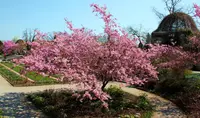
The North Japanese hill cherry, Prunus sargentii, is a deciduous flowering tree valued for its spring blossoms and strong seasonal interest. It develops a rounded crown with upright branches and attractive bark, making it useful as a landscape feature tree.

This species is native to Japan and neighboring regions of East Asia, where it grows in cool to temperate mountain forests. It is generally considered a durable ornamental cherry, with better cold tolerance and disease resistance than many other flowering cherries.

Gardeners who learn how to care for North Japanese hill cherry usually find it moderately easy to grow when given full sun, well-drained soil, and consistent moisture during establishment.

Main Plant Requirements

Care Difficulty

Moderate Care

Light Preference

Full Sun

Water Requirements

Moderate Water

Temperature Preference

Cold Hardy

Hardiness Zone

4–7

Soil Texture

Sandy, Loamy, Clay

Soil pH

Acidic (5.5–6.5), Slightly acidic (6.5–7.0)

Soil Drainage

Moist but well-drained

Fertilization

Minimal (feed rarely)

Get Personalized Care Plan

Scan your plant to receive care tips personalized for your specific plant

Available on iOS and Android

How to Care for the North Japanese hill cherry

Prunus sargentii performs best in full sun but tolerates light shade in hotter regions.

  • Provide 6–8 hours of direct sun daily; in hot summers, aim for morning sun with light afternoon shade to reduce leaf scorch risk.
  • In mild climates, full sun all day promotes dense branching, strong flowering, and good autumn color in North Japanese hill cherry.
  • Young trees benefit from some filtered light during their first 1–2 summers while roots establish, especially on south- or west-facing sites.

Prunus sargentii prefers evenly moist, well-drained soil rather than frequent shallow watering.

  • During the first 2–3 growing seasons, water when the top 5–8 cm of soil feels dry, applying a deep soak to wet the root zone 20–30 cm down.
  • Reduce watering in autumn and winter, providing only enough to prevent the soil from staying bone dry for long periods.
  • Watch for limp, curling leaves and dry twig tips as signs of underwatering; yellowing leaves and soggy soil indicate excess water or poor drainage.

This cherry tree is a cold-hardy species that thrives in temperate climates with distinct seasons.

  • Optimal growing-season temperatures are around 60–77°F (16–25°C), with active shoot growth and good flower bud formation in this range.
  • Mature trees tolerate winter lows near -20°F (-29°C), but young trees benefit from protection from drying winds and sudden freeze–thaw cycles.
  • In summer, brief heat up to about 90°F (32°C) is tolerated if soil moisture is maintained; prolonged hotter spells increase stress and leaf scorch risk.

Humidity is rarely limiting for Prunus sargentii in typical outdoor conditions.

  • Target 40–60% humidity, which most temperate outdoor climates naturally provide.
  • The tree tolerates short dry-air spells but may show marginal leaf browning and earlier leaf drop in very arid sites.
  • In hot, dry regions, cluster plantings or nearby shrubs can slightly raise local humidity around North Japanese hill cherry foliage.

Prunus sargentii grows best in deep, moist, well-drained mineral soil with moderate organic matter.

  • Use a loamy soil structure with roughly equal parts sand, silt, and clay, plus 20–30% compost to support root development.
  • Aim for slightly acidic to neutral pH, around 6.0–7.0, since strongly alkaline soil can limit nutrient uptake and weaken growth.
  • Improve drainage and aeration on heavy sites by incorporating coarse sand or fine gravel into the top 30–40 cm before planting.
  • Avoid compacted, waterlogged, or very shallow soils, which increase risk of root rot and poor anchorage for the mature tree.

This species is only moderately suitable for short-term container growing, mainly when young.

  • Select a heavy, stable pot that resists wind tipping as the crown becomes wider and more top-heavy.
  • Use a deep container to provide vertical root space, as shallow pots restrict the taproot and reduce drought resilience.
  • Choose a mineral-based mix that drains freely yet retains some moisture, since very peat-heavy mixes can cause waterlogging in large pots.

This cherry is modest in its nutrient needs but benefits from light feeding in poor or depleted soils.

  • Use a balanced slow-release fertilizer (around 10-10-10) or well-rotted compost once in early spring as growth begins.
  • Apply at 1/2 the label rate for ornamental trees, keeping granules off the trunk and foliage.
  • In average garden soil, one feeding per year is enough for North Japanese hill cherry; skip summer doses unless growth is weak.
  • Do not fertilize in late summer or fall, and avoid any feeding during winter dormancy.

Prunus sargentii needs only light, well-timed pruning to maintain structure and health.

  • Carry out main pruning in late winter or right after flowering, before strong new growth hardens.
  • Remove dead, diseased, or damaged wood first, then thin crossing or crowded branches to open the canopy.
  • Use clean, sharp bypass pruners or a pruning saw, making cuts just outside the branch collar.
  • Limit pruning to moderate reshaping; heavy cutting can reduce flowering and encourage weak, vertical shoots.

This cherry is usually grown in the ground, so focus on correct transplanting rather than frequent repotting.

  • Transplant in late fall or early spring while the tree is dormant to reduce shock.
  • Look for signs such as girdling roots in a nursery container or slow, stunted growth indicating it has outgrown its pot.
  • Plant at the same depth as in the container, spreading roots outward in a wide hole with loosened surrounding soil.
  • Water deeply after planting, then keep soil evenly moist and apply 5–8 cm of mulch to limit root stress.

Propagation of Prunus sargentii is possible but usually handled by nurseries rather than home growers.

  • Sow fresh seed in fall outdoors or with cold stratification at 34–41°F for 2–3 months to break dormancy.
  • Use a free-draining, sterile seed mix and keep it evenly moist until germination in spring.
  • Semi-hardwood cuttings in midsummer need high humidity, bottom heat, and rooting hormone for best success.
  • Grafted plants on suitable rootstocks often perform better, but grafting requires specific skill and tools.

This cherry is generally cold hardy in typical temperate climates and needs only minimal winter care.

  • Tolerates freezing temperatures in USDA zones around 4–7 once established.
  • Apply a 5–8 cm mulch layer over the root zone in late fall, keeping it a few cm away from the trunk.
  • For young or container-grown trees, shield the root zone from severe freeze-thaw cycles and strong winter wind.
  • Move containers to a sheltered, unheated but frost-moderated spot if roots might experience extreme cold.

Care Tips

Root flare check

At planting and every few years, gently expose the top of the root flare by removing excess mulch and soil so the first main roots sit just at or slightly above soil level, which helps prevent girdling roots and trunk rot.

Wind and snow management

In exposed sites, site the tree where nearby structures or windbreaks reduce prevailing winds, and after heavy, wet snows lightly broom off accumulating snow from young branches to limit breakage.

Branch angle training

On young trees, use cloth ties and stakes or spreaders in late spring to widen very narrow branch crotch angles to about 45–60°, which produces a stronger scaffold framework that resists splitting later.

Spring frost mitigation

In regions with late frosts, avoid low pockets where cold air settles and use a very light, breathable row cover on small trees during forecast frost nights to protect flower buds and maintain consistent blooming when growing North Japanese hill cherry.

Trunk and mulch protection

Install a light-colored tree guard or hardware cloth around the lower trunk and maintain a 5–10 cm mulch-free ring at the base to protect against sunscald, mower damage, and rodent gnawing during winter.

Common Pests and Diseases

Black knot

This disease causes hard, black, swollen galls on twigs and branches, which gradually girdle and kill affected wood. Symptoms include rough, elongated swellings that turn from green-brown to coal black over time.

Solution

Prune out infected twigs and branches at least 15–20 cm below visible galls during dry weather and destroy the prunings; disinfect tools between cuts. Improve airflow by thinning dense growth, avoid overhead irrigation, and monitor nearby Prunus species so heavily infected trees can be removed to reduce spore sources as part of general Prunus sargentii care instructions.

Cherry leaf spot

This disease produces small purple to brown spots on leaves that can merge and cause yellowing and early leaf drop. Severe infections weaken the tree over several seasons.

Solution

Rake and remove fallen leaves in autumn to reduce fungal spores and avoid wetting foliage when watering. In regions with a history of leaf spot, use a registered fungicide timed to early leaf expansion and again after petal fall, following local extension guidance for stone fruit trees.

Powdery mildew

This disease appears as white, powdery patches on young leaves, shoots, and sometimes flower buds, which may curl or distort. Symptoms include reduced vigor and unsightly foliage, especially in shaded or crowded sites.

Solution

Prune to open the canopy and increase light and air movement, and remove heavily affected shoots. Avoid high-nitrogen fertilization, water at soil level, and in recurrent problem areas consider a preventive fungicidal spray such as horticultural oil or sulfur applied according to label directions.

Aphids

These insects cluster on young shoots and the undersides of leaves, sucking sap and causing curling, distortion, and sticky honeydew. This pest can attract sooty mold on the honeydew and stress new growth.

Solution

Spray colonies off tender shoots with a firm stream of water and encourage natural predators such as lady beetles by minimizing broad-spectrum insecticides. For persistent infestations, apply insecticidal soap or a light horticultural oil thoroughly to new growth, repeating as needed according to the product label.

Japanese beetles

These insects skeletonize leaves by feeding between the veins and can cause significant defoliation in mid-summer. This pest often appears in groups and prefers sunny, exposed foliage and flowers.

Solution

Hand-pick beetles in early morning and drop them into soapy water to reduce numbers, focusing on the first few days of emergence. Avoid placing beetle traps near the tree, and in high-pressure areas consider protective netting or a targeted insecticide approved for ornamental cherries, applied following local regulations and timing guidelines.

Interesting Facts

High cold tolerance

This species is notably hardy for a flowering cherry, tolerating winter temperatures typical of USDA zone 4, which allows it to grow reliably in colder regions than many ornamental cherries.

Early spring display

Its flowers often open before or just as the leaves emerge, creating a strong visual contrast between the pink blossoms and still-bare branches, especially noticeable in climates with distinct winters.

Distinctive autumn color

The foliage develops strong orange to reddish-purple tones in autumn, making it one of the more valued ornamental cherries for fall color as well as spring flowering.

Botan icon

Did you know?

This species is one of the parent plants used in breeding several modern ornamental cherry cultivars, contributing genes for both cold hardiness and vivid flower color in urban and park plantings.

FAQs about North Japanese hill cherry

This species usually flowers in early to mid-spring, often before full leaf-out. The main blossom display is brief, typically 7–14 days, but cool, mild weather and sheltered sites can extend flower longevity somewhat.

Grow Healthy Plants with Botan Care

Keep your plants happy and healthy with plant identification, disease detection, and easy care guidance.

Botan plant care app — identify plants on mobile

Explore More Plants