West African albizzia Care (Albizia adianthifolia)

Also known as: Flat-crown Albizia, Flat-crown
West African albizzia

About West African albizzia

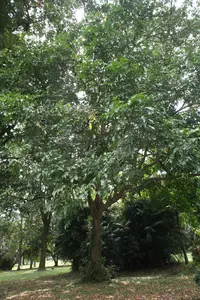
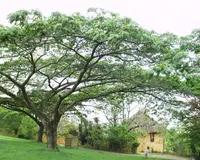
West African albizzia (Albizia adianthifolia) is a fast-growing, deciduous tree from tropical and subtropical regions of West and Central Africa. It often forms a broad, light crown that gives soft, dappled shade.

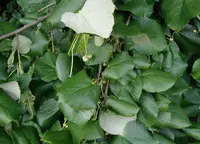
The tree has fine, feathery, bipinnate leaves and pale, fluffy flower heads that attract insects. Its open canopy and relatively shallow root system make it suitable for light shade rather than dense screening.

In its native range it grows in woodland edges, savannas, and disturbed sites, showing good tolerance to heat and seasonal dryness once established. For those learning how to care for West African albizzia, the key points are its need for sun, well-drained soil, and protection from severe frost.

Main Plant Requirements

Care Difficulty

Moderate Care

Light Preference

Full Sun

Water Requirements

Moderate Water

Temperature Preference

Tropical / Frost Sensitive

Hardiness Zone

10–12

Soil Texture

Sandy, Loamy, Organic-rich

Soil pH

Acidic (5.5–6.5), Slightly acidic (6.5–7.0)

Soil Drainage

Well-drained

Fertilization

Minimal (feed rarely)

Get Personalized Care Plan

Scan your plant to receive care tips personalized for your specific plant

Available on iOS and Android

How to Care for the West African albizzia

This fast-growing tree needs bright outdoor light to develop a balanced crown and healthy foliage.

  • Provide 6–8 hours of sun daily, with morning sun and light afternoon shade; young West African albizzia trees scorch in intense midafternoon sun, especially in hot, dry climates.
  • Plant in a position with open sky and only light dappled shade; dense shade leads to sparse branching, elongated shoots, and fewer flowers.
  • In hot summers, offer filtered light through taller trees; in cooler coastal areas it tolerates more direct sun but monitor for leaf curl or brown leaf margins.

This species prefers evenly moist, free-draining soil and reacts quickly to prolonged drought or saturation.

  • Water when the top 3–5 cm of soil feels dry, then soak the root zone deeply so moisture reaches 20–30 cm; allow excess water to drain away.
  • During the first 2–3 growing seasons, check soil weekly in warm weather; reduce watering in cool or rainy periods to prevent root rot and fungal issues.
  • Watch for wilted, folding leaflets and dry twigs as signs of underwatering, and for yellowing leaves, soft new growth, and persistent soggy soil as signs of overwatering in Albizia adianthifolia.

This tree is adapted to warm, frost-free to very light-frost climates and slows growth in cooler conditions.

  • Optimal growth occurs around 70–86°F (21–30°C); active shoot and leaf production are strongest in consistently warm weather with moderate humidity.
  • The tree is damaged below about 30°F (-1°C) and may die back or fail in areas with repeated hard frosts; young plants are more cold-sensitive than older, established trees.
  • Mature trees tolerate brief heat up to about 100°F (38°C) if soil moisture is adequate; during heatwaves, deeper watering and mulch help protect fine feeder roots from stress.

This species accepts a fairly wide humidity range but benefits from slightly moist air when grown indoors.

  • Aim for 40–60% humidity for West African albizzia, as prolonged air below 30% can dry leaf tips and edges.
  • Crisping leaf margins and increased leaf drop during heated winters often indicate humidity stress rather than underwatering.
  • Use grouped plants, a nearby humidifier, or a wide pebble tray under (not touching) the pot to raise local humidity without waterlogging roots.

Albizia adianthifolia prefers loose, well-aerated soil that drains quickly but does not dry out instantly.

  • Use a sandy-loam style mix such as 2 parts compost or leaf mold, 1 part coarse sand, and 1 part perlite or fine bark for structure and aeration.
  • Ensure water drains through in seconds, not minutes; soggy, slow-draining substrates encourage root rot and poor growth.
  • Keep pH slightly acidic to neutral, around 6.0–7.0, avoiding strongly alkaline mixes that can limit nutrient uptake and cause chlorosis.
  • On heavy clay sites, raise the planting area or container and blend in coarse sand and bark chips to improve drainage and oxygen around the roots.

This species can be grown in containers when managed as a juvenile tree or maintained at a modest size.

  • Select a wide, heavy container to counterbalance the spreading canopy and reduce the risk of the pot tipping in wind.
  • Choose a breathable material such as unglazed clay if outdoor conditions are wet, to help excess moisture evaporate from the root zone.
  • Provide a deep enough pot to allow a developing taproot and lateral roots to spread without circling tightly along the base.

This fast-growing leguminous tree needs only light feeding in most garden soils, as caring for West African albizzia focuses more on water and light than on fertilizer.

  • Use a balanced, slow-release fertilizer (around 10-10-10) or a thin layer of compost in early spring to support new growth.
  • Feed once at the start of the growing season; a second light application in mid-summer is enough in poor soils.
  • Dilute liquid fertilizers to 1/2 strength for container plants to avoid root burn and excessive leafy growth.
  • Skip feeding in late fall and winter to allow natural dormancy and prevent soft, frost-prone shoots.

Pruning Albizia adianthifolia helps maintain a strong framework and safe, balanced canopy.

  • Carry out main pruning in late winter or very early spring before active growth starts.
  • Remove dead, diseased, storm-damaged, or crossing branches first to improve safety and airflow.
  • Thin crowded interior shoots to allow more light, which encourages a healthier canopy and better flowering.
  • Use clean, sharp bypass pruners or a pruning saw, making smooth cuts just outside the branch collar.

This species is usually grown in the ground, so management focuses on careful transplanting of young trees rather than frequent repotting.

  • Transplant in late winter or early spring when the tree is dormant and temperatures are mild.
  • Look for circling roots in nursery pots or slowed growth as signs a young Albizia adianthifolia needs a larger space.
  • Move up only 1–2 pot sizes or into a well-prepared planting hole with free-draining, moderately fertile soil.
  • Water thoroughly after planting, then keep soil evenly moist and shade the canopy lightly for 1–2 weeks to reduce transplant shock.

Albizia adianthifolia is commonly propagated from seed, with cuttings used less often for specific selections.

  • Collect ripe pods in late summer or fall, then dry and store seeds cool and dry until spring sowing.
  • Scarify hard seed coats lightly with sandpaper and soak for 12–24 hours to improve germination.
  • Sow seeds in a free-draining mix, keep at 70–80°F, and maintain light, even moisture until seedlings emerge.
  • For semi-hardwood cuttings, use rooting hormone, provide bright shade, high humidity, and bottom warmth to encourage rooting.

This tree is frost-sensitive and needs protection in regions with cold winters, especially when young or container-grown.

  • In mild climates, apply a 5–8 cm mulch layer over the root zone in late fall, keeping mulch off the trunk.
  • In cooler areas, grow in large containers and move indoors or to a frost-free greenhouse before temperatures drop near 32°F.
  • Shelter young outdoor trees from cold winds and heavy frost using breathable fabric or temporary windbreaks.

Care Tips

Early framework training

In the first 2–3 years, select 1 strong central leader and 3–5 well-spaced lateral branches, then remove competing stems gradually to build a stable canopy and reduce future storm breakage.

Root zone protection

Keep a grass-free, mulched ring 60–90 cm around the trunk to minimize competition, prevent mower damage to the thin bark, and maintain a cooler, moister root zone.

Wind exposure management

On exposed sites, install temporary windbreak netting or plant on the leeward side of a building or taller trees to reduce limb breakage while the tree establishes a strong root system.

Targeted structural pruning

Inspect annually for narrow crotch angles and crossing branches, then remove or shorten them during the dry season to lower the risk of split limbs as the canopy becomes heavier.

Understory planting strategy

Use deep-rooted or shade-tolerant groundcovers instead of shallow, thirsty plants under the canopy to limit competition and simplify caring for West African albizzia in mixed plantings.

Common Pests and Diseases

Mistletoe

This pest is a parasitic plant that attaches to branches, stealing water and nutrients and weakening the canopy over time. Symptoms include dense clumps of evergreen shoots on branches, dieback beyond the infection point, and reduced vigor.

Solution

Prune out infected branches at least 30–40 cm below the mistletoe attachment point, disinfecting tools between cuts, and destroy removed material. Improve overall tree health through appropriate watering and mulching so it can compartmentalize wounds, and avoid leaving small mistletoe fragments on the tree, as these can regrow.

Powdery mildew

This disease produces white, powdery fungal growth on young leaves, shoots, and sometimes flower buds, especially in warm, dry air with poor airflow. Symptoms include distorted new growth, premature leaf yellowing, and reduced photosynthesis.

Solution

Improve air circulation by selective thinning of crowded branches and avoid overhead watering late in the day. Remove and dispose of heavily infected leaves, and apply a sulfur or potassium bicarbonate fungicide labeled for ornamental trees at the first signs of disease, repeating as directed in humid or stagnant conditions.

Leaf spot

This disease causes small brown, tan, or purple lesions on the leaf blade that may enlarge, merge, and lead to partial defoliation during wet, warm periods. Symptoms include scattered necrotic spots often with yellow halos and early leaf drop on lower and inner branches.

Solution

Collect and discard fallen leaves and prunings to reduce fungal or bacterial inoculum, and water at soil level to keep foliage dry. For repeatedly affected landscape trees, apply a copper-based or chlorothalonil fungicide at the start of the rainy season according to label directions, focusing on thorough coverage of the canopy.

Scale insects

These insects attach to twigs and leaves, feeding on sap and excreting honeydew that encourages sooty mold growth. Symptoms include sticky leaves, black fungal coating, yellowing foliage, and reduced vigor on stressed trees, especially in warm, sheltered sites.

Solution

Prune out and destroy heavily infested twigs and improve tree vigor with proper watering and soil management. For remaining populations, wash accessible branches with a strong stream of water, then treat with horticultural oil during the active crawler stage, ensuring thorough coverage of stems and leaf undersides.

Bark-boring beetles

These insects tunnel into the trunk and branches, disrupting the flow of water and nutrients, particularly in drought-stressed or newly transplanted trees. Symptoms include small round exit holes, fine frass (sawdust-like material) at the base of the tree, branch dieback, and thinning foliage.

Solution

Promptly prune and dispose of dead or dying branches to limit beetle breeding sites and avoid mechanical injuries to the trunk that attract borers. Maintain strong tree health through regular deep watering during dry periods and mulching, and consult a certified arborist about targeted trunk or soil-applied systemic treatments if active infestations are detected, as part of broader Albizia adianthifolia care instructions.

Interesting Facts

Night-scented flowers

This species opens its small white flower heads mainly at night and releases a noticeable fragrance that attracts nocturnal moths and other night-flying pollinators in its native African habitats.

Nitrogen-fixing crown tree

It forms root nodules with nitrogen-fixing bacteria, which allows it to enrich poor soils and often dominate the upper canopy of moist woodlands and forest margins in West and Central Africa.

Flexible, feathery foliage

The bipinnate leaves are highly divided into many small leaflets and show nyctinasty, folding or drooping at night and during drought stress, which reduces water loss and physical damage from wind and heavy rain.

Botan icon

Did you know?

In parts of its native range, especially in West Africa, this species is frequently left standing when land is cleared for farming, because its light, high canopy casts filtered shade that protects understory crops while still allowing enough sunlight for productive cultivation.

FAQs about West African albizzia

This species is generally fast-growing, often adding 30–90 cm of height per year once established. Growth is quickest in warm climates with deep, fertile, well-drained soil and regular moisture, and slows noticeably in compacted or dry sites.

Grow Healthy Plants with Botan Care

Keep your plants happy and healthy with plant identification, disease detection, and easy care guidance.

Botan plant care app — identify plants on mobile

Explore More Plants