Young tree staking
Stake newly planted trees with 2–3 flexible ties placed low and mid-trunk for only the first 1–2 years, then remove the stakes so the trunk can strengthen naturally in the wind.

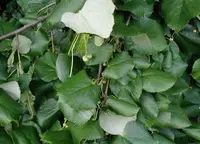
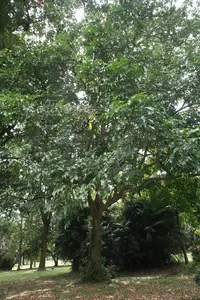
Silver lime, Tilia tomentosa, is a large deciduous tree valued for its attractive foliage and fragrant summer flowers. It is commonly planted as a street and park tree in many temperate cities. Its broad, heart-shaped leaves are dark green above and silvery beneath, giving the canopy a shimmering look in wind. Mature trees develop a strong central trunk and a high, rounded crown. The species is native to southeastern Europe and western Asia, where it grows in mixed forests and along river valleys. It adapts well to urban conditions, but care for Silver Lime is easier in well-drained soil with moderate moisture and full sun to light shade.

Care Difficulty
Moderate Care

Light Preference
Full Sun

Water Requirements
Moderate Water

Temperature Preference
Cold Hardy

Hardiness Zone
4–7

Soil Texture
Loamy, Clay, Organic-rich

Soil pH
Slightly acidic (6.5–7.0), Neutral (7.0)

Soil Drainage
Moist but well-drained

Fertilization
Minimal (feed rarely)
Scan your plant to receive care tips personalized for your specific plant
Available on iOS and Android
This large deciduous tree prefers bright, open sites with moderate sun exposure for balanced growth.
This species prefers consistently moist yet free-draining soil, especially during establishment.
This hardy temperate tree tolerates a wide range of outdoor temperatures once established.
This species is generally tolerant of a wide humidity range and does not need special humidity management outdoors.
Tilia tomentosa prefers deep, fertile, loamy soil that holds moisture but does not stay saturated.
This large tree is generally unsuitable for long-term container growing, except for short-term use with young specimens.
Tilia tomentosa benefits from light, balanced nutrition but often grows acceptably even in average urban soils.
Tilia tomentosa responds well to thoughtful structural pruning that maintains a strong framework and safe clearance.
This species is usually grown in the ground, so management focuses on correct transplanting rather than frequent repotting.
Tilia tomentosa is usually raised in nurseries, and garden-scale propagation is slow and somewhat specialized.
Mature Tilia tomentosa trees are cold hardy in most temperate climates and usually need minimal winter care once established.

Plant Health Check
Not sure what's wrong with your plant? Check your plant's health inside the app.
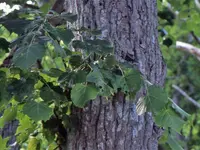
The leaves have a dark green upper surface and a densely hairy, silvery underside, which gives the whole crown a shimmering appearance in wind and helps reduce water loss through transpiration in hot, dry conditions.
Silver lime is widely planted as a street tree in European cities because it tolerates urban air pollution, compacted soils, and de-icing salts better than many other lime (linden) species.
Its late-summer flowers are rich in nectar and strongly fragrant, attracting many bees and other pollinators; flowering time often extends the foraging season after other limes have finished blooming.

Many old specimens of Tilia tomentosa in European cities are living cultural landmarks, often planted in 19th-century boulevards and public squares, so individual trees can be traced in historical records for more than a century.
This tree is considered moderately fast-growing, often adding 30–60 cm of height each year under good conditions. Growth is quicker in deep, moist, fertile soil and slower in compacted, dry, or nutrient-poor sites.
Keep your plants happy and healthy with plant identification, disease detection, and easy care guidance.