Wind-harden young plants
Expose container-grown juveniles to increasing wind over several weeks before planting out, or use temporary windbreaks, so the trunk and roots strengthen and fronds are less likely to snap in coastal or open sites.

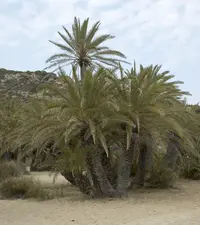
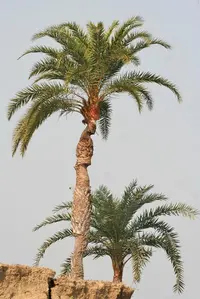
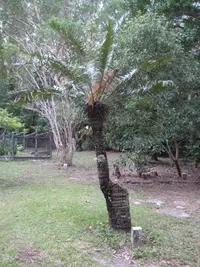
The Cretan date palm, Phoenix theophrasti, is a hardy, clumping palm native to Crete and a few nearby eastern Mediterranean coasts. It forms multiple slender trunks with dense crowns of stiff, feather-like fronds that give a more rugged look than the common date palm.
In the wild it grows in rocky coastal areas and gorges, so it tolerates wind, salt spray, and poor, gritty soil. Its slow growth and strong drought resistance can make it relatively low-maintenance where winters are mild.
Understanding how to care for Cretan date palm starts with giving it plenty of sun, well-drained soil, and protection from severe, prolonged frost.

Care Difficulty
Moderate Care

Light Preference
Full Sun

Water Requirements
Low Water

Temperature Preference
Warm Climate

Hardiness Zone
8–11

Soil Texture
Sandy, Loamy, Rocky

Soil pH
Slightly acidic (6.5–7.0), Slightly alkaline (7.0–7.5)

Soil Drainage
Well-drained

Fertilization
Minimal (feed rarely)
Scan your plant to receive care tips personalized for your specific plant
Available on iOS and Android
This Mediterranean palm benefits from strong, direct light and adapts well to full sun in warm climates.
This drought-tolerant palm prefers deep, infrequent watering once established.
This species thrives in warm, dry climates and handles more cold than many other date palms.
This Mediterranean palm tolerates relatively dry air but grows best with modest ambient humidity.
This species prefers mineral, sharply drained soil that mimics its dry, rocky native habitat.
This palm is suitable for long‑term container culture when given stable, well‑drained conditions.
Phoenix theophrasti grows slowly and needs only modest, carefully measured feeding in cultivation.
Phoenix theophrasti benefits from light, targeted pruning rather than heavy shaping.
Young Phoenix theophrasti tolerates transplanting if handled gently, but older palms prefer to stay in place.
Phoenix theophrasti is propagated almost exclusively from seeds, which can be slow and variable to germinate.
This palm is relatively cold tolerant for a date palm but still benefits from some winter protection in harsh climates.

Plant Health Check
Not sure what's wrong with your plant? Check your plant's health inside the app.
Phoenix theophrasti is one of the very few true palms native to Europe, naturally occurring in Crete and a few small Aegean coastal sites in Greece and southwestern Turkey.
This species grows naturally on coastal cliffs and beaches and shows notable tolerance to salt spray and strong coastal winds compared with many other Phoenix species.
It often forms dense thickets through suckering from the base, creating multi-stemmed groups that help stabilize slopes and coastal habitats.

Theophrastus, often called the father of botany, is honored in the species name theophrasti because historical texts suggest he may have been describing this palm or a closely related form when writing about palms in the ancient Mediterranean world.
This species grows slowly, often adding only 10–20 cm of trunk per year under good outdoor conditions. Cool temperatures, dry soil, or nutrient-poor sites can reduce growth even further, so patience is essential when establishing specimens.
Keep your plants happy and healthy with plant identification, disease detection, and easy care guidance.