Foxtail palm Care (Wodyetia bifurcata)

Foxtail palm

About Foxtail palm

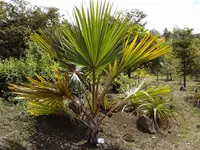
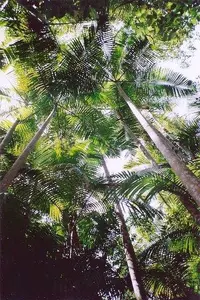
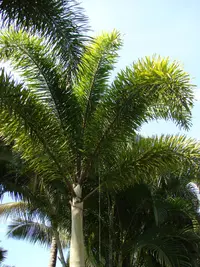
The foxtail palm, Wodyetia bifurcata, is a fast-growing, single-trunk palm valued for its clean look and symmetrical crown. It forms full, bushy fronds that resemble a fox’s tail, giving the plant a distinctive, textured appearance in landscapes.

This species comes from rocky, tropical areas of north-eastern Australia, where it grows in full sun and warm, frost-free conditions. It adapts fairly well in cultivation but needs warmth, good light, and well-drained soil to stay healthy.

Gardeners appreciate its relatively low maintenance once established, though young plants require protection from cold and drying winds. Understanding how to care for Foxtail palm helps prevent nutrient problems that can affect palm fronds and trunk strength.

Main Plant Requirements

Care Difficulty

Moderate Care

Light Preference

Full Sun

Water Requirements

Moderate Water

Temperature Preference

Tropical / Frost Sensitive

Hardiness Zone

10–11

Soil Texture

Sandy, Loamy, Organic-rich

Soil pH

Acidic (5.5–6.5), Slightly acidic (6.5–7.0)

Soil Drainage

Well-drained

Fertilization

Light (every 4–6 weeks)

Get Personalized Care Plan

Scan your plant to receive care tips personalized for your specific plant

Available on iOS and Android

How to Care for the Foxtail palm

This sun-loving palm thrives in bright, open positions with plenty of direct light.

  • Provide 6–8 hours of direct sun daily; full sun is ideal once established, though young plants benefit from light afternoon shade in very hot inland areas.
  • Foxtail palm tolerates light partial shade (around 3–4 hours direct sun) but may grow thinner and develop a less full crown in lower light.
  • In summer, monitor for leaf scorch from reflected heat; in winter, ensure sites are not heavily shaded so fronds still receive several hours of unobstructed light.

This palm prefers evenly moist but not saturated soil, especially while establishing.

  • Water when the top 3–5 cm of soil feels dry, then irrigate deeply so moisture reaches the full root zone, particularly during the first 2–3 growing seasons.
  • Ensure fast-draining soil; soggy conditions cause yellowing fronds, soft trunk tissue, and root rot, especially if combined with cool weather.
  • In hot, dry summers increase frequency if leaf tips brown or fronds droop, but in cooler months reduce watering so Wodyetia bifurcata does not sit in cold, wet soil.

This species is a warm-climate palm that prefers consistently mild to hot conditions without frost.

  • Optimal growth occurs around 70–90°F (21–32°C), where fronds expand quickly and the crown fills out with dense foliage.
  • The palm tolerates brief drops to about 30–32°F (-1–0°C) but foliage can burn; sustained freezing or hard frost may kill young or newly planted specimens.
  • Handle high heat of 95–105°F (35–40°C) by ensuring adequate soil moisture and some wind exposure, and protect from cold winter winds in marginal climates to reduce chill damage.

This species handles a fairly wide humidity range but benefits from moderate ambient moisture.

  • Aim for 40–60% humidity; typical indoor levels are usually adequate for Foxtail palm.
  • It tolerates short dry spells, but very dry heated air can cause leaflet tip browning and frayed edges.
  • Increase humidity locally by grouping plants, placing a wide water tray with pebbles nearby, or using a small humidifier in very dry rooms.

This palm prefers sharply drained, slightly sandy soil that still holds some organic matter.

  • Use a loose mix of roughly 50–60% coarse sand or grit with the rest peat-free compost and fine bark to mimic the free-draining conditions Wodyetia bifurcata experiences in nature.
  • Ensure very fast drainage; water should run through immediately with no puddling or lingering surface gloss.
  • Keep pH slightly acidic to neutral, around 6.0–7.0, avoiding highly alkaline mixes that can lock up micronutrients and cause leaf yellowing.
  • Improve aeration by avoiding compaction, incorporating chunky particles like pine bark or pumice, and never growing the palm in heavy clay or waterlogged ground.

This palm can be grown in containers when space, drainage, and stability are carefully managed.

  • Select a deep, heavy container to counterbalance the tall, top-heavy crown and reduce tipping in strong wind.
  • Choose thick-walled clay or concrete pots outdoors to moderate root temperature swings and slow moisture loss in hot sun.
  • Elevate the pot slightly on feet or blocks so gravity can pull water fully out of the drainage holes after each watering.

This palm responds well to moderate feeding during warm months, which supports steady growth and healthy fronds.

  • Use a slow-release palm fertilizer or balanced NPK such as 8-2-12 with added magnesium and micronutrients for Foxtail palm.
  • Feed every 2–3 months during spring–summer, applying evenly over the root zone and watering in well.
  • Reduce or stop feeding in fall–winter when growth slows, especially in cooler regions.
  • Avoid overconcentration; follow label rates and never exceed recommended strength to prevent root and leaf burn.

Pruning Wodyetia bifurcata is mainly cosmetic and focuses on removing unhealthy or hazardous fronds.

  • Carry out pruning in late winter to early spring in warm climates, or after the risk of frost in marginal areas.
  • Remove only dead, fully brown, broken, or severely diseased fronds; leave green fronds to maintain energy production.
  • Use clean, sharp loppers or a pruning saw, cutting close to the trunk without gouging the bark.
  • Avoid over-thinning the canopy, as excessive removal weakens the palm and can lead to sunscald on the trunk.

Transplanting this palm is done infrequently and should be planned carefully to reduce stress and establishment problems.

  • Look for roots circling the container drainage holes, soil drying out very quickly, or slowed growth as signs a potted plant is pot-bound.
  • Schedule transplanting for late spring to early summer when soil is warm, aiming for 2–3 years between container size increases.
  • Move the root ball gently, keep as much soil attached as possible, and avoid breaking large structural roots.
  • Water thoroughly after transplanting, provide light shade for 1–2 weeks, and maintain even moisture until new growth resumes.

New plants are typically produced from seed, as vegetative methods are not practical for this palm species.

  • Harvest ripe, orange-red seeds and clean off all fruit pulp to reduce fungal problems before sowing.
  • Sow in late spring to early summer in a warm, bright location with temperatures around 75–85°F and high humidity.
  • Use a sterile, well-draining mix such as 50% coarse sand or perlite with 50% peat or coco coir.
  • Keep the medium evenly moist but not waterlogged; germination is slow and may take several months, so maintain stable conditions.

Cold sensitivity means this palm needs thoughtful winter management in regions with frost or extended cool periods.

  • In ground, it performs best in climates where temperatures rarely drop below 30°F; young plants are more vulnerable.
  • Apply a 5–8 cm mulch layer around the root zone in fall, keeping it slightly away from the trunk to limit rot.
  • For container plants, shift them indoors or into a heated greenhouse before the first frost, providing bright light.
  • During cool months, water less often, allowing the top soil layer to dry slightly while avoiding complete root desiccation.

Care Tips

Protect young trunk

Stake newly planted specimens with 2–3 sturdy stakes set outside the root ball and use soft, flexible ties so the slender trunk stays stable in strong wind without rubbing or girdling the bark.

Spacing for full crown

Allow at least 2.5–3 m of horizontal space from buildings and other trees so the arching fronds and swollen crownshaft can develop fully without shading or mechanical damage.

Salt and wind management

In coastal sites, install windbreak shrubs or fencing on the prevailing-wind side to reduce leaf shredding and salt burn while still maintaining good air movement around the canopy.

Mulch for root zone

Maintain a 5–8 cm layer of coarse organic mulch in a wide ring under the canopy, keeping it 10–15 cm away from the trunk, to moderate soil temperature, retain moisture, and encourage a broad, healthy root system when growing Foxtail palm.

Cold snap preparation

In regions with occasional drops below 35°F, wrap the upper trunk and crown with breathable frost cloth the day before a forecast cold snap and remove it promptly once temperatures rise to prevent rot and heat buildup.

Common Pests and Diseases

Palm aphids

These insects cluster on young fronds and flower stalks, sucking sap and causing yellowing, leaf distortion, and sticky honeydew that can lead to sooty mold.

Solution

Prune and discard heavily infested fronds, then hose down remaining foliage to dislodge colonies and honeydew; follow with a targeted treatment using insecticidal soap or a light horticultural oil, repeating every 7–10 days until new growth is clean.

Royal palm bugs

This pest feeds inside the folded spear and on newly emerging leaflets, producing pale streaks, small necrotic spots, and a general tatty look to new fronds, especially in warm, dry weather.

Solution

Inspect the emerging spear and youngest fronds regularly; remove and destroy severely damaged spears and treat the crown area with a systemic insecticide labeled for palm bugs, ensuring thorough coverage early in the growing season to prevent repeated damage when growing Foxtail palm.

Spiraling whiteflies

These insects form white, waxy spirals and patches on the undersides of fronds, causing leaf yellowing, premature leaf drop, and heavy honeydew with black sooty mold.

Solution

Rinse undersides of fronds with a strong stream of water to remove nymphs and honeydew, prune off badly affected leaves, and use insecticidal soap or horticultural oil directed at lower leaf surfaces, repeating applications as new generations appear.

Ganoderma butt rot

This disease is caused by a soil-borne fungus that attacks the lower trunk, leading to slow decline, reduced vigor, and eventual death; hard, shelf-like conks may form at the base of the palm.

Solution

Remove and destroy affected palms including as much of the stump and major roots as possible, avoid replanting palms in the same exact spot, and focus on prevention by avoiding trunk wounds and improving drainage rather than attempting fungicide treatment, which is ineffective once symptoms appear.

Lethal yellowing

This disease is a phytoplasma infection spread by planthoppers that causes premature fruit drop, yellowing and collapse of older fronds, and eventual crown death, often progressing over several months.

Solution

At early stages, systemic antibiotic trunk injections done by a certified arborist may slow or suppress the disease; remove and destroy palms with advanced symptoms and consider planting resistant species nearby, while controlling planthopper vectors and monitoring neighboring palms closely.

Interesting Facts

Foxtail leaf structure

Its leaflets are arranged radially around the rachis, giving the frond a bottlebrush or fox tail look that is unusual among palms and inspired its common name, foxtail palm.

Origin in a sandstone gorge

This palm is native to a very restricted area of exposed sandstone ridges and gorges in the Cape Melville region of northeastern Queensland, Australia, where it grows in nutrient-poor, rocky soils and seasonally dry conditions.

Late scientific discovery

Although locally known to Indigenous Australians, this species was only formally described by science in 1983, making it a relatively recent addition to documented palm diversity.

Botan icon

Did you know?

Foxtail palm seeds became so heavily collected and traded for ornamentals in the late 20th century that Australian authorities moved to regulate and restrict wild seed harvesting from its small natural population in Cape Melville National Park.

FAQs about Foxtail palm

Yellowing fronds usually result from nutrient deficiencies, especially magnesium or potassium, or from chronic overwatering causing root stress. Older fronds naturally yellow and die with age; only be concerned when many newer leaves yellow together.

Grow Healthy Plants with Botan Care

Keep your plants happy and healthy with plant identification, disease detection, and easy care guidance.

Botan plant care app — identify plants on mobile

Explore More Plants