Red latan palm Care (Latania lontaroides)

Also known as: red latania
Red latan palm

About Red latan palm

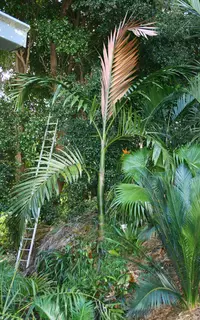
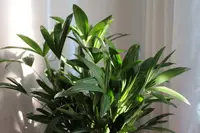
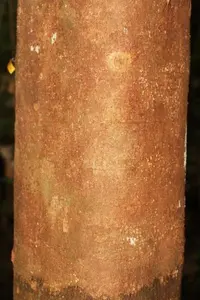
Red latan palm, Latania lontaroides, is a slow-growing fan palm valued for its bold architectural form. Young plants show striking red to bronzy petioles and leaf bases that gradually age to gray.

This species is native to the Mascarene Islands in the Indian Ocean, where it grows in sunny, coastal, and seasonally dry habitats. Its slow growth, single trunk, and stiff, rounded fronds make it best suited to warm outdoor climates or large, bright indoor spaces.

It prefers strong light, good air movement, and well-drained, gritty soil, which helps prevent rot. Understanding these natural conditions provides a good foundation for how to care for Red latan palm in home or landscape settings.

Main Plant Requirements

Care Difficulty

Moderate Care

Light Preference

Full Sun

Water Requirements

Moderate Water

Temperature Preference

Tropical / Frost Sensitive

Hardiness Zone

10–11

Soil Texture

Sandy, Loamy, Organic-rich

Soil pH

Acidic (5.5–6.5), Slightly acidic (6.5–7.0)

Soil Drainage

Well-drained

Fertilization

Light (every 4–6 weeks)

Get Personalized Care Plan

Scan your plant to receive care tips personalized for your specific plant

Available on iOS and Android

How to Care for the Red latan palm

This sun-loving palm needs strong light to color well and grow compact foliage.

  • Provide 6–8 hours of direct sun daily; full sun is best from morning through mid-afternoon for strong red petioles on Red latan palm.
  • In hot inland or tropical sites, give light afternoon shade or filtered light to prevent leaf scorch, especially on young plants.
  • Avoid deep shade; less than 4 hours of sun leads to stretched growth and dull color, so choose an open, unshaded planting position.

Latania lontaroides prefers evenly moist but never soggy soil once established.

  • Allow the top 3–5 cm of soil to dry before watering; use this as a guide rather than a fixed schedule in garden plantings.
  • Increase watering in hot, dry periods when new fronds are expanding, and reduce frequency in cooler months when growth slows.
  • Watch for yellowing, limp fronds and sour-smelling soil as signs of overwatering; crisp browning tips and slow growth indicate the plant is staying too dry.

This palm thrives in warm, frost-free climates and reacts badly to cold snaps.

  • Aim for 70–85°F (21–29°C) for active growth; stable warmth encourages strong trunk development and leaf production.
  • Protect from cold below 40°F (4°C); brief dips to 35°F (2°C) may be tolerated, but repeated exposure risks leaf damage and decline.
  • Avoid planting in frost pockets or exposed windy sites; in heat above 95°F (35°C), provide deep soil moisture and some afternoon shade to limit stress.

This palm prefers moderately dry air and usually adapts well to typical household humidity.

  • Aim for 40–60% humidity, as consistently higher moisture around foliage is unnecessary for this dry-tolerant species.
  • Leaf tips browning, folding, or becoming brittle while soil moisture is correct may indicate air that is too dry.
  • Increase humidity only if needed by grouping plants, placing the pot on a pebble tray, or using a small humidifier near the Red latan palm.

This species prefers a sharply drained, mineral-rich substrate that mimics sandy coastal soils.

  • Use a sandy or gritty loam with 30–50% inert material such as coarse sand, pumice, or perlite to prevent waterlogging around the roots.
  • Incorporate a small amount of compost or well-rotted bark to provide nutrients without making the mix heavy or compacted.
  • Aim for slightly acidic to neutral pH (6.0–7.0), avoiding strongly alkaline mixes that may reduce nutrient availability over time.
  • For Latania lontaroides, avoid dense clay, peat-heavy mixes, or any substrate that stays wet for more than 2–3 days after thorough watering.

This palm can be grown in containers, especially while young or in cooler climates.

  • Choose a deep, heavy pot that resists tipping, as the plant eventually develops a thick trunk and stiff, wind-catching fronds.
  • Select containers with wide drainage outlets so coarse, gritty mixes do not clog and trap water at the base.
  • Use a slightly wider-than-rootball diameter to balance root space with fast drying, which reduces the risk of chronic soggy conditions.

This slow-growing palm benefits from light, steady feeding during the warm season, especially in containers.

  • Use a balanced slow-release fertilizer (for example 10-10-10 or 14-14-14) formulated for palms at the start of spring.
  • Apply every 3–4 months during the growing season, following label rates and avoiding over-application around the trunk.
  • For potted Red latan palm, use a half-strength balanced liquid feed every 4–6 weeks on moist soil.
  • Stop feeding in late fall and winter, when growth is minimal, to prevent soft, frost-sensitive tissue.

Latania lontaroides needs minimal pruning, mainly to remove spent or damaged fronds.

  • Carry out pruning in late spring or early summer, once the risk of frost has passed and growth is active.
  • Remove only completely brown, dead, or badly damaged fronds, cutting them close to the trunk without injuring live tissue.
  • Avoid cutting green fronds, since they support photosynthesis and overall vigor and help maintain the natural architectural shape.
  • Use clean, sharp loppers or a pruning saw, disinfecting blades between cuts to reduce the risk of disease entry.

This palm is usually grown in the ground, with transplanting done carefully while young to avoid root damage.

  • Plan transplanting in late spring or early summer, once soils are warm and stable weather is expected.
  • Look for roots circling the pot, slow growth despite good care, or water running straight through as signs a container plant needs more space.
  • Shift to a container only 1–2 in wider, using a free-draining, gritty mix, and keep the root ball as intact as possible.
  • Water thoroughly after moving, shade lightly for 1–2 weeks, and avoid heavy feeding until new growth confirms recovery.

Propagation of this palm is done almost exclusively from seed and is considered slow and specialized.

  • Use fresh, ripe seed from healthy Latania lontaroides plants, as older seed loses viability quickly.
  • Sow in late spring or early summer into a sterile, very well-drained mix kept at 75–85°F with steady moisture, not saturation.
  • Provide bright, indirect light and high humidity; germination can be slow and uneven, often taking several months.
  • Transplant seedlings only once they form several strong leaves and a firm root system, handling roots gently to limit shock.

This tropical palm is frost-sensitive and needs protection in climates with cool or freezing winters.

  • Avoid exposure below about 32°F; in marginal zones, plant in the warmest, most sheltered microclimate available.
  • Mulch the root zone with 5–8 cm of coarse organic material in late fall, keeping mulch away from the trunk base.
  • Wrap the crown and young trunk with breathable frost cloth during cold snaps to reduce leaf and bud damage.
  • Move container plants indoors or into a heated greenhouse before night temperatures drop near freezing, providing bright light.

Care Tips

Early trunk training

Stake young plants with 2–3 sturdy stakes placed outside the root zone to keep the trunk upright in windy sites, checking ties every 3–4 months so they do not bite into the expanding stem tissue.

Protect juvenile leaves

In the first 2–3 years, use a low, breathable windbreak fence or shade cloth on the windward side to reduce tearing of the large juvenile fronds while the root system establishes.

Salt and spray management

In coastal plantings, hose down foliage with fresh water every 2–4 weeks during dry periods to remove salt spray and fine dust that can clog stomata and reduce photosynthesis.

Cold event preparation

Before a forecast cold snap below 40°F, water the root zone thoroughly, apply a 5–8 cm mulch ring, and loosely wrap the crown with frost cloth to reduce cold stress and spear damage.

Root zone protection

Keep turfgrass and groundcovers at least 60–90 cm away from the base and use a wide, clean mulch ring so mower and string-trimmer damage to the trunk and surface roots does not compromise long-term Latania lontaroides care.

Common Pests and Diseases

Red palm mite

This pest feeds on the undersides of fronds, causing fine yellow speckling that can progress to bronzing and premature leaf decline. Symptoms include very small red mites and fine webbing visible on close inspection.

Solution

Rinse fronds thoroughly with a strong stream of water, focusing on the undersides, and repeat weekly until populations drop. For heavier infestations, apply a horticultural oil or insecticidal soap labeled for mites, making sure to coat both sides of the fronds and improving air movement and reducing dust to discourage reinfestation.

Paysandisia palm borer

This insect’s larvae tunnel through the trunk and leaf bases, leading to distorted new growth, yellowing, and eventual collapse of the crown in severe cases. Symptoms include oozing sap, frass (sawdust-like material), and damaged spear leaves.

Solution

Remove and destroy heavily infested or dead palms to prevent spread and inspect regularly for fresh frass or damage at the crown. In regions where this pest is present, follow local extension guidance for preventive systemic insect treatments and keep the palm as stress-free as possible with proper watering and nutrition to increase resilience.

Scale insects

These insects attach to leaf stalks and fronds, sucking sap and causing yellowing, reduced vigor, and sticky honeydew that can attract sooty mold. Symptoms include small dome-shaped or oval bumps clustered along veins and petioles.

Solution

Wipe affected areas with a cloth or soft brush dipped in water with a small amount of mild soap to dislodge scales, repeating every 7–10 days. For persistent infestations, use horticultural oil directed at the crawler stage and monitor new growth closely as part of broader Latania lontaroides plant care.

Leaf spot

This disease causes small brown, gray, or black lesions that may enlarge and merge, giving fronds a scorched or patchy appearance. Symptoms include spots with darker margins and, in humid conditions, possible fungal growth on affected tissue.

Solution

Prune and discard affected fronds, avoiding healthy tissue as much as possible, and keep water off the foliage, especially in cool or humid weather. Improve spacing and air circulation, water at the soil level, and if the problem persists, apply a palm-safe fungicide according to label directions while also avoiding overhead irrigation.

Bud rot

This disease affects the central growing point, leading to collapse or browning of the spear leaf and failure of new leaves to emerge. Symptoms include soft, foul-smelling tissue in the crown and rapid decline of the newest fronds while older ones remain temporarily green.

Solution

Remove and dispose of all rotting crown tissue and any fallen infected material, keeping the crown area as dry as possible. Preventive measures are critical: avoid overwatering into the crown, improve drainage, protect the palm from prolonged cold and wet conditions, and in high-risk areas consider preventive fungicide drenches labeled for palm bud rot after consulting local horticultural guidance.

Interesting Facts

Striking juvenile coloration

Young plants produce bright red petioles and leaf bases that gradually turn gray-green as the palm matures, a feature that makes it very distinctive among island fan palms.

Endemic to Réunion

This species occurs naturally only on Réunion Island in the Indian Ocean, where it grows in dry lowland habitats and coastal areas on rocky, well-drained substrates.

Slow-growing fan palm

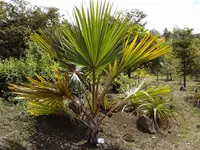
It forms a stout, solitary trunk with a compact crown of stiff, fan-shaped leaves, but growth is slow, so wild individuals can take many years to reach full height.

Botan icon

Did you know?

The wild populations of this palm are considered threatened in its native range on Réunion due to habitat loss and land use change, so many plants seen in gardens and collections are important ex situ conservation material that helps preserve its genetic diversity.

FAQs about Red latan palm

Growth is slow to moderate. Under warm, bright, coastal or subtropical conditions, it usually adds about 15–30 cm of trunk per year once established. Young plants may sit almost unchanged for several years while building roots.

Grow Healthy Plants with Botan Care

Keep your plants happy and healthy with plant identification, disease detection, and easy care guidance.

Botan plant care app — identify plants on mobile

Explore More Plants