Flamethrower Palm Care (Chambeyronia macrocarpa)

Also known as: Red Leaf Palm
Flamethrower Palm

About Flamethrower Palm

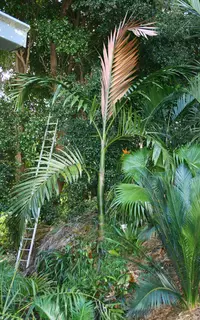
The flamethrower palm, Chambeyronia macrocarpa, is a slow-growing, solitary palm valued for its striking new fronds that emerge bright red before turning deep green. It develops a smooth, ringed trunk and a full, arching crown, giving a lush, tropical appearance even at a young age.

This species is native to the rainforests of New Caledonia, where it grows under warm, humid, partially shaded conditions. It is considered moderately easy if its need for consistent moisture, protection from strong drying winds, and frost-free conditions is respected.

Gardeners who care for Flamethrower Palm usually focus on providing filtered light, evenly moist but well-drained soil, and shelter from extreme heat or cold.

Main Plant Requirements

Care Difficulty

Moderate Care

Light Preference

Partial Shade

Water Requirements

Moderate Water

Temperature Preference

Tropical / Frost Sensitive

Hardiness Zone

10–11

Soil Texture

Sandy, Loamy, Organic-rich

Soil pH

Acidic (5.5–6.5), Slightly acidic (6.5–7.0)

Soil Drainage

Moist but well-drained

Fertilization

Light (every 4–6 weeks)

Get Personalized Care Plan

Scan your plant to receive care tips personalized for your specific plant

Available on iOS and Android

How to Care for the Flamethrower Palm

This palm prefers bright, filtered light similar to a lightly shaded tropical understory.

  • Provide 3–5 hours of gentle morning sun with bright shade or dappled light the rest of the day for healthy fronds and strong color in Flamethrower Palm.
  • Allow partial shade, especially in hotter regions; protect from harsh midday and afternoon sun that can scorch leaflets and bleach the new red frond.
  • In cooler or cloudier seasons, choose a spot with slightly more exposure, but still filtered, to compensate for lower light intensity.

This species prefers evenly moist but not waterlogged soil throughout the growing season.

  • Before watering, let the top 3–5 cm of soil or topsoil dry; soil below should feel slightly cool and moist, not soggy.
  • Use deep watering so moisture reaches the root zone, then allow excess to drain freely; Chambeyronia macrocarpa reacts poorly to standing water with yellowing, limp, or collapsing fronds.
  • In warm months, monitor more often as evaporation increases; in cooler seasons, extend intervals, watching for dry, crisp leaflet tips as a sign to water sooner.

This palm thrives in consistently warm, frost-free conditions.

  • Aim for 70–85°F (21–29°C) for active growth, with night temperatures ideally staying above 60°F (16°C).
  • It tolerates brief drops to about 40–45°F (4–7°C) but foliage damage and growth slowdown occur as temperatures approach this range.
  • Avoid frost and freezing conditions, and protect from extreme heat above 95°F (35°C) with extra shade and moisture to limit stress and leaf burn.

This palm prefers consistently moist air and reacts quickly to very dry conditions.

  • Aim for 60–80% humidity; it tolerates brief dips lower but not prolonged dry indoor air.
  • Low humidity causes browning leaf tips, crisp margins, and slower new frond expansion.
  • Increase humidity with pebble trays under the pot, grouping plants, or a humidifier when caring for Flamethrower Palm.

Chambeyronia macrocarpa grows best in deep, moist, well-drained, organic-rich soil.

  • Use a loose loam made from roughly 50% peat- or coco-based potting mix, 25% compost, and 25% coarse material such as perlite or pine bark fines.
  • Ensure rapid drainage; water should pass through within seconds and not leave the mix waterlogged for hours.
  • Maintain slightly acidic to neutral pH around 6.0–7.0 for best nutrient availability and root activity.
  • Avoid heavy clay, compacted ground, or mixes dominated by fine sand that hold water but limit aeration and root oxygen.

This species can be grown in containers for many years, especially in its juvenile stage.

  • Choose a tall, heavy container that resists tipping as the trunk elongates and fronds become sail-like in wind.
  • Select potting media that stays evenly moist but drains fast so the container root zone does not overheat or go anaerobic.
  • Leave several cm of headspace below the rim so deep, slow watering can saturate the full root profile without spilling.

This palm benefits from light, consistent feeding during active growth but resents heavy fertilization.

  • Use a balanced slow-release palm fertilizer (for example, 8-2-12 or similar) or well-aged compost mixed into the topsoil in spring.
  • Feed Flamethrower Palm every 2–3 months during the warm growing season, following label rates rather than guessing.
  • Apply at 1/2–3/4 the recommended strength for container plants to avoid salt buildup and root burn.
  • Stop or greatly reduce feeding in fall and winter, when growth slows and nutrient demand drops.

Chambeyronia macrocarpa needs minimal pruning focused on cleanliness rather than shaping.

  • Carry out light pruning in late spring or early summer once any risk of frost has passed.
  • Remove only dead, yellowing, or storm-damaged fronds, cutting them close to the trunk without injuring live tissue.
  • Avoid cutting green, healthy fronds, since this can slow growth and weaken the palm’s natural form.
  • Use clean, sharp bypass loppers or a pruning saw, disinfected before and between cuts to limit disease spread.

This palm grows slowly and dislikes frequent root disturbance, so transplant only when necessary.

  • Look for roots circling the container, pushing through drainage holes, or noticeably slowed growth as signs it needs a larger pot or ground planting.
  • Plan repotting or transplanting in late spring to early summer, when soil is warm and recovery is fastest.
  • Move up only 1 pot size, handling the root ball gently and keeping as much original soil around the roots as possible.
  • Water thoroughly after planting, provide light shade for 1–2 weeks, and maintain even moisture to reduce transplant shock.

Chambeyronia macrocarpa is propagated almost exclusively from seeds and is slow to start.

  • Collect fresh, ripe seeds and clean off all fruit pulp, which can inhibit germination and encourage mold.
  • Sow in warm conditions around 77–86°F with high humidity and a free-draining, slightly moist substrate such as sand and peat or coco coir.
  • Maintain steady warmth using a heat mat if needed; germination can take several months, so patience is essential.
  • Keep seedlings in bright, indirect light and avoid disturbing their roots while they develop their first several leaves.

This palm is frost sensitive and needs protection in regions with cool or freezing winters.

  • Aim to keep temperatures above 40°F; brief dips just below this may cause leaf damage but can be survivable.
  • Apply a 5–8 cm mulch layer around the root zone in late fall, keeping it slightly away from the trunk base.
  • Wrap the crown and young trunk of outdoor specimens with breathable frost cloth during expected freezes.
  • Move container-grown plants indoors or into a heated greenhouse before night temperatures drop near 40°F.

Care Tips

Root flare check

When planting or repotting, ensure the top of the root ball and trunk base (root flare) sit just at soil level to prevent rot in this moisture-sensitive palm.

Mulch for cool roots

Apply a 5–8 cm ring of coarse organic mulch around the root zone, keeping it 5–8 cm away from the trunk, to keep roots cool and stable in warm climates.

Trunk wind support

In windy or exposed sites, stake the palm loosely with soft ties for the first 1–2 years so the root system can anchor fully without the trunk rubbing or snapping.

Salt exposure management

In coastal areas, choose a planting spot sheltered from direct ocean winds and periodically hose off foliage to reduce salt buildup on the leaf surface.

Slow acclimation outdoors

For Flamethrower Palm indoor care, move containers outdoors for the warm season only after gradually increasing light and airflow over 10–14 days to avoid leaf scorch and shock.

Common Pests and Diseases

Palm leaf spot

This disease causes brown to black spots, often with yellow halos, on the leaflets of young and mature fronds, especially in humid, shaded conditions. Symptoms include slow expansion of lesions that can merge and cause partial leaflet blight.

Solution

Remove and discard heavily spotted fronds, keep the canopy dry by watering at soil level, and improve spacing and airflow around the palm. In persistent humid conditions, apply a copper-based fungicide labeled for palms according to directions as part of broader Chambeyronia macrocarpa care.

Ganoderma butt rot

This disease affects the lower trunk and root crown, leading to a gradual decline, frond yellowing, and reduced vigor, often followed by the appearance of hard, varnished, shelf-like fruiting bodies at the base. Symptoms include internal trunk decay that cannot be reversed once advanced.

Solution

Remove any palms showing conks and dispose of the stump and as many infected roots as practical, then avoid planting another palm in the same exact spot. Maintain good soil drainage, avoid trunk wounds, and do not bury the root crown to reduce the risk of new infections.

Palm aphids

These insects cluster on young fronds, leaf bases, and flower stalks, sucking sap and excreting sticky honeydew that can lead to sooty mold on the leaves. This pest may cause leaf distortion and general decline in heavily infested young specimens.

Solution

Wash colonies off with a firm stream of water and prune heavily infested small fronds if practical. For ongoing issues, use an insecticidal soap or horticultural oil spray, ensuring thorough coverage of leaf undersides and tight leaf bases, and repeat as needed according to label directions.

Scale insects

These insects appear as small, dome-shaped or flattened bumps on leaf midribs, petioles, and sometimes trunks, often going unnoticed until leaves yellow and growth slows. This pest feeds on sap and can weaken the palm over time, especially in warm, sheltered sites.

Solution

Gently scrape or wipe light infestations with a soft cloth or brush dipped in soapy water, focusing on midribs and leaf bases. For larger populations, apply horticultural oil during mild weather to smother the scales, repeating treatments at intervals until new growth emerges clean.

Bud rot

This disease attacks the growing tip (bud) of the palm, leading to collapse or easy pull-out of the spear leaf and blackened, soft tissue in the crown region. Symptoms include sudden decline of the newest fronds while older leaves may remain green for some time.

Solution

Remove and destroy affected spear leaves and any obviously rotted tissue, improving drainage and avoiding overhead watering to keep the crown as dry as possible. In early stages and in warm, wet climates, a systemic fungicide labeled for palm bud rot can be drench-applied to the crown and root zone following label instructions, though severely affected palms often cannot be saved.

Interesting Facts

New leaf turns red

Newly emerging leaves are naturally bright red and only stay that way for a few days before turning green, which is why the palm is called flamethrower or red leaf palm.

Endemic New Caledonian species

This palm occurs naturally only on the island of New Caledonia in the southwest Pacific, where it grows in humid lowland and montane forests on well-drained soils.

Slow but long-lived

The species grows slowly, especially in its early years, but forms a tall, single trunk that can persist for many decades in stable tropical conditions.

Botan icon

Did you know?

In its native New Caledonian forests, this species often grows under partial canopy light, and its vivid red flushing leaves are thought to provide short-term protection from intense sunlight by filtering excess radiation while the leaf tissue is still soft and developing.

FAQs about Flamethrower Palm

This species grows slowly, often adding only 15–30 cm of trunk per year in warm climates. Juvenile plants may appear almost unchanged for several seasons before establishing a visible crownshaft and noticeable vertical growth.

Grow Healthy Plants with Botan Care

Keep your plants happy and healthy with plant identification, disease detection, and easy care guidance.

Botan plant care app — identify plants on mobile

Explore More Plants