


Root-zone mulching
Apply a 5–8 cm layer of coarse, well-composted bark or palm mulch over the root zone, keeping it 5–10 cm away from the trunk, to stabilize soil moisture and temperature and protect the shallow roots from mechanical damage.


Chambeyronia oliviformis, often called the red feather palm, is a slow-growing, single-trunk palm valued for its striking new foliage. Fresh leaves emerge in vivid red tones, then mature to glossy green with graceful, arching fronds.
This species is native to the rainforests of New Caledonia, where it grows in warm, humid, partially shaded conditions. It prefers sheltered sites, consistent moisture, and a rich, well-drained soil.
Its slow growth and sensitivity to cold make it more challenging in cooler or very dry climates, but it can adapt well in tropical or mild subtropical gardens. Understanding how to care for Chambeyronia oliviformis helps maintain healthy color, stable growth, and an attractive canopy over many years.

Care Difficulty
Moderate Care

Light Preference
Partial Shade

Water Requirements
Regular Water

Temperature Preference
Tropical / Frost Sensitive

Hardiness Zone
10–11

Soil Texture
Loamy, Sandy, Organic-rich

Soil pH
Acidic (5.5–6.5), Slightly acidic (6.5–7.0)

Soil Drainage
Moist but well-drained

Fertilization
Light (every 4–6 weeks)
Scan your plant to receive care tips personalized for your specific plant
Available on iOS and Android
This palm prefers bright, filtered light with some direct sun in cooler parts of the day.
This palm prefers evenly moist but not saturated soil, especially during active growth.
This species thrives in warm, frost-free conditions with mild seasonal variation.
This palm prefers consistently moist air and reacts poorly to very dry conditions.
This species needs an airy, organic-rich, free-draining substrate that never stays waterlogged.
This palm adapts well to large, stable containers when roots have enough depth and excess water can drain freely.
This palm responds well to light, steady feeding during warm months, especially in containers.
Pruning needs are minimal and focus on cleanliness rather than shaping this palm.
This species grows slowly and dislikes frequent disturbance, so repot or transplant only when clearly necessary.
Propagation of this palm is typically done from seed and is slow but reliable under stable conditions.
Cold sensitivity is moderate, so mild climates suit this palm outdoors, while containers need more attention in winter.

Plant Health Check
Not sure what's wrong with your plant? Check your plant's health inside the app.
This palm is naturally restricted to the southern part of New Caledonia, where it grows in lowland to mid‑elevation rainforests on ultramafic and other mineral‑rich soils.
It is known for emerging leaves that can flush bright red before turning green, a trait believed to protect tender tissue from intense light and herbivores while the leaf is still developing.
The species forms a single, unbranched trunk and grows slowly, which makes mature specimens in cultivation relatively scarce compared with faster tropical palms.

In its native New Caledonian forests, this palm often grows in association with other ultramafic‑tolerant species, reflecting a high degree of adaptation to metal‑rich, nutrient‑imbalanced soils that are challenging for many other plants.
Growth is slow to moderate. Young plants may add only 10–20 cm of trunk per year, even in warm, frost-free climates. Patience is essential, as full ornamental size can take many years to develop.
Keep your plants happy and healthy with plant identification, disease detection, and easy care guidance.

Northern Milkwood
Alstonia actinophylla
Antidesma obliquinervium
Antidesma montanum
Majesty palm
Ravenea rivularis
 POPULAR
Canary Island date palm
Phoenix canariensis
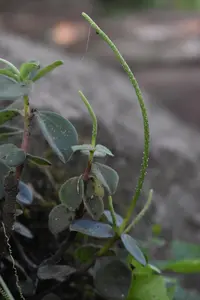
Peperomia increscens
Peperomia increscens
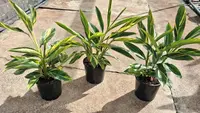
Variegated Shell Ginger
Alpinia zerumbet 'Variegata'
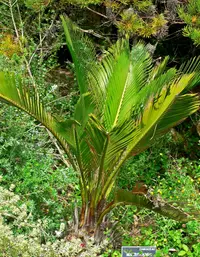
Zamia Palm
Macrozamia riedlei
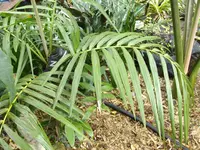
Cyphophoenix fulcita
Cyphophoenix fulcita