Wind-firm training
In windy sites, lightly stake young plants for the first 1–2 years and remove lower, weak side shoots so the main stem thickens and anchors the shrub more securely.

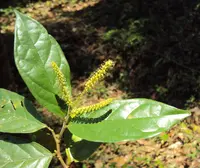
Antidesma obliquinervium, often treated as a form of Antidesma montanum, is a small tropical tree or large shrub from forests of South and Southeast Asia. It typically has an upright habit with simple, glossy leaves and slender branches.
In the wild it grows in warm, humid lowland to hill forests, sometimes at forest edges or along paths, and can adapt to a range of light levels from bright shade to filtered sun. Small flowers are followed by clusters of pea-sized berries that ripen through red to dark purple or black, giving the plant ornamental interest.
For home growers, it is moderately easy if given warmth, consistent moisture, and well-drained, organic-rich soil. Understanding how to care for Antidesma obliquinervium starts with replicating its sheltered forest habitat as closely as possible.

Care Difficulty
Moderate Care

Light Preference
Partial Sun

Water Requirements
Moderate Water

Temperature Preference
Tropical / Frost Sensitive

Hardiness Zone
10–12

Soil Texture
Loamy, Sandy, Organic-rich

Soil pH
Acidic (5.5–6.5), Slightly acidic (6.5–7.0)

Soil Drainage
Moist but well-drained

Fertilization
Minimal (feed rarely)
Scan your plant to receive care tips personalized for your specific plant
Available on iOS and Android
Antidesma montanum prefers bright, warm conditions similar to its native tropical woodland edges.
Antidesma montanum prefers consistently moist but not saturated soil once established in the ground.
This species performs best in consistently warm, frost‑free climates.
This shrub prefers moderately humid air but tolerates a broad humidity range if soil moisture is stable.
This species grows best in loose, evenly moist, well-drained mineral-organic soil.
This species can be grown in containers if given a stable, deep root zone and careful moisture management.
This species usually grows well in the ground with minimal feeding, but light fertilization benefits container or landscape Antidesma montanum in poor soils.
Antidesma montanum responds well to light structural pruning that maintains a healthy framework and safe size.
This small tree is more often transplanted in the landscape than grown long term in containers.
Antidesma montanum is most often propagated by seeds or semi-hardwood cuttings under warm, humid conditions.
In mild to warm climates this species needs little special winter attention once established.

Plant Health Check
Not sure what's wrong with your plant? Check your plant's health inside the app.
This species shows clear leaf dimorphism, with larger, broader leaves on juvenile or lower branches and smaller, narrower leaves on exposed upper branches, an adaptation that helps balance light capture and water loss in its native forest habitats.
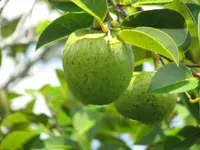
Its drupes (fleshy, single-seeded fruits) ripen in hanging clusters that shift from green to red and finally to dark purplish-black, providing a visual cue to fruit-eating birds and other animals that act as seed dispersers.
The plant naturally occurs from dim lower forest understorey to brighter forest edges and secondary growth, indicating a relatively broad tolerance to different light levels in humid tropical environments.

Antidesma montanum is widely used as a living fence and boundary marker in parts of South and Southeast Asia, where its dense branching, tolerance of repeated pruning, and conspicuous fruit clusters make it practical for low-input, long-lasting hedgerows.
Ripe fruits are considered edible in many of its native areas and may be eaten fresh or processed, but flavor and quality vary. Always confirm correct identification and avoid fruits from polluted sites or plants treated with chemicals.
Keep your plants happy and healthy with plant identification, disease detection, and easy care guidance.