Stem training support
As the plant matures, stake or tie main stems loosely to a sturdy support to keep the canopy upright and prevent the top-heavy crown from leaning or snapping at the base.

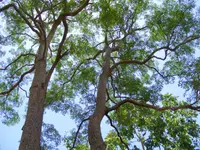
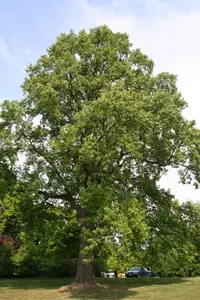
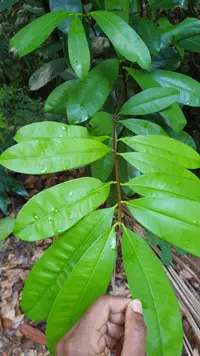
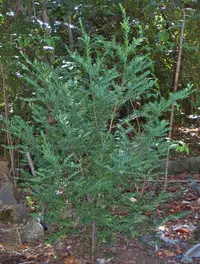
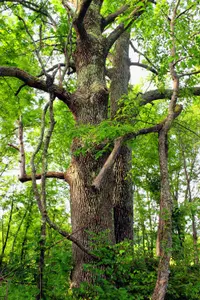
Northern milkwood (Alstonia actinophylla) is an evergreen tree from tropical northern Australia and nearby regions. It naturally grows in warm, humid forests and coastal areas. The plant forms a straight trunk with whorled clusters of narrow leaves and large umbrella-like heads of small, creamy flowers. In gardens and large indoor spaces it is valued for its tidy structure and glossy foliage. Growth is moderately fast when conditions are warm and stable, so regular pruning may be needed to keep size in check. It adapts reasonably well to pots if given bright light, steady moisture, and free-draining soil, which makes it practical to learn how to care for Northern Milkwood.

Care Difficulty
Moderate Care

Light Preference
Partial Sun

Water Requirements
Moderate Water

Temperature Preference
Tropical / Frost Sensitive

Hardiness Zone
10–12

Soil Texture
Sandy, Loamy, Organic-rich

Soil pH
Acidic (5.5–6.5), Slightly acidic (6.5–7.0)

Soil Drainage
Moist but well-drained

Fertilization
Minimal (feed rarely)
Scan your plant to receive care tips personalized for your specific plant
Available on iOS and Android
Alstonia actinophylla prefers bright, indirect light with some direct sun at cooler times of day.
This species prefers evenly moist, well-drained soil that never stays saturated for long.
This tree grows best in consistently warm, frost-free conditions.
This species prefers moderately humid air but usually adapts to typical indoor conditions.
This plant thrives in loose, well-aerated, fast-draining soil that still retains some moisture.
This species is suitable for container growing when the pot provides stability and controlled moisture.
Alstonia actinophylla benefits from moderate, consistent feeding during active growth, especially in containers, when caring for Northern Milkwood.
Pruning Alstonia actinophylla helps manage size, maintain structure, and remove weakened growth.
Alstonia actinophylla is often grown as a landscape tree, but container plants or young specimens sometimes need careful repotting or transplanting.
Alstonia actinophylla is usually propagated by seeds or semi-hardwood cuttings under warm, humid conditions.
Alstonia actinophylla is frost sensitive and needs protection in regions with cold winters, especially when young or container-grown.

Plant Health Check
Not sure what's wrong with your plant? Check your plant's health inside the app.
This species typically produces 7–20 narrow leaves in a single whorl at the end of each branch, giving the crown a distinctive umbrella-like appearance that is very recognizable in its native Australian range.
All parts of the tree exude a sticky white latex when damaged; this latex is a chemical defense against herbivores and can be irritating if it contacts skin or eyes.
In its native habitat, the strongly scented, creamy-green flower clusters open mainly at night and are visited by nectar-feeding bats and moths, which are considered its primary pollinators.

In parts of northern Australia, dense stands of this tree can naturalize so aggressively along waterways and disturbed sites that it is locally regarded as an environmental weed, outcompeting native vegetation and altering habitat structure.
This species is generally fast-growing, often adding 30–90 cm of height per year in warm climates. Growth slows in containers, with limited root space and lower light. Regular pruning and moderate fertilizing help manage size and structure.
Keep your plants happy and healthy with plant identification, disease detection, and easy care guidance.