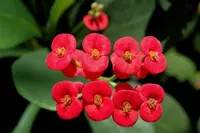
Maxillaria porrecta Care

Maxillaria porrecta

About Maxillaria porrecta

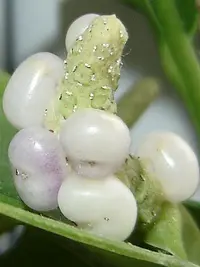
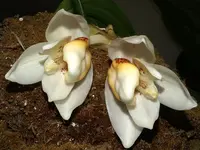
Maxillaria porrecta is a small epiphytic orchid that typically grows on trees, forming compact clumps of slender pseudobulbs and narrow grasslike leaves. It produces modest, often subtly colored flowers that are more interesting up close than from a distance.

This species is native to tropical regions of Central and South America, where it experiences warm, humid forests with good air movement. It is moderately demanding in cultivation because it dislikes extremes in dryness or constant wetness and needs stable warmth.

Those who want to care for Maxillaria porrecta should provide bright filtered light, regular moisture with quick drainage, and high humidity similar to other small tropical orchids.

Main Plant Requirements

Care Difficulty

Moderate Care

Light Preference

Partial Shade

Water Requirements

Moderate Water

Temperature Preference

Tropical / Frost Sensitive

Hardiness Zone

Unknown

Soil Texture

Peaty, Organic-rich

Soil pH

Acidic (5.5–6.5)

Soil Drainage

Moist but well-drained

Fertilization

Light (every 4–6 weeks)

Get Personalized Care Plan

Scan your plant to receive care tips personalized for your specific plant

Available on iOS and Android

How to Care for the Maxillaria porrecta

This orchid prefers bright, gentle light that mimics filtered forest conditions.

  • Provide 6–8 hours of bright, indirect light, such as dappled shade under taller plants or under 30–50% shade cloth for Maxillaria porrecta.
  • Allow soft morning sun but protect from strong midday and afternoon sun, which can scorch leaves and cause yellowing or dry, bleached patches.
  • In winter, move plants to a brighter spot or thin overhead shade to compensate for shorter days, watching that leaves stay medium green rather than dark and floppy.

Watering should keep the root zone evenly moist but never saturated.

  • Water when the top 2–3 cm of the mix feels just barely dry, using free‑draining orchid media so water runs through quickly and roots receive air.
  • In active growth and warmer months, expect to water more often, while in cooler seasons extend the interval slightly, avoiding a hard, bone‑dry medium.
  • Watch for signs of stress: wrinkled pseudobulbs and dry leaf tips suggest underwatering, while blackened roots, sour smell, or limp yellow leaves indicate overwatering in Maxillaria porrecta.

Stable, mild temperatures support consistent growth and flowering.

  • Aim for 65–80°F (18–27°C) by day and 55–65°F (13–18°C) at night, which suits the intermediate conditions preferred by this orchid.
  • Avoid temperatures below 45–50°F (7–10°C), as cold can damage leaves and roots; protect from frost at all times.
  • In hot spells above 85°F (29°C), increase air movement and humidity and keep the plant shaded to prevent heat stress, leaf scorch, and bud blast.

This orchid benefits from consistently moist air around the foliage and roots.

  • Aim for 60–80% humidity; below 50% for long periods often slows growth and can desiccate pseudobulbs.
  • It tolerates brief spells of drier air if watering is steady, but prolonged low humidity causes wrinkled pseudobulbs and crisp leaf tips.
  • Increase humidity with a room humidifier, fine-mist spraying of the air near the plant, or a pebble tray that keeps the pot base above the waterline.

Maxillaria porrecta grows best in a very airy, fast-draining orchid substrate rather than dense soil.

  • Use a coarse mix such as medium-grade fir bark with 10–20% perlite and a little sphagnum moss to retain moderate moisture without staying wet.
  • Ensure large air spaces between particles so roots receive constant oxygen; compressed or muddy media encourage root rot.
  • A slightly acidic reaction around pH 5.5–6.5 suits this species and supports nutrient uptake in typical orchid fertilizers.
  • Avoid garden soil, peat-heavy potting mixes, or fine coco coir alone, as these collapse quickly and hold water against the roots.

This species is well suited to container culture when the pot and setup control moisture and provide strong aeration.

  • Choose a squat, wide pot so the creeping rhizome has lateral space while the shallow root zone does not sit in a deep, wet column of mix.
  • Use slotted or net orchid pots placed inside a cachepot or tray so air can move freely through the sides and base of the root zone.
  • If the plant becomes top-heavy with new growths, position the container in a stable outer sleeve or add a top dressing of coarse stones for weight.

This orchid responds well to light, consistent feeding during active growth.

  • Use a balanced orchid fertilizer (for example 20-20-20) diluted to 1/4–1/2 strength in low-mineral water.
  • Feed Maxillaria porrecta every 2–3 weeks in spring and summer when producing new roots and pseudobulbs.
  • Reduce feeding to monthly or stop entirely in fall and winter, depending on growth slowdown.
  • Flush the pot with plain water about once a month to prevent salt buildup around the roots.

This orchid needs only minimal pruning focused on plant health and hygiene.

  • Trim spent flower spikes at the base with clean, sharp scissors once blooms fade.
  • Remove dead, shriveled, or clearly rotted pseudobulbs and leaves to limit disease spread in Maxillaria porrecta.
  • Cut only dry, brown leaf tips if needed, leaving a narrow margin of dead tissue to avoid further dieback.
  • Disinfect tools with alcohol between plants to reduce transmission of fungal and bacterial problems.

This orchid prefers slightly tight conditions but benefits from periodic repotting for fresh medium.

  • Plan to repot every 2–3 years, or when roots circle the container, medium breaks down, or growth slows noticeably.
  • Repot in late winter or early spring, just before new root growth, so the plant re-establishes quickly.
  • Gently remove old mix, trim dead roots, and place the plant so new growth points face into fresh bark-based orchid medium.
  • Water lightly after repotting Maxillaria porrecta, keep in bright, indirect light, and maintain stable humidity to reduce transplant stress.

Division is the standard method for propagating this orchid in home collections.

  • Divide clumps in late winter or early spring, timed with repotting, when new shoots and roots start to emerge.
  • Use a sterile knife or pruners to separate the rhizome into sections with at least 3–4 healthy pseudobulbs each.
  • Pot divisions into fresh, fine- to medium-grade orchid bark, keeping them firmly anchored and not buried too deeply.
  • Maintain warm temperatures, bright filtered light, and high humidity (60–80%) to support root growth in divided Maxillaria porrecta plants.

This orchid is not frost hardy and needs sheltered conditions in winter in most climates.

  • Keep temperatures above 55°F; prolonged exposure near 40°F can damage leaves and roots of Maxillaria porrecta.
  • Move container plants indoors or into a heated greenhouse before the first frost period.
  • Provide bright, indirect light and slightly drier conditions, letting the mix approach dryness between waterings.
  • Avoid cold drafts from windows or doors and maintain moderate humidity to reduce winter stress.

Care Tips

Mounting technique

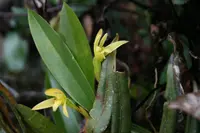
Consider mounting plants on coarse cork or tree fern with a thin pad of long-fiber sphagnum around the roots to provide fast drainage while still holding enough moisture for this fine-rooted species.

Basket culture

Use small, slatted wooden or plastic baskets lined loosely with sphagnum or fine bark to allow roots to wander and air to circulate, which helps prevent root rot in mature clumps.

Frequent division timing

Divide only when new root tips are just emerging from newly formed pseudobulbs, as this timing allows divisions to establish faster and reduces transplant stress.

Targeted air movement

Position a small, low-speed fan to create gentle, constant air movement across foliage and media, which lowers the risk of fungal spotting on the narrow leaves.

Cool-season adjustment

In areas with cool winters, slightly reduce watering frequency and increase light within safe limits during the darker months to keep growth compact and to support reliable flowering when growing Maxillaria porrecta.

Common Pests and Diseases

Scale insects

This pest often appears on pseudobulbs and leaf bases, feeding on plant sap and weakening the plant over time. Symptoms include sticky honeydew and sooty mold on the leaves and pot surface.

Solution

Remove heavily infested areas with a cotton swab dipped in 70% isopropyl alcohol, then rinse the plant with lukewarm water. Improve air movement, avoid overcrowding, and repeat spot treatments weekly until no new insects appear; for severe cases, use a labeled systemic insecticide suitable for orchids according to package directions.

Spider mites

These insects thrive in warm, dry indoor air and can cause fine stippling, dull leaves, and webbing on the undersides of Maxillaria foliage. Symptoms include slow decline and leaves that feel rough or dusty to the touch.

Solution

Shower the plant thoroughly with lukewarm water, focusing on the undersides of leaves, and raise humidity to 50–70% while keeping good airflow. If needed, apply an insecticidal soap or horticultural oil labeled for orchids, repeating every 7–10 days until new growth appears clean.

Orchid aphids

This pest tends to cluster on tender new growth and flower spikes, sucking sap and distorting buds. Symptoms include sticky residue, misshapen flowers, and reduced vigor.

Solution

Rinse infested shoots under a gentle stream of water and remove heavily affected buds or spikes. Follow up with insecticidal soap or neem oil spray, covering all green parts and repeating at 7–10 day intervals until no aphids are seen, which is a common approach in Maxillaria porrecta care.

Bacterial leaf spot

This disease causes water-soaked translucent spots on leaves that may turn brown and spread rapidly in warm, humid conditions. Symptoms include a sour smell and soft tissue around the lesions.

Solution

Isolate the plant, cut away affected tissue with a sterile blade back into healthy tissue, and let the wounds dry in good airflow. Reduce overhead watering, avoid wetting leaves late in the day, and use a copper-based bactericide labeled for orchids if new spots continue to appear.

Fungal leaf and pseudobulb rot

This disease starts as small dark lesions on leaves or at the base of pseudobulbs and can progress to sunken, mushy areas if moisture remains high and air movement is poor. Symptoms include rapid collapse of affected tissues and shriveling pseudobulbs despite adequate watering.

Solution

Remove all rotted tissue with sterilized tools, dust cut surfaces lightly with powdered sulfur or cinnamon, and repot into a fresh, fast-draining orchid mix. Improve ventilation, avoid crowding plants, and adjust watering so the medium dries slightly between waterings while maintaining high ambient humidity.

Interesting Facts

Miniature creeping habit

This species forms a low, creeping mat with closely spaced pseudobulbs that run along the substrate, rather than producing tall, upright canes. The compact growth allows it to occupy thin layers of moss and leaf litter on branches and logs in its native forests.

Narrow, forward-pointing flowers

The species name porrecta refers to the way its narrow sepals and petals project forward, giving the flower a slender, elongated look. These small, often brownish to reddish flowers are adapted to blend with bark and debris, making them less conspicuous to herbivores.

Cool to intermediate cloud-forest origin

This orchid is native to cool to intermediate, humid cloud forests in Central and northern South America, typically at mid to higher elevations. It often grows as an epiphyte, anchored on tree branches where air movement is constant and light is filtered through the canopy.

FAQs about Maxillaria porrecta

Lack of flowers usually comes from insufficient light, too-warm nights, or lack of a slight drier rest after growth. Older, crowded pseudobulbs may also flower less and benefit from division when roots become very congested.

Grow Healthy Plants with Botan Care

Keep your plants happy and healthy with plant identification, disease detection, and easy care guidance.

Botan plant care app — identify plants on mobile

Explore More Plants