Support tall scapes
Insert a slim stake beside each flowering scape as it elongates and loosely tie with soft garden tape to prevent bending or snapping under the weight of the large flowers.

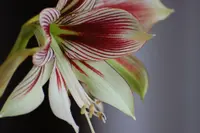
Butterfly amaryllis, Hippeastrum papilio, is a bulb-forming flowering plant grown mainly as a decorative houseplant or in protected patios. It produces striking, butterfly-like blooms in shades of green, cream, and burgundy on tall, sturdy stems above strap-shaped leaves.
This species is native to subtropical regions of southern Brazil, where it grows in warm, humid forest habitats. Compared with many showy amaryllis hybrids, it is considered moderately easy but benefits from stable indoor conditions and careful watering.
It prefers bright, indirect light, a well-drained potting mix, and even moisture without waterlogging. Understanding how to care for butterfly amaryllis helps it rebloom reliably and maintain healthy foliage over many years.

Care Difficulty
Moderate Care

Light Preference
Bright Indirect Light

Water Requirements
Moderate Water

Temperature Preference
Tropical / Frost Sensitive

Hardiness Zone
10–11

Soil Texture
Sandy, Loamy, Organic-rich

Soil pH
Acidic (5.5–6.5), Slightly acidic (6.5–7.0)

Soil Drainage
Well-drained

Fertilization
Light (every 4–6 weeks)
Scan your plant to receive care tips personalized for your specific plant
Available on iOS and Android
This species prefers bright, indirect light that mimics high, filtered forest canopies.
Watering for this bulb focuses on moisture balance without letting the roots sit wet.
This subtropical bulb prefers mild, stable temperatures without frost exposure.
This species manages well in typical indoor humidity but benefits from slightly moist air.
Hippeastrum papilio needs a fast-draining, airy mix that protects the bulb from staying wet.
This bulb is very suitable for container growing when pot choice supports drainage and stability.
Hippeastrum papilio benefits from moderate, targeted feeding to support flowering and bulb health.
Pruning Hippeastrum papilio focuses on maintaining bulb strength and clean foliage rather than shaping.
Repotting Hippeastrum papilio is done infrequently to refresh soil and maintain bulb vigor.
Propagation of Hippeastrum papilio is most reliable by bulb division, with seed used mainly for breeding.
Winter care for Hippeastrum papilio focuses on avoiding frost damage and managing dormancy in cooler climates.

Plant Health Check
Not sure what's wrong with your plant? Check your plant's health inside the app.
This species is native to the coastal Atlantic Forest of southern Brazil, where it grows as a lithophyte or epiphyte on rocks and trees rather than in typical garden soil.
Its flowers have long, narrow segments with greenish backgrounds and maroon to purple veining, creating a wing-like pattern that inspired the common name butterfly amaryllis.
Unlike many bulb relatives that have a pronounced dormancy, this species tends to remain evergreen or semi-evergreen in mild conditions, holding leaves for much of the year if light and temperature stay favorable.

In its native habitat, this species often anchors itself in pockets of organic debris high in trees, where its fleshy roots help it withstand periodic drying while still absorbing enough moisture and nutrients from rain, mist, and decaying plant material.
Lack of flowering often comes from insufficient rest after the previous bloom, low light during the growing season, or nutrient depletion. A defined rest period, followed by gradual reintroduction of water and light, usually restores blooming.
Keep your plants happy and healthy with plant identification, disease detection, and easy care guidance.