Plains coreopsis Care (Coreopsis tinctoria)

Also known as: plains coreopsis, goldenwave, calliopsis, Dyer's tickseed
Plains coreopsis

About Plains coreopsis

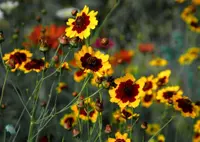
Plains coreopsis (Coreopsis tinctoria) is an annual wildflower known for its airy habit and daisy-like blooms in yellow, gold, and reddish-brown tones. Plants usually form loose, branching clumps with fine, threadlike foliage that gives a light, open look in garden beds or meadow plantings.

This species is native to central and western North America, where it often grows in prairies, open fields, and along roadsides. It adapts well to poor or sandy soils and tends to thrive in full sun with moderate moisture, which makes it relatively simple to care for Plains coreopsis in many home gardens.

Main Plant Requirements

Care Difficulty

Easy Care

Light Preference

Full Sun

Water Requirements

Low Water

Temperature Preference

Warm Climate

Hardiness Zone

2–11

Soil Texture

Sandy, Loamy, Rocky

Soil pH

Acidic (5.5–6.5), Slightly acidic (6.5–7.0)

Soil Drainage

Well-drained

Fertilization

Minimal (feed rarely)

Get Personalized Care Plan

Scan your plant to receive care tips personalized for your specific plant

Available on iOS and Android

How to Care for the Plains coreopsis

This annual thrives in bright, open sites with long hours of direct sun for best flowering.

  • Provide 6–8 hours of direct sunlight daily; full sun is ideal, especially in cooler climates, to keep plants compact and floriferous.
  • Tolerates light afternoon shade in hotter regions; 3–4 hours of strong morning sun plus bright, open exposure prevents leggy Plains coreopsis growth.
  • In dense shade, expect weak stems and few blooms; in very intense sun with reflected heat, monitor for leaf scorch and consider light mulching.

This species prefers relatively dry conditions and is sensitive to heavy, waterlogged soil.

  • Allow the top 3–5 cm of soil to dry before watering; soil should feel dry but not rock hard when checked by hand.
  • Increase watering slightly in the first growing month and during extended drought, but reduce once plants are established and flowering.
  • Use fast-draining, sandy or loamy soil; persistent wilting with dry soil indicates underwatering, while yellowing, limp stems in damp soil suggest overwatering in Coreopsis tinctoria.

This species is adapted to warm summers and cool nights typical of many temperate regions.

  • Optimal growth occurs around 65–80°F (18–27°C), supporting steady foliage development and abundant flowering.
  • Plants tolerate heat up to about 90–95°F (32–35°C) if soil is not waterlogged; light mulch helps buffer root temperatures in exposed sites.
  • Hardy as an annual down to about 25–28°F (-4 to -2°C); light frosts may be survived, but repeated or hard freezes usually end the growing season.

Humidity is rarely a concern for Coreopsis tinctoria, which thrives in relatively dry air.

  • Target 30–50% humidity, similar to typical indoor and outdoor air in most US homes and gardens.
  • The plant tolerates dry air well; limp, browning leaf tips usually indicate water or heat stress rather than low humidity.
  • If air is extremely dry and hot, group pots together or place near a lightly damp gravel tray to slightly buffer moisture around foliage.

Coreopsis tinctoria prefers lean, well-drained soil that does not stay wet for long.

  • Use sandy or sandy-loam soil with low to moderate organic matter, which supports deep rooting and reduces rot risk.
  • Aim for pH 6.0–7.5; this species is adaptable but performs best in slightly acidic to neutral soils.
  • Blend garden soil or potting mix with coarse sand or fine grit at about 1:1 to improve drainage and aeration.
  • Avoid heavy clay, compacted areas, or mixes high in peat that hold water, as these conditions quickly lead to root problems.

This species is suitable for containers when drainage and stability are managed carefully.

  • Choose a pot at least 25–30 cm deep to allow its taproot to develop without circling tightly.
  • Use a heavier material, such as ceramic or clay, to keep tall, flower-heavy plants from tipping in wind.
  • Raise containers slightly on pot feet or bricks so drainage holes stay clear and runoff water exits quickly.

This adaptable annual needs only light feeding to support steady flowering in typical garden soil.

  • Apply a balanced, slow-release fertilizer (around 10-10-10) at planting time for Coreopsis tinctoria in average to poor soil.
  • Use a dilute (50% strength) balanced liquid feed every 4–6 weeks during the main growing season if plants look pale or weak.
  • Skip extra fertilizer in rich soil or where compost is incorporated, as excess nutrients reduce flowering and cause floppy growth.
  • Stop feeding in late summer to early fall so plants harden off naturally before frost and do not push soft, weak growth.

Pruning helps maintain compact growth and extends the flowering display of Coreopsis tinctoria.

  • Deadhead spent blooms every few days in summer by snipping flower stems just above a leaf node to encourage more buds.
  • Shear back the top third of the plant in mid to late summer if growth becomes leggy, which promotes a fresh flush of foliage and flowers.
  • Remove dead, diseased, or storm-damaged stems whenever noticed using clean, sharp scissors or hand pruners to limit disease spread.
  • At season’s end, cut plants to ground level after frost, or leave some seed heads standing if self-seeding and wildlife support are desired.

This annual wildflower is most often direct-sown, but young plants transplant well if handled carefully.

  • Transplant Coreopsis tinctoria seedlings outdoors after frost when roots lightly fill starter cells but are not circling densely.
  • If container-grown, shift to a slightly larger pot only when roots emerge from drainage holes or growth slows in midseason.
  • Move plants with a moist, intact root ball; disturb roots as little as possible to reduce transplant shock and wilting.
  • Transplant in the cooler part of the day, water deeply afterward, and provide 2–3 days of light shade or wind shelter to aid recovery.

New plants are usually raised from seed, which germinates reliably in typical garden conditions.

  • Sow seeds indoors 4–6 weeks before the last frost or direct-sow outdoors once soil has warmed in spring.
  • Press seeds lightly into the surface; they need light to germinate, so do not bury them deeper than a thin dusting of soil.
  • Maintain 65–75°F and evenly moist, not soggy, soil until seedlings emerge in 7–21 days.
  • Division is rarely used because plants are short-lived annuals; instead, allow some flowers to set seed for natural reseeding and continuous Coreopsis tinctoria plant care.

This species is typically grown as a warm-season annual and needs minimal winter care in most climates.

  • In mild regions, self-sown seedlings may overwinter; leave some seed heads and avoid heavy fall cultivation.
  • In cold areas, treat plants as annuals and re-sow each spring rather than trying to overwinter mature plants outdoors.
  • Container-grown plants in borderline climates can be moved to a cool, frost-free, bright spot to extend flowering slightly into early winter.

Care Tips

Staggered Succession Sowing

Direct-sow new rows every 2–3 weeks in late spring and early summer so flowering continues as older plants tire, keeping the display full and productive for cutting.

Timed Deadheading Routine

Once a week, shear back spent flower stems by about one-third with clean shears rather than individual snips to trigger a strong flush of new buds with less effort.

Self-Seeding Management

If you want controlled reseeding, leave seed heads on only selected plants at the back of the bed and cut all others before seeds drop to prevent overcrowded, weak seedlings.

Lean-Growth Support

In fertile or irrigated beds, install low, unobtrusive twiggy branches or 20–30 cm mesh supports early in the season so tall stems grow through and stay upright in wind and rain.

Drought-Hardening Strategy

After seedlings are established, gradually extend the interval between deep waterings by a few days to encourage deeper root growth and improve resilience when growing Plains coreopsis in hot, dry sites.

Common Pests and Diseases

Aphids

This pest attacks new growth and flower stalks, sucking sap and causing curling or distortion of leaves and buds. Symptoms include sticky honeydew on stems and an increase in sooty mold on nearby surfaces.

Solution

Spray plants with a firm stream of water in the morning to dislodge colonies, then follow with insecticidal soap or a ready-to-use neem oil product labeled for ornamentals if needed. Encourage natural predators such as lady beetles by avoiding broad-spectrum insecticides and by limiting high-nitrogen fertilizer that drives very soft, aphid-prone growth.

Spider mites

These insects thrive in hot, dry conditions and feed on undersides of leaves, causing fine stippling, a dull or bronzed appearance, and sometimes fine webbing. Symptoms include reduced vigor and premature leaf drop in stressed clumps.

Solution

Increase humidity around plants by watering the soil regularly and avoid prolonged drought, then hose down foliage thoroughly, especially the undersides, to remove mites. If populations remain high, apply insecticidal soap or horticultural oil, repeating at the interval on the label to break the life cycle.

Leaf spot

This disease causes small brown to dark purple spots on foliage that may enlarge and merge, leading to partial yellowing and early leaf drop. Symptoms include thinning foliage on lower stems, especially in dense plantings with frequent overhead watering.

Solution

Remove and discard heavily spotted leaves and any fallen debris to reduce inoculum, then improve air movement by thinning crowded plants and watering at the base instead of overhead. In areas with a history of problems, rotate planting sites and, if disease pressure is high, use a copper or chlorothalonil fungicide labeled for ornamental leaf spots, following all label directions.

Powdery mildew

This disease appears as white to gray powdery patches on leaves and stems, usually first on older foliage in humid but not necessarily wet conditions. Symptoms include distorted growth and gradual decline in flowering when infection is heavy.

Solution

Space plants so air can move freely, avoid excess nitrogen, and water early in the day so foliage dries quickly. At first signs, remove the worst-affected leaves and consider applying a sulfur or potassium bicarbonate fungicide labeled for powdery mildew on ornamentals, repeating as directed during humid periods as part of Coreopsis tinctoria care.

Interesting Facts

Natural dye source

This species has been traditionally used as a dye plant, with its flower heads producing yellow to orange and reddish-brown dyes for textiles and crafts when different mordants are used.

Short-lived annual strategy

Coreopsis tinctoria is usually an annual that completes its life cycle quickly and relies on prolific seed production and a persistent seed bank in the soil to reappear in the same area year after year.

High pollinator value

Its nectar- and pollen-rich composite flower heads attract a wide range of native bees, hoverflies, and butterflies, making it an important seasonal resource in prairie and roadside pollinator networks.

Botan icon

Did you know?

In some regions outside its native North American range, Coreopsis tinctoria has naturalized along roadsides, railways, and disturbed soils so successfully that it is sometimes considered an ornamental invasive, yet it is still actively used in wildflower seed mixes for erosion control and landscape restoration due to its adaptability and showy blooms.

FAQs about Plains coreopsis

Lack of blooms often comes from too much shade, excess nitrogen fertilizer, or old, spent flowers left on the plant. Deadhead regularly, avoid high-nitrogen feeds, and ensure at least moderate light exposure to support flowering.

Grow Healthy Plants with Botan Care

Keep your plants happy and healthy with plant identification, disease detection, and easy care guidance.

Botan plant care app — identify plants on mobile

Explore More Plants