Harvesting technique
Pull and twist individual stalks from the base rather than cutting them, which reduces the risk of rot at the crown and encourages new, vigorous shoots.

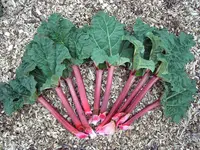
Rhubarb, Rheum × hybridum, is a hardy perennial grown mainly for its thick, edible leaf stalks with a tart flavor. It forms a clump of upright red or green stems topped with large, heavily veined leaves.
This plant originates from cultivated hybrids of Asian rhubarb species and is now common in cool-temperate gardens. It prefers cool climates, moist but well-drained soil, and open, sunny positions.
Rhubarb grows strongly once established but needs space, consistent moisture, and protection of the crown from extreme heat. With these basics in mind, it is straightforward to care for Rhubarb.

Care Difficulty
Moderate Care

Light Preference
Full Sun

Water Requirements
Keep Soil Moist

Temperature Preference
Cold Hardy

Hardiness Zone
3–8

Soil Texture
Loamy, Silty, Organic-rich

Soil pH
Acidic (5.5–6.5), Slightly acidic (6.5–7.0)

Soil Drainage
Moist but well-drained

Fertilization
Light (every 4–6 weeks)
Scan your plant to receive care tips personalized for your specific plant
Available on iOS and Android
This perennial vegetable needs strong light to build large, flavorful stalks.
This plant prefers consistently moist, not saturated, soil to support its large leaves and thick stalks.
Rheum × hybridum thrives in cool climates with a marked winter chill period.
Humidity is not a significant factor for Rheum × hybridum, which thrives outdoors in open air.
Rheum × hybridum prefers deep, moisture-retentive but well-drained loam enriched with organic matter.
This species is marginally suitable for large outdoor containers but performs best in open ground.
Heavy-feeding Rheum × hybridum responds well to nutrient-rich soil and measured fertilization during active growth.
Pruning Rheum × hybridum focuses on hygiene and directing energy into strong leaf stalks.
Rheum × hybridum is usually grown in the ground; transplanting established crowns is more common than repotting.
Propagation of Rheum × hybridum is typically done by division to maintain cultivar traits and vigor.
Rheum × hybridum is generally cold hardy in temperate climates but benefits from simple crown protection in harsh winters.

Plant Health Check
Not sure what's wrong with your plant? Check your plant's health inside the app.
Rheum × hybridum produces thick, edible leaf stalks used as a tart vegetable, but its leaf blades contain high levels of oxalic acid and must not be eaten due to potential toxicity to humans and animals.
This garden rhubarb is not a true wild species but a long-cultivated hybrid complex, derived mainly from Asian species such as Rheum rhaponticum and Rheum rhabarbarum, selected over centuries for thicker, less fibrous petioles.
Rheum × hybridum needs a period of winter chilling to break dormancy and support vigorous spring growth, which is why it thrives in cool-temperate climates and often struggles in regions without a distinct cold season.

In parts of northern Europe and North America, Rheum × hybridum was historically so important as an early spring food source that household guidelines on how to take care of Rhubarb were regularly included in 19th- and early 20th-century gardening manuals, alongside staple crops like potatoes and cabbages.
Only the thick leaf stalks are edible when cooked; leaves and roots contain high oxalic acid and should not be eaten. Harvest stalks from established plants, remove leaves immediately, and avoid using frost-damaged, wilted, or insect-chewed stems.
Keep your plants happy and healthy with plant identification, disease detection, and easy care guidance.