Sea Milkwort Care (Lysimachia maritima)

Sea Milkwort

About Sea Milkwort

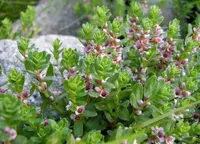
Sea milkwort, Lysimachia maritima, is a low, spreading perennial often found on salty coasts, dunes, and salt marsh edges. It forms small mats of fleshy, opposite leaves that help it tolerate saline and windy sites.

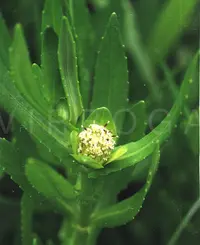
The plant produces small, pale star-shaped flowers that sit close to the stems, giving it a subtle but attractive appearance. Its compact growth makes it suitable for coastal-style gardens and rockeries in cool to mild climates.

This species is generally undemanding where soil drains well and moisture is steady, but it dislikes drought and heavy disturbance. Understanding how to care for Sea Milkwort starts with providing conditions that mimic its natural, open coastal habitat.


Main Plant Requirements

Care Difficulty

Moderate Care

Light Preference

Full Sun

Water Requirements

Aquatic

Temperature Preference

Cold Hardy

Hardiness Zone

4–8

Soil Texture

Sandy, Loamy, Silty

Soil pH

Slightly acidic (6.5–7.0), Neutral (7.0)

Soil Drainage

Waterlogged tolerant

Fertilization

Minimal (feed rarely)

Get Personalized Care Plan

Scan your plant to receive care tips personalized for your specific plant

Available on iOS and Android

How to Care for the Sea Milkwort

This coastal perennial prefers bright, open conditions similar to its natural seashore habitat.

  • Provide 6–8 hours of full sun daily in cool to mild climates; in hotter inland areas, give morning sun with light afternoon shade to prevent leaf scorch.
  • Tolerates light partial shade (around 3–4 hours of direct sun), but dense shade leads to weak, stretched growth and fewer flowers in Sea Milkwort.
  • In summer, monitor for pale, crisping foliage as a sign of excessive sun; in low-light seasons, ensure no shading from taller plants or structures.

This salt-tolerant species favors consistently moist but not stagnant soil, especially during active growth.

  • Aim for soil that stays lightly moist; let only the top 1–2 cm dry before watering again, using local rainfall as a guide in coastal gardens.
  • Use free-draining, sandy or gritty soil so water does not pool; poor drainage causes yellowing, limp stems, and possible root rot in Lysimachia maritima.
  • In cooler months, when growth slows, reduce watering frequency and watch for wilting, crisp margins, or slow recovery after sun as signs of underwatering.

This hardy coastal plant tolerates a wide temperature range but grows best in cool to mild conditions.

  • Ideal growth occurs around 55–70°F (13–21°C), with steady flowering and compact foliage in this band during spring and early summer.
  • Established plants survive down to about 10–15°F (-12–-9°C) with good drainage, but repeated freeze–thaw in heavy, wet soils can damage roots.
  • Heat tolerance extends to roughly 80–85°F (27–29°C) if soil moisture is maintained; prolonged hotter periods may cause slowed growth and temporary leaf stress.

This coastal species prefers moderate ambient humidity but usually copes well with typical household levels.

  • Aim for 40–60% humidity, which reflects the fresh but not tropical conditions of its native shoreline habitats.
  • Dry indoor air can cause leaf edges to brown and growth tips to stall, signaling humidity stress in Sea Milkwort.
  • If air is very dry, group plants together on a pebble tray with water below the pot base to raise local humidity slightly.

This plant is adapted to light, mineral soils and performs best in mixes that mimic coastal, sandy ground.

  • Use a sandy or sandy-loam mix with 40–60% sharp sand or grit to keep the root zone open and fast draining.
  • Combine roughly 2 parts sand, 1 part compost, and 1 part fine grit or perlite to balance drainage and moderate fertility for Lysimachia maritima.
  • Maintain slightly alkaline to neutral pH around 7.0–8.0, avoiding strongly acidic mixes dominated by peat without lime.
  • Avoid heavy clay or peat-heavy blends that hold water for long periods, since these restrict aeration and increase root rot risk.

This species can be grown in containers if the setup maintains sharp drainage and a relatively shallow, spreading root zone.

  • Choose a wide, shallow pot to match its creeping habit and prevent water from pooling deeply around the roots.
  • Select unglazed terracotta rather than plastic if outdoor rainfall is frequent, as it allows faster evaporation from the root zone.
  • Raise the pot on feet or bricks so drainage holes stay clear and runoff can exit quickly after heavy rain or watering.

This coastal native needs only modest feeding, especially when grown in lean, sandy soil.

  • Use a light application of compost or a balanced slow-release fertilizer (around 10-10-10) in early spring for Sea Milkwort in nutrient-poor beds or containers.
  • Feed once per growing season; overfeeding can reduce salt tolerance and cause soft, weak growth.
  • If using liquid fertilizer in pots, dilute to 1/2 strength and apply no more than every 6–8 weeks in spring–summer.
  • Stop fertilizing in late summer so growth hardens before winter, and avoid any feeding during winter dormancy.

Pruning Lysimachia maritima is mainly about tidying and maintaining a compact, healthy mat.

  • Cut back dead, damaged, or winter-burned stems in early spring using clean, sharp scissors or hand pruners.
  • Lightly trim back long, straggly shoots after flowering to keep low, dense coverage and prevent bare gaps.
  • Remove any crowded or crossing stems in the center of the clump to improve air flow and reduce disease risk.
  • Shear lightly over large patches once a year if a uniform, groundcover look is desired.

This species is usually grown in the ground, so focus on careful transplanting rather than frequent repotting.

  • Transplant in early spring or early autumn when temperatures are mild and soil stays evenly moist.
  • Look for slow spread, poor vigor, or plants heaving out of the soil in exposed coastal sites as cues to reset clumps.
  • Divide and replant every 3–4 years, spacing pieces so roots can establish in loose, sandy or sandy-loam soil.
  • Lift with a generous root ball, keep roots shaded and moist, then water thoroughly after planting to limit stress.

Lysimachia maritima is commonly propagated by division, cuttings, or seeds, depending on the planting goal.

  • Divide established clumps in early spring, replanting healthy sections with several shoots and firm roots.
  • Take 5–8 cm softwood cuttings in late spring, insert in a free-draining, sandy mix, and keep evenly moist until rooted.
  • Sow fresh seeds in autumn or early spring in a cold frame; natural chilling over winter supports germination.
  • Maintain high light, moderate moisture, and good air movement around young plants to reduce rot and encourage sturdy growth.

This coastal perennial is generally cold hardy in temperate climates and needs minimal winter care in the ground.

  • Tolerates light to moderate frost once established, especially in well-drained sandy soils.
  • In colder inland sites, apply a thin mulch layer around, not on top of, crowns to stabilize soil temperature.
  • For container plants, shift pots to a sheltered, unheated but frost-sheltered spot and keep soil just barely moist.

Care Tips

Salinity Management

If grown away from the coast, add a small amount of marine salt or seaweed-based soil conditioner once or twice a season to mimic mild coastal salinity and maintain this halophyte’s natural vigor, but avoid high concentrations that leave visible white crusts on the soil surface.

Coastal Wind Exposure

In windy, exposed gardens, place plants where they receive some shelter from the strongest inland winds while still getting good air movement, as completely stagnant air encourages fungal spots on foliage.

Low-Nutrient Positioning

Site plants in naturally lean, sandy areas of the garden or rockery, because overly fertile beds promote floppy, weak growth that is more prone to lodging and winter damage.

Edge Stabilization Use

Use this species along the edges of gravel paths, coastal beds, or between rocks where its mat-forming roots help stabilize loose substrate while preventing more aggressive groundcovers from taking over.

Winter Drainage Check

Before winter rains, inspect and lightly fork the surrounding soil or sand to maintain sharp drainage, since prolonged waterlogging in cold weather is more damaging than short dry spells when growing Sea Milkwort.

Common Pests and Diseases

Aphids

These insects cluster on young shoots and flower stems, sucking sap and causing curling, distortion, and sticky honeydew on the foliage.

Solution

Rinse colonies off stems and leaves with a firm stream of fresh water, then repeat every few days until numbers drop. In exposed coastal sites, encourage natural predators like lady beetles, or use an insecticidal soap spray labeled for soft-bodied insects, making sure to coat the undersides of leaves thoroughly.

Leaf spot

This disease causes small brown or black lesions on the succulent leaves, which can merge into larger patches under prolonged wet conditions.

Solution

Remove and discard affected leaves promptly and avoid overhead watering so foliage dries quickly. Improve air movement around plants, reduce crowding, and if the problem persists in very wet seasons, apply a sulfur or copper-based fungicide according to label directions as part of broader Lysimachia maritima care instructions.

Powdery mildew

This disease produces a white, powdery coating on leaves and stems, leading to dull, distorted foliage and reduced vigor in more sheltered plantings.

Solution

Increase light and airflow by thinning dense growth and avoiding overcrowding, and water at soil level instead of on the foliage. Prune out heavily affected shoots and, if needed, apply a horticultural oil or potassium bicarbonate product labeled for powdery mildew, making sure to treat both upper and lower leaf surfaces.

Slugs and snails

These pests chew irregular holes in succulent leaves, often leaving ragged edges and silvery slime trails, especially in moist, shaded conditions away from direct salt spray.

Solution

Hand-pick at night or early morning and reduce hiding spots like dense debris near the planting area. Use iron phosphate bait or simple barriers such as copper tape or coarse grit around clumps, and avoid excessive mulching right up to the stems.

Interesting Facts

Salt marsh specialist

This species naturally grows in coastal salt marshes and upper tidal zones, tolerating both saline soils and occasional seawater flooding that would kill many other herbaceous plants.

Halophyte survival strategy

As a halophyte (salt-tolerant plant), it manages excess salt by compartmentalizing ions in vacuoles inside its cells, which allows normal photosynthesis and growth under conditions that are physiologically stressful to most non-coastal species.

Arctic–temperate distribution

The plant has a broad native range from Arctic shorelines in northern Europe and Greenland down to cool-temperate Atlantic coasts, tracking cold and mild maritime climates rather than inland habitats.

Botan icon

Did you know?

Genetic and morphological evidence indicates that this species, once placed in the genus Glaux as Glaux maritima, is so distinct within its group that its reclassification into Lysimachia helped clarify evolutionary relationships in the primrose family (Primulaceae) and highlighted how unusual its floral structure is compared with typical Lysimachia species.

FAQs about Sea Milkwort

This species forms low, creeping mats but is not usually aggressive. It spreads slowly by short stems and self-seeding in suitable coastal conditions. In gardens, simple edging or occasional thinning keeps it contained without major effort.

Grow Healthy Plants with Botan Care

Keep your plants happy and healthy with plant identification, disease detection, and easy care guidance.

Botan plant care app — identify plants on mobile

Explore More Plants