BotaN logo

corn Care (Zea mays)

Also known as: maize, Indian Corn, Teosinte, Mandamin
corn

About corn

Corn, or Zea mays, is a tall, fast-growing grass cultivated mainly as an annual crop. It forms upright stems with narrow leaves and produces tassels and ears with rows of kernels.

The plant originated in the Americas and is now grown widely in warm and temperate regions for food, animal feed, and ornamental uses. Its rapid growth and high nutrient demand mean it is not difficult but also not low-maintenance.

Corn prefers full sun, consistent moisture, and fertile, well-drained soil. Understanding these basic needs helps clarify how to care for corn successfully in home gardens.

Main Plant Requirements

Care Difficulty

Moderate Care

Light Preference

Full Sun

Water Requirements

Regular Water

Temperature Preference

Tropical / Frost Sensitive

Hardiness Zone

3–11

Soil Texture

Loamy, Silty, Organic-rich

Soil pH

Acidic (5.5–6.5), Slightly acidic (6.5–7.0)

Soil Drainage

Moist but well-drained

Fertilization

Heavy (weekly, diluted)

Get Personalized Care Plan

Scan your plant to receive care tips personalized for your specific plant

Available on iOS and Android

How to Care for the corn

This sun-loving grain needs strong light to produce full ears and healthy foliage.

  • Provide 8–10 hours of direct sun daily; open, unshaded fields are ideal for maximum yield.
  • Tolerates very light partial shade (up to 2–3 hours of dappled shade), but reduced light lowers corn height and kernel fill.
  • Avoid tall structures or trees casting late-afternoon shade; in cloudy regions, orient rows north–south to capture more seasonal light.

Consistent soil moisture is essential for strong root development and ear formation.

  • Maintain evenly moist soil, letting the top 2–5 cm dry slightly between irrigations to encourage deeper rooting in Zea mays.
  • Increase watering during tasseling and silking, watching for leaf rolling or dull, gray-green leaves as signs of drought stress.
  • Ensure loose, well-drained soil; yellowing, limp lower leaves and standing water around roots indicate overwatering and poor aeration.

Warm conditions are critical for vigorous growth and pollination success.

  • Aim for daytime temperatures of 70–86°F (21–30°C) and nights above 55°F (13°C) for steady vegetative growth.
  • Plant only after soil and air stay reliably above 50°F (10°C); frost or prolonged cold stunts seedlings and can kill emerging shoots.
  • Mature plants tolerate brief heat up to about 95°F (35°C) if soil moisture is stable, but extended extremes reduce pollination and kernel set.

This species prefers moderate atmospheric moisture but mainly relies on adequate soil water.

  • Aim for 40–60% humidity, which is typical for most outdoor growing seasons in temperate regions.
  • Dry air is usually tolerated if soil does not dry out completely during hot, windy periods.
  • Humidity stress appears as curled, rolled, or scorched leaf edges during heat, so use mulch and regular watering to reduce evaporation around corn.

This grass performs best in deep, loose soil that holds moisture yet drains efficiently.

  • Use a loamy structure with high organic matter, such as native soil amended with 25–40% mature compost for nutrient retention and water holding.
  • Ensure drainage is moderate to fast; avoid compacted or heavy clay that stays waterlogged, which restricts roots and encourages root rot.
  • Target a slightly acidic to neutral pH around 6.0–7.0 for optimal nutrient availability for Zea mays.
  • Improve aeration by incorporating coarse sand or fine grit in heavier soils and avoid working ground when wet to prevent long-term compaction.

This species can be grown in containers for small-scale or decorative plantings, but yields and plant size are usually reduced.

  • Choose deep, heavy containers at least 30–40 cm deep so tall stalks remain stable and roots have vertical space.
  • Use a weighty potting mix and, if needed, secure the container against wind to prevent tipping of top-heavy plants.
  • Group several containers close together so neighboring stalks can support one another and reduce leaning or lodging in exposed sites.

Zea mays is a heavy feeder and responds strongly to consistent, balanced nutrition during its rapid growth phase.

  • Incorporate rich compost or well-rotted manure into the soil before sowing to build a nutrient reserve.
  • Apply a balanced NPK fertilizer or slow-release granules at 4–6 weeks after emergence, following label rates.
  • Side-dress nitrogen along rows once or twice during early to mid-season if leaves pale or growth slows.
  • Stop high-nitrogen feeding as ears fill and do not fertilize in winter or when plants are fully senescent.

Zea mays does not need ornamental pruning, but limited removal of weak material supports healthy stand development.

  • Thin crowded seedlings at 10–15 cm height, keeping the strongest plants to avoid competition.
  • Remove broken, diseased, or badly lodged stalks using clean, sharp shears to reduce pest and disease spread.
  • Cut off heavily tillered side shoots only if they shade or weaken main stalks, as they rarely improve yield.

Corn is usually direct-sown outdoors, so care focuses on careful transplanting of young Zea mays when started in containers.

  • Transplant when seedlings have 2–3 true leaves and roots lightly fill the plug but are not circling.
  • Move plants outdoors after frost risk passes and soil reaches about 55–60°F for steady growth.
  • Handle root balls gently, disturb roots as little as possible, and water thoroughly to settle soil around roots.
  • Harden off trays for 5–7 days by gradually increasing sun and wind exposure to reduce transplant shock.

Zea mays is propagated almost exclusively from seed, which allows rapid establishment of uniform stands each season.

  • Sow fresh seed in late spring once soil warms to at least 55–60°F for reliable germination.
  • Plant seeds 2.5–5 cm deep in well-drained, fertile soil, spacing plants to match the expected mature size.
  • Keep soil evenly moist, not waterlogged, until germination and early root establishment.
  • For good pollination and ear fill, arrange plants in short blocks of rows rather than a single long row.

Corn is an annual crop, so Zea mays plants die back after harvest and require minimal winter care.

  • After harvest, remove or chop stalks to reduce overwintering pests and diseases in the residue.
  • In colder regions, apply a light mulch or cover crop to protect and improve the soil over winter.
  • Container-grown plants can be discarded after seed maturity, then containers cleaned and stored dry.

Care Tips

Block planting layout

Arrange plants in short, dense blocks (for example, 4–5 rows of 4–6 plants) rather than one long row to improve wind pollination and give fuller, better-filled ears when growing corn.

Hand pollination assist

On a still, dry morning, gently shake the stalks or strip some pollen from the tassels into a clean container and dust it over the silks to increase kernel set, especially in small gardens or sheltered sites.

Progressive sowing strategy

Sow small batches every 10–14 days over late spring and early summer so that ears mature in succession, which avoids a single large harvest window that is hard to use at peak sweetness.

Targeted side-dressing

When plants reach about 20–30 cm tall and again at tasseling, pull soil slightly up around the base of each stalk and side-dress with a measured band of balanced granular fertilizer, then water in to support strong stalks and ear development.

Mulch and root stability

Apply a 5–8 cm layer of clean organic mulch around the base once the soil has warmed to reduce weed pressure, stabilize soil moisture, and help anchor surface roots, which makes stalks less likely to lodge in strong wind when caring for corn.

Common Pests and Diseases

Corn earworm

This pest attacks developing ears, chewing through silk and kernels and leaving frass and damaged tips. Symptoms include ragged silk, entry holes near the ear tip, and brown, crumbly droppings.

Solution

Hand-pick and destroy larvae where practical and remove badly infested ears. Use tight silk covers or bags on young ears, encourage beneficial insects, and if needed apply a Bacillus thuringiensis (Bt) product or spinosad to fresh silks according to label directions, timing sprays just as silks emerge.

European corn borer

This pest bores into stalks and ears, weakening plants and causing broken stalks, poor ear fill, and sawdust-like frass at entry holes. This insect often overwinters in crop residue and can be a recurring issue in the same location.

Solution

Remove and destroy all corn stalks and debris after harvest to reduce overwintering larvae. For Zea mays care in home gardens, plant resistant or Bt corn varieties when possible and, if needed, use targeted Bt sprays to young larvae before they tunnel into stalks and ears.

Corn leaf aphid

These insects cluster on young leaves and tassels, sucking sap and excreting sticky honeydew that can lead to sooty mold. Symptoms include curled or distorted foliage, sticky surfaces, and a decline in plant vigor during heavy infestations.

Solution

Dislodge aphids by spraying plants with a strong stream of water, and encourage natural predators such as lady beetles by avoiding broad-spectrum insecticides. For persistent problems, use insecticidal soap or a horticultural oil, coating leaf undersides and tassels thoroughly in the early morning or evening.

Common rust

This disease produces small, reddish-brown pustules on both sides of leaves that can merge and cause premature leaf death. Symptoms include reduced photosynthesis, weakened plants, and lower yields when infection is severe.

Solution

Remove and dispose of heavily infected leaves and crop residues to reduce spore carryover. Improve spacing and air movement, avoid overhead watering, and choose rust-resistant corn varieties for future plantings; fungicides labeled for rust can be used preventively in high-risk conditions.

Northern corn leaf blight

This disease causes long, gray-green to tan lesions on older leaves that can expand and merge, giving the foliage a scorched look. Symptoms include early leaf death and reduced ear size and fill under prolonged humid conditions.

Solution

Rotate corn with non-grass crops, remove and destroy infected residues, and avoid planting corn repeatedly in the same spot. Select resistant varieties when possible, water at soil level to keep foliage dry, and in severe or recurring cases consider a preventive fungicide labeled for leaf blights, applied at early symptom onset.

Interesting Facts

Single domestication event

Genetic evidence shows modern Zea mays was domesticated once from the wild grass teosinte in southwestern Mexico roughly 9,000 years ago, then diversified into many landraces as it spread through the Americas.

Separate male and female flowers

On the same plant, Zea mays produces male flowers in the tassel at the top and female flowers on the ears, with each silk thread connected to a single ovule that can develop into one kernel if successfully pollinated.

Genetically complex genome

The Zea mays genome is larger than the human genome and contains many duplicated genes and mobile DNA elements, reflecting multiple ancient genome duplication events studied in modern Zea mays plant care research and breeding.

Botan icon

Did you know?

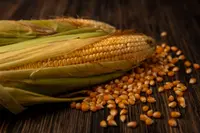
Zea mays kernels naturally occur in many colors, including yellow, white, red, blue, and multicolored patterns, because pigments such as anthocyanins and carotenoids are controlled by multiple genes that have been selected differently in traditional landraces around the world.

FAQs about corn

This species is relatively fast-growing. Under warm conditions and adequate fertility, it usually reaches harvest maturity in about 60–100 days after sowing, depending on variety length, day length, and overall weather conditions.

Grow Healthy Plants with Botan Care

Keep your plants happy and healthy with plant identification, disease detection, and easy care guidance.

Botan plant care app — identify plants on mobile

Explore More Plants