Salt-tolerant placement
Use this plant along slightly saline or coastal plots where other vegetables struggle, as its natural salt tolerance allows it to act as a buffer before more sensitive crops.

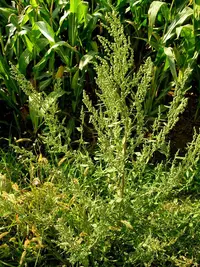
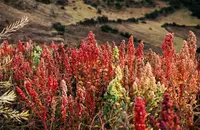
Common orache (Atriplex patula) is an annual leafy plant in the amaranth family, often found as a wild vegetable or field weed. It forms upright, branched stems with triangular, sometimes slightly toothed leaves that may show a subtle bluish or mealy coating.
This species is native to Eurasia but now grows widely in disturbed soils, coastal areas, and gardens across temperate regions. It is fast-growing and generally easy to manage where space and regular weeding are available.
Common orache prefers open, sunny sites, reasonably moist but well-drained soil, and tolerates some salinity and poor ground. These traits make it adaptable for gardeners who want to care for common orache with minimal complexity.

Care Difficulty
Easy Care

Light Preference
Full Sun

Water Requirements
Moderate Water

Temperature Preference
Cold Hardy

Hardiness Zone
4–9

Soil Texture
Sandy, Loamy, Silty

Soil pH
Neutral (7.0), Slightly alkaline (7.0–7.5)

Soil Drainage
Well-drained

Fertilization
Minimal (feed rarely)
Scan your plant to receive care tips personalized for your specific plant
Available on iOS and Android
This annual herb thrives in open, bright locations with ample direct sun for strong growth.
This species prefers consistent but not saturated soil, with good drainage as the main priority.
This hardy annual tolerates a broad temperature range but grows best in cool to warm conditions.
Humidity is rarely a concern for Atriplex patula, which is adapted to dry, exposed sites.
Atriplex patula grows best in lean, well-drained, sandy or loamy soil rather than rich, dense substrates.
This species can be grown in containers if the pot is set up to mimic its naturally well-drained, open rooting conditions.
Atriplex patula usually grows well in average or mildly poor soils, so fertilization is minimal for common orache.
Pruning Atriplex patula is mainly used to manage size and keep plants tidy rather than as a strict requirement.
This species is most often grown in open ground, so care focuses on transplanting seedlings rather than frequent repotting.
Atriplex patula is most commonly propagated from seed, which allows quick establishment of new stands.
This annual species generally completes its life cycle before winter and does not need detailed cold-season care.

Plant Health Check
Not sure what's wrong with your plant? Check your plant's health inside the app.
This species is a halophyte, meaning it tolerates saline soils by storing excess salt in its leaf tissues, which allows it to survive in coastal strands, salt marsh margins, and road verges where de-icing salts accumulate.
Its seed heads produce two visibly different seed types on the same plant, a strategy that spreads germination over time and helps the population cope with unpredictable disturbance and soil conditions.
The plant often colonizes nutrient-rich, disturbed ground such as manure heaps and field edges, and studies have shown it can accumulate certain heavy metals, which makes it a useful indicator of polluted or overfertilized soils.

In several temperate regions, this fast-colonizing annual is considered an archaeophyte, meaning it likely arrived with early agriculture thousands of years ago and has persisted as a characteristic weed of old arable landscapes.
Yellowing leaves often result from nutrient-poor soil, especially nitrogen deficiency, or from waterlogged conditions that reduce root oxygen. Compacted or saline soil, root disturbance, and natural aging of older leaves can also cause gradual yellowing on lower stems.
Keep your plants happy and healthy with plant identification, disease detection, and easy care guidance.