Sturdy wind support
Install stakes or a simple string fence along rows when plants reach 30–45 cm to prevent tall quinoa stalks from lodging in wind or heavy rain.

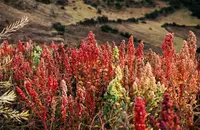
Quinoa, Chenopodium quinoa, is an annual grain crop grown mainly for its nutritious seeds. It belongs to the same family as spinach and beets. The plant forms upright stems with many branching flower clusters that mature into small, round seeds in a range of colors, often cream, red, or black. Foliage is typically green to reddish with a slightly toothed edge. Quinoa comes from the Andean region of South America, where it grows in cool, dry, high-altitude conditions. It is generally considered a resilient crop but needs open light, well-drained soil, and consistent moisture to thrive, which shapes how to care for quinoa successfully.

Care Difficulty
Moderate Care

Light Preference
Full Sun

Water Requirements
Moderate Water

Temperature Preference
Cool Climate

Hardiness Zone
4–9

Soil Texture
Sandy, Loamy, Silty

Soil pH
Acidic (5.5–6.5), Slightly acidic (6.5–7.0)

Soil Drainage
Well-drained

Fertilization
Minimal (feed rarely)
Scan your plant to receive care tips personalized for your specific plant
Available on iOS and Android
This crop performs best in open, bright conditions with long summer days.
This species prefers evenly moist but not saturated soil, especially during early growth and flowering.
This Andean crop is cool-season tolerant but needs moderate warmth to produce good seed yields.
Humidity has little impact on quinoa, which is adapted to relatively dry air.
Chenopodium quinoa grows best in loose, well-drained mineral soils that do not stay wet after irrigation or rain.
This species can be grown in containers if the pot is large and stable enough for its tall, upright habit.
Healthy Chenopodium quinoa plants need only modest, targeted feeding on reasonably fertile soil.
Pruning needs for Chenopodium quinoa are minimal and focus on basic hygiene and harvest management.
This species is usually grown as an annual field or garden crop, so focus on careful transplanting rather than long-term repotting.
New Chenopodium quinoa plants are produced almost entirely from seed rather than vegetative methods.
Chenopodium quinoa is an annual and does not need ongoing winter care once the crop is finished.

Plant Health Check
Not sure what's wrong with your plant? Check your plant's health inside the app.
Quinoa evolved in high Andean regions and can tolerate light frosts during its vegetative stage better than most warm-season crops, which helps it complete its life cycle in cool, high-altitude climates.
Quinoa seeds contain a broad balance of essential amino acids, including lysine, and relatively high levels of minerals such as magnesium and iron compared with many cereal grains, which is why it is often described as a pseudocereal rather than a true cereal.
Quinoa seeds are surrounded by a bitter layer of saponins, soap-like compounds that deter birds and herbivores; these must be removed by rinsing or polishing before the seeds are eaten.

Quinoa was domesticated in the Andean region thousands of years ago and held such cultural importance to pre-Columbian civilizations, including the Inca, that it was sometimes called the mother grain and used in ritual offerings as well as daily food.
The seeds are the main edible part and are cooked like a grain. Young leaves are also edible and can be eaten raw or cooked, similar to spinach, if they are clean and pesticide-free.
Keep your plants happy and healthy with plant identification, disease detection, and easy care guidance.