lobster mushroom Care (Hypomyces lactifluorum)

lobster mushroom

About lobster mushroom

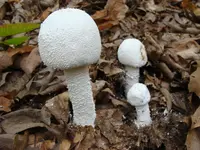
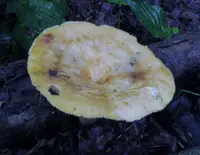
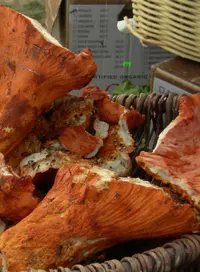
The lobster mushroom is not a true mushroom species but a parasitic fungus that colonizes certain Russula and Lactarius mushrooms. Hypomyces lactifluorum covers its host with a firm, bright orange crust that gives it a lobster-like color and texture. In the wild it appears in late summer to fall, mainly in mixed forests of North America. It grows low to the ground, often partially buried in leaf litter. Because it depends on suitable host mushrooms and specific forest conditions, it is difficult to cultivate indoors or in typical garden settings. For those who want to care for lobster mushroom, it is usually approached more as foraging and habitat management than as a conventional plant or mushroom crop.

Main Plant Requirements

Care Difficulty

Hard Care

Light Preference

Partial Shade

Water Requirements

Keep Soil Moist

Temperature Preference

Cool Climate

Hardiness Zone

Unknown

Soil Texture

Loamy, Silty, Organic-rich

Soil pH

Acidic (5.5–6.5)

Soil Drainage

Moist but well-drained

Fertilization

Minimal (feed rarely)

Get Personalized Care Plan

Scan your plant to receive care tips personalized for your specific plant

Available on iOS and Android

How to Care for the lobster mushroom

This fungus develops best in shaded woodland conditions with limited direct sun exposure.

  • Provide dappled or filtered light under trees, with no more than 1–2 hours of weak direct morning sun and full shade by midday.
  • Choose north- or east-facing forest edges where host mushrooms grow under 60–90% canopy cover to reduce drying and UV damage.
  • In summer, increased shade is beneficial; excessive direct sun scorches host mushrooms and quickly desiccates developing lobster mushroom fruiting bodies.

Moisture conditions in the forest floor strongly influence the growth of Hypomyces lactifluorum.

  • Aim for consistently moist, not saturated, soil; the upper 2–5 cm should feel damp and springy, not waterlogged or dusty dry.
  • Good drainage is essential; standing water or thick, compacted clay promotes rot of host mushrooms and reduces colonization success.
  • During dry spells, a slow soak that moistens the upper 5–10 cm of leaf litter mimics steady rainfall; shriveling or hardening mushrooms indicate insufficient moisture.

Temperature affects both the host mushrooms and the lobster mushroom fungus that parasitizes them.

  • Optimal fruiting usually occurs around 55–70°F (13–21°C), common in late summer to early fall in many temperate forests.
  • Growth slows below about 45°F (7°C), and hard frosts can damage existing mushrooms and halt new development.
  • Prolonged heat above 80–85°F (27–29°C) combined with dry conditions can cause rapid drying, deforming fruiting bodies and shortening their usable lifespan.

This parasitic fungus requires consistently moist, humid conditions rather than dry air to fruit well.

  • Maintain 80–95% humidity around developing mushrooms, mimicking a damp forest floor rather than typical room air.
  • Dry air causes caps to crack, edges to harden, and growth to stall, especially during early formation.
  • Increase humidity with heavy leaf litter, moist sphagnum on the surface, and a breathable but enclosing cover that traps moisture without sealing air completely.

Hypomyces lactifluorum grows on compatible host mushrooms in moist, organic forest substrate rather than conventional potting soil.

  • Use a loose, organic-rich medium such as decayed hardwood leaf litter mixed with partially decomposed wood chips to mimic forest duff.
  • Ensure the substrate stays evenly moist yet never waterlogged by using a coarse structure that drains but still holds water in fine organic particles.
  • Aim for slightly acidic conditions, roughly pH 5.0–6.0, by incorporating oak or other hardwood leaves and avoiding lime or alkaline amendments.
  • Improve aeration by blending in chunky bark or coarse wood pieces, and avoid compacted mineral soils, peat-only mixes, or any medium that forms a dense, airless mass.

This species is generally unsuitable for container growing, as it depends on specific forest-host interactions that are difficult to reproduce in pots.

Hypomyces lactifluorum is a parasitic fungus on certain Russula and Lactarius hosts, so direct fertilization is rarely useful.

Pruning is not applicable to Hypomyces lactifluorum, as it is a fungal parasite on other mushrooms rather than a leafy plant or shrub.

Transplanting focuses on maintaining suitable forest habitat and host mushrooms rather than moving Hypomyces lactifluorum itself.

  • Avoid disturbing established forest duff and leaf litter, as this layer supports host Russula and Lactarius species.
  • If moving inoculated substrate, transfer during cool, moist weather to reduce stress and desiccation.
  • Shift only small sections of colonized soil and leaf litter, keeping clumps intact to preserve fungal networks.
  • Water gently after any habitat disturbance to settle material and maintain consistent moisture levels.

Propagation of Hypomyces lactifluorum is challenging and usually left to natural forest processes.

Specific winter care is not needed, as this fungus persists in the soil and host networks and fruits seasonally when conditions suit.

Care Tips

Use Suitable Host

Select robust Lactarius or Russula host mushrooms from clean, pesticide-free woodland areas, as the quality and health of the host strongly influence Hypomyces lactifluorum yield and edibility.

Host Pre‑conditioning

Slightly injure host mushrooms by making shallow surface cuts or scrapes before inoculation to increase surface area and help the parasite colonize more quickly and evenly.

Targeted Inoculation

Apply spores or colonized tissue directly onto the gills and damaged areas of host mushrooms, then gently press the caps back into leaf litter so the inoculum stays in close, humid contact.

Microclimate Management

Maintain a stable, shady, wind-sheltered forest micro-site with thick leaf litter and coarse woody debris to keep moisture and temperature fluctuations low while growing lobster mushroom.

Hygienic Harvesting

Harvest only firm, bright orange specimens and trim away any white, moldy, or heavily insect-damaged areas in the field to reduce contamination risk and improve storage life.

Everything About lobster mushroom

Common Pests and Diseases

Fungus gnat larvae

This pest lives in very moist substrate or cultivation containers and feeds on fungal mycelium and decaying material, which can reduce lobster mushroom development. Symptoms include slowed growth of the host fungi and visible small white larvae in the substrate or around fruiting bodies.

Solution

Reduce excess surface moisture between misting or watering cycles, improve ventilation around grow containers, and remove heavily infested substrate. Sticky traps help monitor adult gnats, and a biological control such as Bacillus thuringiensis var. israelensis (BTI) in water can be used to reduce larvae without harming the fungal culture.

Mite infestation

This pest consists of tiny arthropods that graze on mycelium and young fruiting tissues, sometimes causing deformed or aborted lobster mushroom formations. Symptoms include fine pitting on tissue surfaces and small moving specks under magnification or bright light.

Solution

Lower overcrowding in culture trays, keep work areas clean of spilled substrate, and discard heavily infested blocks or trays. For mild issues, increase airflow and slightly reduce humidity, and in professional setups use predatory mites as a biological control while maintaining stable environmental conditions recommended for Hypomyces lactifluorum care instructions.

Bacterial blotch

This disease is caused by surface-dwelling bacteria that spread in stagnant, overly wet conditions, leading to sunken, water-soaked, and sometimes slimy spots on the fruiting surface. Symptoms include localized discoloration that can progress to soft decay in storage or on the grow surface.

Solution

Avoid direct water spray on fruiting bodies, improve air exchange, and keep relative humidity in the recommended range without visible condensation on surfaces. Remove and discard affected mushrooms promptly, sanitize knives and tools, and clean growing chambers or tents with a suitable disinfectant between production cycles.

Competing mold contamination

This disease involves fast-growing molds, often green, blue, or black, that overrun the substrate or host fungi before the lobster mushroom can fully develop. Symptoms include patches of colored mold, off odors, and weak or absent formation of the characteristic orange crust.

Solution

Use clean, well-pasteurized substrate and handle inoculation tools in hygienic conditions, avoiding open-air exposure during critical steps. At the first sign of mold, isolate or discard affected blocks, reduce airborne dust, and clean shelves, filters, and walls of the grow area to lower spore loads before starting a new batch.

Interesting Facts

Parasitic fungus makeover

This species is a parasitic fungus that invades milk-cap and russula mushrooms, chemically transforming their tissues, color, and texture rather than producing its own typical mushroom cap and stem.

Color-changing infection

The infection turns the host mushroom a bright to deep orange-red due to pigment production by the fungus, giving it the appearance of a cooked lobster shell.

Texture and flavor shift

As it colonizes its host, it often reduces brittleness and alters flavor and aroma, which is why culinary foragers treat the resulting structure as a distinct edible type rather than as its original host species.

Botan icon

Did you know?

Genetic and microscopic studies show that the lobster mushroom is actually a fungal-fungal composite: a deforming ascomycete completely overgrowing a basidiomycete host, creating a stable but unusual chimeric structure not seen in most common edible mushrooms.

FAQs about lobster mushroom

This fungus is generally considered edible and is widely foraged as a wild food. Correct identification is critical, since it parasitizes Russula or Lactarius hosts, and contaminated or spoiled specimens can cause digestive upset if eaten.

Grow Healthy Plants with Botan Care

Keep your plants happy and healthy with plant identification, disease detection, and easy care guidance.

Botan plant care app — identify plants on mobile

Explore More Plants