


Retain Woody Debris
Leave partially buried, decaying hardwood pieces in the soil near host trees, as this provides a stable, long-term substrate that helps support the underground mycelium network.

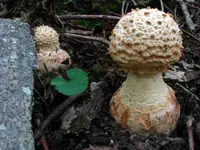
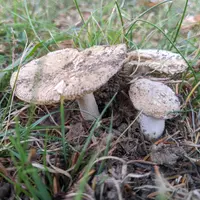
Carrot-footed lepídella (Amanita daucipes) is a mycorrhizal mushroom, not a true houseplant, that forms partnerships with tree roots in forests and woodlands. It appears from the ground with a thick, carrot-like stem base and a pale to tan cap often covered in warts or patches.
This species is native to parts of North America, most often found near oak and other hardwoods. It grows from soil rich in leaf litter rather than from wood itself.
Because it depends on live tree partners, Amanita daucipes is difficult to cultivate at home, and attempts to care for Carrot-Footed Lepidella indoors are rarely successful. It prefers undisturbed, moist, well-drained forest soils with moderate shade.

Care Difficulty
Hard Care

Light Preference
Partial Shade

Water Requirements
Keep Soil Moist

Temperature Preference
Cool Climate

Hardiness Zone
Unknown

Soil Texture
Loamy, Silty, Organic-rich

Soil pH
Acidic (5.5–6.5)

Soil Drainage
Moist but well-drained

Fertilization
Minimal (feed rarely)
Scan your plant to receive care tips personalized for your specific plant
Available on iOS and Android
This woodland fungus prefers low, forest-floor light that stays cool and indirectly lit.
Moist but not waterlogged conditions support healthy development of Amanita daucipes in soil or leaf litter.
This species thrives in temperate woodland conditions with moderate warmth and cool nights.
Humidity is not a meaningful care factor for Amanita daucipes, which lives naturally in outdoor woodland conditions.
Amanita daucipes is a mycorrhizal woodland fungus that relies on living tree partners, so soil conditions must mimic a natural forest floor.
This species is not suitable for container growing because it depends on long-term mycorrhizal associations with tree roots in undisturbed soil.
This woodland fungus does not need routine fertilization, as it forms natural associations with tree roots instead of growing like a typical garden plant.
Pruning is not applicable to Amanita daucipes, since it is a wild mycorrhizal fungus rather than a plant maintained by structural trimming.
Cultivation in pots is not recommended; this species lives in soil in partnership with tree roots and does not transplant well.
Propagation of this mycorrhizal mushroom is difficult and not usually attempted in home settings, as it depends on complex relationships with host trees.
This fungus is naturally cold hardy in its native range and typically requires no dedicated winter care from gardeners.

Plant Health Check
Not sure what's wrong with your plant? Check your plant's health inside the app.
The species has a thick, elongated basal bulb often ridged and colored in orange to reddish tones, which inspired both its common name carrot-footed Lepidella and its species name daucipes, meaning carrot-footed.
Mature fruiting bodies often develop a notably strong, unpleasant smell that many field mycologists describe as sour or rancid, which helps distinguish it from some other white Amanita species.
This fungus forms ectomycorrhizal associations with hardwoods, especially oaks and hickories in eastern North America, exchanging mineral nutrients for sugars from the tree roots and contributing to forest soil health.

Some collections show unusually coarse, blocky warts and ornamentation on both the cap and the large bulb at the base, making this species visually striking and relatively easy to recognize among North American Lepidella group amanitas.
This mushroom is considered poisonous and should never be eaten. It may cause serious gastrointestinal and potentially neurological symptoms if ingested. Children and pets must be kept away from fruiting bodies and any dried or decaying material.
Keep your plants happy and healthy with plant identification, disease detection, and easy care guidance.

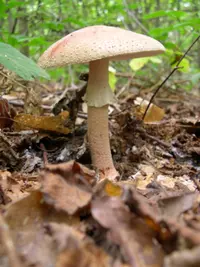
blusher
Amanita rubescens
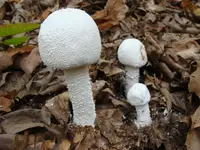
Plateful of Pyramids Lepidella
Amanita polypyramis
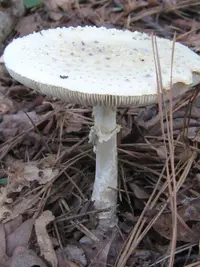
Coker's amanita
Amanita cokeri
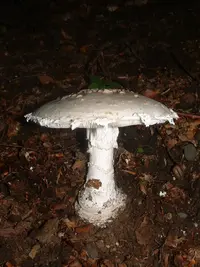
European Pine Cone Lepidella
Amanita strobiliformis
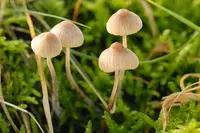
Ivory Bonnet
Atheniella flavoalba
Bresadolia craterella
Bresadolia craterella
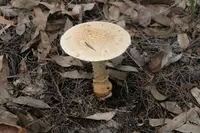
Ocher-Gilled Barefoot Lepidella
Amanita ochrophylla
Poison Champagne Amanita
Amanita crenulata