Substrate moisture control
Maintain constantly damp but not waterlogged leaf litter or moss by misting lightly with non-chlorinated water whenever the surface begins to dry, since brief drying can halt fruiting for this delicate saprophytic fungus.

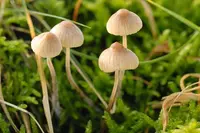
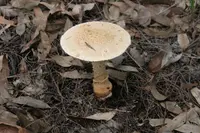
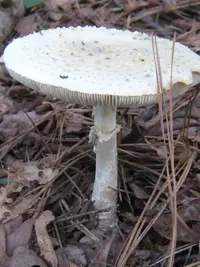
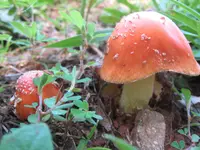
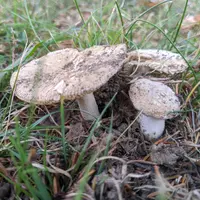
Ivory Bonnet, Atheniella flavoalba, is a small woodland mushroom rather than a typical houseplant. It forms delicate, bell-shaped caps on thin, fragile stems. Clusters often appear on mossy logs, leaf litter, or grassy clearings in temperate forests across Europe and North America. The fruiting bodies are short-lived and respond quickly to moist, cool conditions. This species is best appreciated as a seasonal, outdoor fungus, not as a long-term indoor specimen. It is not practical to care for Ivory Bonnet indoors, since it depends on complex soil and wood-decay communities that are difficult to recreate in containers.

Care Difficulty
Moderate Care

Light Preference
Partial Shade

Water Requirements
Keep Soil Moist

Temperature Preference
Cool Climate

Hardiness Zone
Unknown

Soil Texture
Loamy, Peaty, Organic-rich

Soil pH
Acidic (5.5–6.5)

Soil Drainage
Moist but well-drained

Fertilization
Minimal (feed rarely)
Scan your plant to receive care tips personalized for your specific plant
Available on iOS and Android
This small woodland mushroom prefers cool, shaded conditions rather than direct sun exposure.
Moist, but not waterlogged, ground is essential for stable Atheniella flavoalba fruiting.
This species fruits best in cool to mild conditions and declines in strong heat or hard frost.
This small saprotrophic mushroom prefers consistently moist air but does not require controlled indoor humidity.
Atheniella flavoalba grows on very moist, decaying organic matter rather than conventional garden soil.
This species can be grown in containers only as a niche outdoor fungal project using a specially prepared substrate.
Atheniella flavoalba is a tiny woodland fungus that gains nutrients from decaying organic matter and does not benefit from direct fertilization.
This short-lived mushroom does not need structural pruning; spent fruiting bodies simply collapse and decay on their own.
This species is not suited to container culture; focus on maintaining a suitable outdoor habitat rather than repotting.
Reproducing this wild mushroom in a controlled setting is complex and not a typical home project.
This fungus survives as mycelium in soil or litter and generally needs no dedicated winter care in its natural range.

Plant Health Check
Not sure what's wrong with your plant? Check your plant's health inside the app.
The small bell-shaped caps start pale yellow to cream and often fade almost completely white as they age or dry, which is a key field mark for this species among similar tiny saprotrophic mushrooms.
This fungus typically fruits on well-decayed leaf litter, mossy soil, or rotting plant debris in mixed and coniferous woodlands, where it plays a role in breaking down organic matter and returning nutrients to the soil.
The stems are very thin, often semi-translucent and easily crushed, which is why fruiting bodies rarely last long and are easily missed despite sometimes appearing in scattered groups.
This small mushroom develops quickly. From spore to visible fruiting body can take just a few days under moist, cool conditions. Individual caps often reach full size within 1–2 days and then deteriorate soon after.
Keep your plants happy and healthy with plant identification, disease detection, and easy care guidance.