Bay Bolete Care (Imleria badia)

Bay Bolete

About Bay Bolete

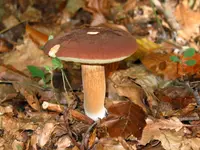
Bay bolete, Imleria badia, is a fleshy, mycorrhizal mushroom that forms a symbiotic relationship with tree roots, especially pines and spruces. It produces smooth brown caps with pale pores underneath and a sturdy, pale to chestnut stem.

This species occurs widely in temperate forests of Europe and North America, often appearing in mossy or acidic woodland soils. It is considered a relatively approachable species for foragers, but correct identification is essential.

For those interested in how to care for Bay Bolete in a managed setting, success depends on suitable host trees, undisturbed soil, and consistent moisture rather than typical indoor pot culture.

Main Plant Requirements

Care Difficulty

Hard Care

Light Preference

Partial Shade

Water Requirements

Keep Soil Moist

Temperature Preference

Cool Climate

Hardiness Zone

3–7

Soil Texture

Loamy, Silty, Organic-rich

Soil pH

Strongly acidic (4.5–5.5), Acidic (5.5–6.5)

Soil Drainage

Moist but well-drained

Fertilization

Minimal (feed rarely)

Get Personalized Care Plan

Scan your plant to receive care tips personalized for your specific plant

Available on iOS and Android

How to Care for the Bay Bolete

Imleria badia, a mycorrhizal mushroom of conifer and mixed forests, prefers cool, dappled woodland light rather than open sun.

  • Aim for bright, filtered forest light or partial shade, similar to light under pine or spruce, with 2–4 hours of soft morning sun and shade or speckled light the rest of the day.
  • Avoid strong midday and afternoon sun, which can overheat leaf litter and upper soil layers, drying the mycelium and reducing fruiting body formation.
  • In summer, choose north or east edges of woodland and let shrubs or low tree branches filter light, while in cooler seasons slightly more open canopy can support good fruiting.

Imleria badia depends on stable, moist but not waterlogged forest soil around its tree partners rather than direct watering of the mushrooms themselves.

  • Maintain evenly moist, humus-rich soil; allow the top 2–3 cm of leaf litter to feel just slightly dry before the next soaking from irrigation or rain.
  • Use well-drained, loose soil with plenty of organic matter so excess water drains within a few hours, preventing standing water and sour, anaerobic conditions.
  • In dry, warm periods, deep-soak the surrounding forest floor 1–2 times per week, watching for cracked, dusty litter as a sign of dryness and for sour smell or slimy patches as indicators of overwatering.

This forest mushroom thrives in cool to mild conditions and reacts strongly to both hard frost and extreme heat.

  • Optimal fruiting typically occurs around 55–70°F (13–21°C), with mycelium growth possible over a wider range when soil moisture is stable and the habitat is shaded.
  • The fungus usually tolerates brief drops near 32°F (0°C) in soil, but repeated hard frosts or frozen ground can halt fruiting and damage young developing fruiting bodies.
  • Sustained heat above 80°F (27°C), especially with dry air, can stress the mycelium; deep shade, thick leaf litter, and consistent soil moisture buffer temperature swings through summer.

Humidity is not a major controllable factor for this ectomycorrhizal fungus, which relies more on moist soil and natural woodland conditions than on ambient indoor humidity management.

This fungus requires specific outdoor soil conditions that mimic coniferous or mixed woodland, rather than a typical potting medium.

  • Use a loose, humus-rich, sandy to sandy-loam soil under pines or other suitable trees, as Imleria badia relies on a mycorrhizal partnership with living roots.
  • Ensure rapid drainage; the upper 5–10 cm should never stay waterlogged, yet remain evenly moist with leaf litter acting as a natural mulch.
  • Aim for a slightly acidic pH around 4.5–6.0, avoiding liming or alkaline amendments that can suppress mycorrhizal activity.
  • Improve aeration and structure outdoors by incorporating well-rotted leaf mold and fine pine litter rather than dense composts or manures.

This species is not suitable for typical container growing because it depends on a stable mycorrhizal association with live tree roots in outdoor soil.

This mycorrhizal fungus relies mainly on its tree partners for nutrients, so direct fertilizing of Imleria badia is usually unnecessary.

Imleria badia does not require pruning, since the visible mushroom is only the fruiting body of an underground fungus.

Transplanting Imleria badia focuses on moving associated host trees or inoculated soil rather than the mushroom itself.

  • Transplant in cool, moist weather, typically early spring or fall, to limit stress on the host tree roots and fungal mycelium.
  • Shift soil containing mycelium together with fine feeder roots, keeping the root ball intact and shaded during the move.
  • Replant at the same depth, water thoroughly, and maintain even soil moisture to support re-establishment of the fungus.
  • Avoid frequent moving; once established with a suitable tree, the Bay Bolete mycorrhizal network is best left undisturbed.

Propagation of Imleria badia is specialized and not handled like typical garden plants, so home propagation is rarely practical.

This ectomycorrhizal fungus is cold hardy in its native range and needs no special winter care.

Care Tips

Establish mycelium bed

Create a semi-shaded outdoor bed with a 5–10 cm layer of mixed conifer and deciduous leaf litter over sandy, slightly acidic soil to give the mycelium a stable, naturalistic substrate to colonize for several years.

Partner with host trees

Introduce spores or spawn near the drip line of compatible trees such as pine, spruce, or oak rather than in open ground, since this species is mycorrhizal and fruits best when roots of a host tree are present.

Use spore slurry

After collecting mature caps, blend them in non-chlorinated water and pour the slurry around selected trees over several square meters to distribute spores more efficiently than placing individual pieces of mushroom.

Limit soil disturbance

Avoid raking, digging, or compacting the soil where the fungus has been introduced, because consistent, undisturbed topsoil and litter layers support long-term mycelium health and more reliable fruiting.

Harvest gently

Cut or carefully twist fruiting bodies at the base and replace any displaced leaf litter to protect the underlying mycelium and maintain site hygiene when caring for Bay Bolete in a home woodland corner.

Common Pests and Diseases

Mycophagous slugs

This pest grazes on developing fruiting bodies, creating ragged holes and sometimes consuming young mushrooms entirely. Symptoms include shredded caps, slime trails, and missing portions of the stem or pore surface.

Solution

Hand-pick slugs in the evening or early morning and use physical barriers such as copper tape or sharp grit around the fruiting area. Reduce nearby hiding spots like dense groundcover or debris, and if needed, apply iron phosphate pellets specifically labeled as safe for use around edible mushrooms, following label directions carefully.

Fungus gnat larvae

This pest lives in moist soil or substrate and feeds on fine fungal mycelium and young primordia, which can halt or deform mushroom development. Symptoms include poor or aborted fruiting, soft or collapsing stems, and tiny black adult gnats flying above the substrate.

Solution

Allow the top layer of substrate to dry slightly between waterings to interrupt the larval stage and use yellow sticky traps to reduce adult populations. For more serious issues, apply a biological control such as Bacillus thuringiensis israelensis (Bti) in irrigation water according to product instructions to target larvae without harming the fungus.

Hypomyces infection

This disease is caused by parasitic fungi (often Hypomyces species) that colonize bay bolete fruiting bodies, covering them with a whitish or yellowish mold and distorting their shape. Symptoms include felt-like fungal growth on caps and pores, discoloration, and a tough, inedible texture.

Solution

Promptly remove and discard all visibly infected mushrooms to reduce local spore load and avoid disturbing or spreading spores over healthy fruiting bodies. Avoid heavy overhead watering and maintain good air movement around the fruiting area to limit prolonged surface moisture, which favors parasitic fungal growth.

Mite infestation

These insects (microscopic arthropods) feed on mushroom tissue and spores, causing pitted or dusty-looking caps and damaged pore surfaces. Symptoms include fine speckling, slow deterioration of fruiting bodies, and, in severe cases, visible tiny moving dots on the underside of caps or in substrate.

Solution

Discard heavily infested mushrooms and, if growing Bay Bolete under controlled conditions, replace or pasteurize contaminated substrate. Keep the fruiting area clean, avoid introducing unsterilized forest litter, and if needed use predatory mites sourced from biological control suppliers to reduce pest mite populations.

Interesting Facts

Blue-staining reaction

When the pores or flesh are bruised, they usually stain bluish, but the reaction is slower and often weaker than in many other boletes, which helps distinguish it from some toxic lookalikes.

Mycorrhizal specialist

This species forms ectomycorrhizal partnerships with conifers and some broadleaf trees, exchanging mineral nutrients and water from the soil for sugars produced by the host through photosynthesis.

Heavy metal accumulator

Studies in Europe show that its fruiting bodies can accumulate elevated levels of certain heavy metals such as cadmium from polluted soils, so collection near roads or industrial areas is discouraged.

Botan icon

Did you know?

Molecular studies have shown that this species, long treated in the genus Boletus, is genetically distinct enough to warrant its own genus Imleria, making it an example of how DNA analysis has reshaped modern bolete classification.

FAQs about Bay Bolete

This species is considered an edible wild mushroom when correctly identified and cooked. It is mild in flavor, often sautéed or dried. As with all wild fungi, misidentification risks exist, so foraging guidance from an expert is essential.

Grow Healthy Plants with Botan Care

Keep your plants happy and healthy with plant identification, disease detection, and easy care guidance.

Botan plant care app — identify plants on mobile

Explore More Plants