Orange Grisette Care (Amanita crocea)

Also known as: Saffron Ringless Amanita
Orange Grisette

About Orange Grisette

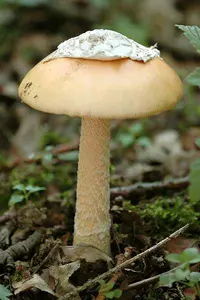
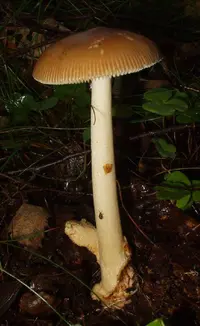
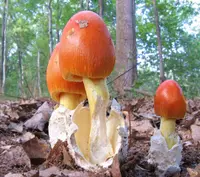
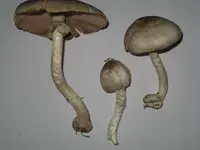
Orange grisette (Amanita crocea) is a mycorrhizal fungus, not a typical houseplant. It forms a partnership with tree roots and helps them absorb nutrients. The fruiting body appears as an orange to apricot cap with pale gills and a slender, striated stem, often emerging from a white, sack-like base.

This species is usually found in woodlands and forest edges across parts of Europe, often in association with birch or oak. It is not suited to containers or standard garden culture, so attempts to care for Orange Grisette focus on maintaining healthy host trees and undisturbed soil.


Main Plant Requirements

Care Difficulty

Hard Care

Light Preference

Partial Shade

Water Requirements

Keep Soil Moist

Temperature Preference

Cool Climate

Hardiness Zone

Unknown

Soil Texture

Loamy, Silty, Organic-rich

Soil pH

Acidic (5.5–6.5)

Soil Drainage

Moist but well-drained

Fertilization

Minimal (feed rarely)

Get Personalized Care Plan

Scan your plant to receive care tips personalized for your specific plant

Available on iOS and Android

How to Care for the Orange Grisette

This ectomycorrhizal fungus depends on dappled woodland light rather than direct open sun.

  • Provide bright, filtered light under deciduous trees, with about 2–4 hours of soft morning sun and shade or broken light afterward for stable fruiting.
  • Avoid strong midday and afternoon sun in open clearings, which can dry the litter layer, damage caps, and shorten the life of Orange Grisette fruiting bodies.
  • In summer, favor partial to deep shade; in spring and fall, slightly more open canopy is acceptable as long as the forest floor does not dry out quickly.

This species relies on consistently moist, not saturated, forest soil and litter around its host trees.

  • Aim for evenly moist mineral soil with a loose leaf-litter layer; the top 2–3 cm should feel damp but not puddled to support stable mycelial growth.
  • Watch for signs of overwatering near cultivated host trees such as standing water, sour smell, or moss overgrowth, which reduce oxygen and can stress Amanita crocea mycelium.
  • In dry spells, light supplemental watering around host tree roots can help, but allow the surface to lose gloss and feel just moist before watering again, especially in cooler seasons.

This woodland fungus performs best in mild, temperate conditions with cool nights and moderate days.

  • Optimal fruiting often occurs around 55–70°F (13–21°C), with the underground mycelium remaining active across a wider band when soil stays cool and moist.
  • It tolerates brief drops near 32°F (0°C) in soil, but hard frost and repeated freeze–thaw at the surface can damage developing primordia and reduce visible Amanita crocea fruiting.
  • Sustained heat above 80°F (27°C), especially with dry air, tends to shorten the life of caps; partial shade, mulch, and stable soil moisture buffer temperature swings in summer.

Humidity is not a significant controllable factor for Amanita crocea, which relies more on suitable outdoor soil and host trees than on air moisture levels.

Amanita crocea requires natural, undisturbed outdoor soil that supports its mycorrhizal partnership with host trees.

  • Favor a light, well-structured, slightly sandy to loamy forest soil with abundant leaf litter and fine roots.
  • Ensure the site drains freely after rain; avoid compacted, waterlogged, or heavily churned ground that stays wet for long periods.
  • Aim for slightly acidic to neutral conditions around pH 5.0–7.0, avoiding limed or strongly alkaline areas.
  • Maintain soil aeration by preserving leaf litter and avoiding heavy foot traffic, digging, or mulching with dense, plastic-like materials.

This species is not suitable for container growing, as its mycorrhizal life cycle depends on a living tree root system in natural soil.

Amanita crocea is a wild mycorrhizal fungus that relies on its tree partners and does not benefit from targeted fertilization in cultivation.

Pruning is not applicable to Amanita crocea, as it is a wild mushroom rather than a plant with stems or branches to shape.

Transplanting this mycorrhizal fungus is generally unsuccessful because Amanita crocea depends on a specific root partnership with its host tree.

  • Avoid attempting container culture; the species requires living tree roots and natural soil structure.
  • If found in unsuitable locations, leave fruiting bodies undisturbed rather than trying to move them.
  • Do not dig up mushrooms or surrounding soil, as this disrupts the underground mycelium network.
  • Support tree health instead of transplanting by maintaining undisturbed leaf litter and low soil disturbance.

Purposeful propagation of Amanita crocea is not a standard horticultural practice and is technically complex.

There are no practical winter care tasks for this wild fungus, as it persists underground as mycelium and resumes fruiting in suitable seasons.

Care Tips

Mycorrhizal partner first

Establish a healthy stand of compatible trees such as birch, beech, or oak in well-drained, low-fertility soil before growing Orange Grisette, since this fungus depends on forming a mycorrhiza, a nutrient-exchanging partnership with living roots.

Minimize soil disturbance

Avoid deep digging, heavy raking, or rototilling under host trees so the underground mycelium and fine tree roots remain intact, which supports consistent fruiting over multiple seasons.

Control competing vegetation

Keep grass and aggressive groundcovers sparse in the fruiting zone by gentle hand weeding or shallow scraping so the mushrooms can emerge through loose leaf litter and not dense turf.

Leaf litter management

Maintain a thin, natural layer of deciduous leaf litter, topping up annually but avoiding thick, matted piles so the soil stays cool and moist while young mushrooms can still push through.

Low-input nutrient regime

Do not add high-nitrogen lawn fertilizers around the host trees; if needed, use only a light, balanced, slow-release product at the dripline so the soil stays relatively lean, which favors Amanita crocea over more nutrient-demanding competitors.

Common Pests and Diseases

Mycophagous insects

These insects feed on the fruiting bodies, causing pits, tunnels, and rapid decay of the cap and stem. Symptoms include small entry holes, softening tissues, and frass-like debris on or inside the mushroom.

Solution

Harvest mushrooms as soon as caps expand, trim away visibly tunneled or soft tissue, and discard heavily infested fruiting bodies. Use fine mesh barriers or netting over fruiting sites, minimize attractants such as decaying organic piles nearby, and avoid chemical insecticides since the mushroom is collected for consumption.

Fungal parasitism

This disease is caused by other fungi colonizing the mushroom surface or internal tissues, leading to deformed, discolored, or prematurely collapsing fruiting bodies. Symptoms include fuzzy, powdery, or slimy growths on caps and stems, often white, gray, or green.

Solution

Remove and dispose of any parasitized mushrooms promptly to reduce spore spread. Keep the surrounding leaf litter and soil surface free of excessive rotting material, and avoid overwatering nearby vegetation to limit prolonged surface moisture that favors competing fungi.

Bacterial soft rot

This disease results from opportunistic bacteria entering damaged tissues, leading to water-soaked, slimy, and foul-smelling decay of the mushroom. Symptoms include rapid collapse of the cap and stem, with wet, discolored patches that spread outward from wounds or insect damage.

Solution

Harvest only intact, firm mushrooms and discard any that show soft or slimy areas. Reduce handling damage, remove decaying organic matter where rot is frequent, and avoid collecting during prolonged wet periods when bacterial spread and tissue breakdown are highest.

Interesting Facts

Distinctive crocea coloring

This species is characterized by a smooth egg-yellow to orange cap and a similarly colored stipe, with no strong color contrast between cap and stem, which helps differentiate it from many other amanitas that have white or strongly contrasting stems.

Fragile universal veil

The universal veil, a tissue that encloses young fruiting bodies, is very delicate in this species and often leaves only a thin, sac-like volva at the base and a few faint patches on the cap rather than the thick warts seen on many relatives.

Mycorrhizal with birch

It forms ectomycorrhizal associations with birch and occasionally other broadleaf trees, exchanging mineral nutrients from the soil for sugars produced by the host tree through photosynthesis.

Botan icon

Did you know?

Unlike some of its more infamous relatives in the genus, this species is not known to contain the deadly amatoxins or phallotoxins that cause severe liver and kidney damage, which has led to its use as an edible mushroom in certain European regions, though consumption still requires careful, expert-level identification.

FAQs about Orange Grisette

This mushroom is considered an edible species when correctly identified, but it belongs to a genus that includes deadly toxic look-alikes. Only highly experienced foragers should eat it; beginners should avoid consumption entirely for safety.

Grow Healthy Plants with Botan Care

Keep your plants happy and healthy with plant identification, disease detection, and easy care guidance.

Botan plant care app — identify plants on mobile

Explore More Plants