Use Clean Substrate
Sterilize sawdust, hardwood chips, or supplemented substrate by pressure cooking or steaming before inoculation to reduce competing molds and bacteria that sharply lower yields when growing Ear fungus.

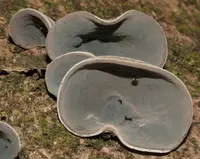
Ear fungus, Auricularia cornea, is a jelly-like wood-decay fungus often grown by specialty growers rather than typical home gardeners. It forms soft, ear-shaped fruiting bodies with a smooth, rubbery surface and a translucent brown to purplish color. In nature it grows on dead or weak hardwood trees in warm, humid forests across parts of Asia and other subtropical regions.
This fungus prefers consistently moist conditions, good air movement, and a shady, protected spot. For those who want to care for Ear fungus at home, the main challenges are keeping the substrate clean, evenly damp, and at suitable humidity without overheating or drying out.

Care Difficulty
Moderate Care

Light Preference
Partial Shade

Water Requirements
Keep Soil Moist

Temperature Preference
Warm Climate

Hardiness Zone
Unknown

Soil Texture
Organic-rich, Loamy

Soil pH
Acidic (5.5–6.5)

Soil Drainage
Moist but well-drained

Fertilization
Minimal (feed rarely)
Scan your plant to receive care tips personalized for your specific plant
Available on iOS and Android
This wood-inhabiting jelly fungus prefers low to moderate light that mimics shaded forest conditions.
Moisture management is critical, as this species fruits best on consistently damp but not waterlogged wood or substrate.
Stable, mild temperatures support reliable growth and fruiting of this jelly fungus on wood or lignin-rich substrates.
Auricularia cornea needs consistently high humidity to form healthy, well-shaped fruiting bodies.
Auricularia cornea does not grow in typical potting soil and instead needs a moist, well-aerated, organic substrate.
This species is suitable for container growing when treated as a substrate-based mushroom crop rather than a potted plant.
Auricularia cornea grown on logs or sterilized substrate needs only minimal nutritional adjustment rather than conventional houseplant feeding.
Auricularia cornea does not require true pruning, but fruiting bodies can be managed by harvesting correctly.
This fungus is usually grown on fixed logs or bags, so transplanting focuses on moving inoculated material rather than repotting like a houseplant.
Auricularia cornea is commonly propagated through mycelium-based methods rather than seeds or cuttings.
Outdoor Auricularia cornea on hardy logs generally tolerates cool weather with minimal specific winter care.

Plant Health Check
Not sure what's wrong with your plant? Check your plant's health inside the app.
Fresh fruit bodies are typically translucent brown to dark olive-brown and can dry almost black, then rehydrate and regain their shape and flexibility after rain.
This species is a saprotrophic fungus that decomposes dead hardwood, especially broadleaf trees, contributing to nutrient recycling in warm, humid forests.
Auricularia cornea is distinguished microscopically by its cylindrical to allantoid (sausage-shaped) spores and a gelatinous layer packed with tiny hair-like structures called hyphidia.

Auricularia cornea is an important cultivated edible fungus in parts of East and Southeast Asia, where specially prepared hardwood sawdust blocks are used to produce its ear-shaped fruit bodies on a commercial scale.
Yes, this species is edible and widely consumed in Asian cuisines. It should only be eaten when correctly identified, collected from unpolluted wood, and cooked thoroughly. Avoid specimens from chemically treated timber or roadside trees.
Keep your plants happy and healthy with plant identification, disease detection, and easy care guidance.