Rhizome Division
Divide mature clumps every 3–4 years in late spring by lifting a section, cutting the rhizome into 3–5 bud pieces with a clean knife, and replanting immediately at the same depth to maintain vigor and create new plants.

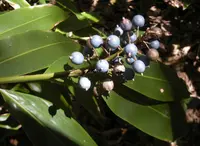
Native ginger (Alpinia caerulea) is a clumping, rhizome-forming plant from the rainforests and moist woodlands of eastern Australia. It is related to edible ginger and has lush, tropical foliage.
Plants form upright canes with broad green leaves and showy flower spikes that mature into decorative blue berries. It suits shaded gardens, subtropical landscapes, and sheltered courtyards.
This species is generally robust and forgiving, which makes it straightforward for gardeners learning how to care for Native Ginger. It prefers filtered light, consistent moisture, and rich, well-drained soil to stay dense and healthy.

Care Difficulty
Easy Care

Light Preference
Partial Shade

Water Requirements
Keep Soil Moist

Temperature Preference
Warm Climate

Hardiness Zone
9–11

Soil Texture
Loamy, Sandy, Organic-rich

Soil pH
Acidic (5.5–6.5), Slightly acidic (6.5–7.0)

Soil Drainage
Moist but well-drained

Fertilization
Minimal (feed rarely)
Scan your plant to receive care tips personalized for your specific plant
Available on iOS and Android
This subtropical understory species prefers bright, gentle light rather than harsh, exposed sun.
This species prefers consistently moist, not saturated, soil that never stays dry for long periods.
This plant thrives in mild, frost-free climates with warm summers and gentle winters.
This species prefers moderately humid air and reacts if kept too dry for long periods.
Alpinia caerulea grows best in moist, well-structured soil that holds water yet drains freely.
This species adapts well to container growing when the pot is matched to its vigorous rhizome and leaf mass.
Alpinia caerulea responds well to light, consistent feeding during the warm growing season.
Alpinia caerulea benefits from light, tidy pruning to maintain a dense, healthy clump.
This species is usually grown in the ground, with transplanting done only when clumps outgrow their space or performance declines.
Division is the most reliable way to increase Alpinia caerulea plants for home gardens.
In mild, frost-free climates this species needs little winter attention, but colder regions require some simple protection.

Plant Health Check
Not sure what's wrong with your plant? Check your plant's health inside the app.
This native Australian ginger produces aromatic rhizomes and young shoots that First Nations peoples have traditionally used as a food flavoring and mild spice, especially in eastern Australian rainforests.
The plant is named for its striking metallic blue fruits, which contain white, fleshy arils that are eaten by birds and help disperse the seeds through rainforest understoreys.
In the wild, this species naturally grows as an understory plant in warm, humid rainforests of eastern Australia, adapted to filtered light, high rainfall, and organically rich, well-drained soils.

This species often forms loose clumps that create low habitat structure on the rainforest floor, providing shelter for small reptiles, invertebrates, and ground-foraging birds while also stabilizing soil on shaded slopes.
The rhizomes and young shoots are edible and have a mild ginger-like flavour, often used in bushfood. Only harvest from correctly identified plants in clean areas and use moderately, as a garnish or seasoning rather than a staple food.
Keep your plants happy and healthy with plant identification, disease detection, and easy care guidance.