American spikenard Care (Aralia racemosa)

American spikenard

About American spikenard

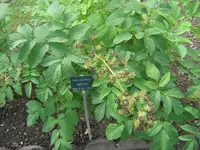
American spikenard, Aralia racemosa, is a robust herbaceous perennial native to woodlands and shaded slopes in eastern North America. It forms a tall, bushy clump with large divided leaves and airy clusters of tiny greenish-white flowers. These are followed by showy purple to reddish berries that attract wildlife and add late-season interest. The plant naturally grows in dappled forest light and moist, humus-rich soil, which guides how to care for American spikenard in gardens. Its tolerance of shade, cold winters, and average garden conditions makes it moderately easy to grow for most temperate-climate gardeners.

Main Plant Requirements

Care Difficulty

Moderate Care

Light Preference

Partial Shade

Water Requirements

Regular Water

Temperature Preference

Cold Hardy

Hardiness Zone

3–8

Soil Texture

Loamy, Silty, Organic-rich

Soil pH

Acidic (5.5–6.5), Slightly acidic (6.5–7.0)

Soil Drainage

Moist but well-drained

Fertilization

Minimal (feed rarely)

Get Personalized Care Plan

Scan your plant to receive care tips personalized for your specific plant

Available on iOS and Android

How to Care for the American spikenard

This woodland perennial prefers bright, filtered light that mimics its natural forest-edge habitat.

  • Provide 3–5 hours of gentle morning sun with dappled or open shade the rest of the day; avoid intense afternoon sun, especially in summer.
  • Tolerates partial to full shade, but flowering and vigor decline in very deep shade; foliage may become sparse and leggy when light is too low.
  • In hotter regions, give American spikenard more shade during June–August to prevent leaf scorch and excessive wilting during heat waves.

This species prefers evenly moist, cool soil but does not tolerate standing water.

  • Water when the top 3–5 cm of soil feels slightly dry, aiming to keep the root zone consistently damp but not soggy.
  • Use deep, infrequent soakings rather than light sprinkling, and ensure the site has well-drained, humus-rich soil to reduce root rot risk in Aralia racemosa.
  • In spring and early summer, monitor closely during active growth; in late summer and fall, reduce watering as growth slows and foliage begins to decline.

This hardy perennial is adapted to cool to mild climates with cold winters and moderate summers.

  • Optimal growth occurs around 60–75°F (16–24°C) during the growing season, with cooler nights helping maintain sturdy stems and foliage.
  • The dormant root system tolerates winter lows near 0°F (−18°C) in the ground when mulched; repeated freeze–thaw cycles can be more damaging than steady cold.
  • In summer, plants handle short periods up to about 85–90°F (29–32°C) if soil stays moist and shaded; prolonged extreme heat can cause leaf scorch and earlier dieback.

This woodland perennial prefers moderately moist air but usually adapts to typical household humidity.

  • Aim for 40–60% humidity to match the sheltered, moist forest conditions favored by American spikenard.
  • Leaves curling at edges or browning between veins can indicate air that is too dry or uneven moisture at the roots.
  • Increase local humidity by grouping plants, using a pebble tray with water below the pot base, or running a nearby humidifier.

This species grows best in deep, loose, humus-rich soil that mimics a shady forest floor.

  • Use a loamy mix with high organic matter, such as 2 parts garden loam, 2 parts compost, and 1 part leaf mold or fine bark.
  • Ensure free drainage; soil should stay evenly moist but never waterlogged, which encourages root rot and weak growth in Aralia racemosa.
  • Target slightly acidic to neutral pH, around 6.0–7.0, which supports nutrient uptake and healthy root development.
  • Improve aeration and structure in heavy clay by incorporating coarse sand, fine bark, or perlite and avoiding compacted planting sites.

This plant can be grown in containers, but large, stable pots are needed to support its mature size and root system.

  • Choose a deep container at least 30–40 cm tall to accommodate the fleshy roots and prevent crowding near the surface.
  • Select a heavy, non-tipping pot material such as thick ceramic to counterbalance tall, leafy stems in windy or exposed spots.
  • Elevate the container slightly on pot feet so drainage holes stay clear and excess water exits quickly after rain or watering.

American spikenard in rich garden soil needs only modest feeding to maintain healthy growth.

  • Use a balanced, slow-release fertilizer (around 10-10-10) or a light top-dressing of compost in early spring.
  • Feed outdoor plants 1–2 times during the growing season; containers may benefit from monthly feeding.
  • Dilute liquid fertilizers to 1/2 strength to avoid root burn and excessive, weak growth.
  • Stop fertilizing in late summer and avoid feeding during fall and winter dormancy.

Aralia racemosa needs only light pruning to stay tidy and healthy.

  • Prune in late winter or very early spring before new shoots emerge.
  • Remove dead, damaged, or diseased stems at ground level using clean, sharp pruners.
  • Thin a few older, crowded stems to improve air flow and maintain a balanced clump shape.
  • Avoid heavy cutting of young shoots, which can reduce flowering panicles later in the season.

This species is usually grown in the ground, so focus on careful transplanting rather than frequent repotting.

  • Transplant in early spring or early fall when temperatures are mild and soil is moist.
  • Move plants only every several years or when overcrowded, as Aralia racemosa dislikes frequent disturbance.
  • Choose a site with deep, humus-rich soil; dig a wide hole and keep the crown at the same soil level.
  • Water thoroughly after transplanting, then keep soil evenly moist and apply mulch to limit root stress.

Aralia racemosa is most often propagated by seed or by careful division of mature clumps.

  • Collect ripe seeds in late summer to fall, then cold-stratify them for 2–3 months before spring sowing.
  • Sow seeds in moist, humus-rich soil with light cover and keep in cool, evenly damp conditions.
  • Divide established plants in early spring, lifting the clump and separating sections with several buds and roots.
  • Replant divisions promptly at the original depth, water well, and maintain steady moisture until re-established.

This cold-hardy perennial dies back naturally in winter and usually needs minimal special care.

  • Tolerates typical temperate frosts once established, with dormant roots surviving well below freezing.
  • After hard frost, cut back spent stems to ground level to reduce disease carryover.
  • Apply a 5–8 cm mulch layer over the root zone in late fall to stabilize soil temperatures.

Care Tips

Install sturdy support

Provide a low, discreet support such as a peony ring or short stake early in the season so the tall, heavy stems and flower racemes stay upright and do not flop or snap in wind or after heavy rain.

Use deep organic mulch

Maintain a 5–8 cm layer of shredded leaves or fine bark over the root zone to conserve moisture, keep the root area cool, and gradually improve the humus-rich woodland soil this species prefers.

Divide for renewal

Every 5–7 years, lift and divide congested clumps in early spring just as new shoots emerge to maintain vigor, control size, and create new plants for other shaded parts of the garden.

Protect emerging shoots

Mark the planting area and place a light barrier such as low hoops or a temporary mesh in early spring to protect fragile new shoots from accidental trampling while still allowing light and air movement.

Plan wildlife access

Site plants where berries can be left on the stems and not heavily deadheaded, so birds and pollinators can use the flowers and fruit while you still maintain access for routine tasks involved in caring for American spikenard.

Common Pests and Diseases

Leaf spot fungi

This disease causes irregular brown or purplish spots on leaves that may merge and lead to premature yellowing and drop, especially in humid, shaded plantings.

Solution

Remove and discard heavily spotted leaves, avoid overhead watering, and thin surrounding vegetation to improve air movement; if outbreaks recur, apply a copper-based or chlorothalonil fungicide labeled for ornamental perennials in early spring as new foliage emerges, following label directions.

Rust

This disease produces small orange to brown pustules or patches on the undersides of leaves, sometimes causing yellowing on the upper surface and early leaf drop.

Solution

Prune and discard infected foliage, keep the plant on a wider spacing for better airflow, and water at soil level; in sites with repeated rust issues, start a preventive fungicide program in spring using a product labeled for rust on ornamentals.

Aphids

These insects cluster on young stems and leaf undersides, sucking sap and causing curled or distorted foliage and sticky honeydew that can attract sooty mold.

Solution

Spray colonies off with a strong stream of water, encourage natural predators such as lady beetles, and, if needed, use insecticidal soap or a light horticultural oil, ensuring thorough coverage of new growth and leaf undersides.

Spider mites

These pests thrive in hot, dry conditions, leading to stippled, dull foliage, fine webbing on leaf undersides, and gradual leaf decline.

Solution

Increase humidity around the plant, hose down foliage to dislodge mites, and apply insecticidal soap or a labeled miticide to both upper and lower leaf surfaces, repeating at intervals to catch emerging stages.

Slugs and snails

These pests chew irregular holes in tender leaves, often leaving slime trails and damage concentrated near the soil line or in moist, shaded spots.

Solution

Hand-pick in the evening, remove dense groundcover or debris where they hide, use iron phosphate slug baits placed away from the crown, and keep mulch slightly pulled back from the base to reduce hiding places around the plant.

Interesting Facts

North American woodland native

This species is native to rich, shaded woodlands of eastern North America, where it typically grows at the edges of forests and along slopes with deep, moist, humus-rich soil.

Large, compound foliage

The plant forms bold clumps with very large, twice- or thrice-pinnate compound leaves that can reach over 60 cm long, giving it an almost shrub-like appearance despite dying back to the ground each winter.

Bird-dispersed berries

Its late-summer purple to nearly black berries are eaten by birds and small mammals, which help disperse the seeds across the forest understory.

Botan icon

Did you know?

Early European and North American botanists noted this plant’s strong aromatic root and placed it in the ginseng family (Araliaceae), leading to its traditional comparison to ginseng in field guides and ethnobotanical records, even though it is not a true ginseng species.

FAQs about American spikenard

This species spreads slowly by short rhizomes and self-seeding, but it is not typically aggressive. In average garden conditions it forms a clump over time and rarely overruns neighboring shade perennials if spacing is adequate.

Grow Healthy Plants with Botan Care

Keep your plants happy and healthy with plant identification, disease detection, and easy care guidance.

Botan plant care app — identify plants on mobile

Explore More Plants