Petite Marigold Care (Tagetes tenuifolia)

Petite Marigold

About Petite Marigold

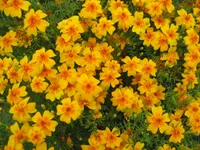
Petite marigold (Tagetes tenuifolia) is a compact, finely textured annual from Central and South America, often grown for its bright, abundant flowers and fragrant foliage. Plants form low, bushy mounds with many small, single blooms in shades of yellow, orange, or bicolor.

This species is valued in borders, edging, and containers, and is also used in kitchen gardens because its scent can help deter some pests. It is considered easy to grow, adapting well to typical garden conditions when given full sun and reasonably well-drained soil.

Gardeners who want to learn how to care for Petite Marigold will find it forgiving of minor mistakes, making it suitable for beginners and mixed plantings.

Main Plant Requirements

Care Difficulty

Easy Care

Light Preference

Full Sun

Water Requirements

Moderate Water

Temperature Preference

Tropical / Frost Sensitive

Hardiness Zone

9–11

Soil Texture

Sandy, Loamy, Organic-rich

Soil pH

Acidic (5.5–6.5), Slightly acidic (6.5–7.0)

Soil Drainage

Well-drained

Fertilization

Light (every 4–6 weeks)

Get Personalized Care Plan

Scan your plant to receive care tips personalized for your specific plant

Available on iOS and Android

How to Care for the Petite Marigold

Tagetes tenuifolia thrives in bright outdoor conditions with plenty of direct sun.

  • Provide 6–8 hours of direct sunlight daily; morning sun plus light afternoon sun gives compact, floriferous plants.
  • The plant tolerates light partial shade (3–4 hours sun), but flowering decreases and stems stretch if light drops below this.
  • In hot summers, protect Petite Marigold from intense late afternoon sun with light shade to reduce leaf scorch and drought stress.

Tagetes tenuifolia prefers evenly moist, well-drained soil that dries slightly between waterings.

  • Outdoors in the ground, water when the top 2–3 cm of soil feels dry, then soak the root zone thoroughly and allow excess to drain away.
  • During cooler or rainy periods, extend the interval between waterings to prevent soggy soil, which can cause root rot and yellowing leaves.
  • If underwatered, foliage wilts and flower production drops; if overwatered, leaves yellow from the bottom and the soil smells sour.

This species grows best in warm, frost-free conditions typical of summer bedding plants.

  • Optimal growth occurs around 68–80°F (20–27°C); flowering is strongest when nights remain above 60°F (16°C).
  • Plants are very frost-sensitive and can be injured below 32°F (0°C), so outdoor planting should wait until all spring frosts have passed.
  • Tagetes tenuifolia tolerates short heat waves up to about 95°F (35°C) if soil moisture is adequate, but prolonged extreme heat can slow flowering.

Humidity is rarely critical for Tagetes tenuifolia, which performs well in typical outdoor conditions.

Tagetes tenuifolia prefers relatively lean, well-drained soil that does not stay wet for long.

  • Use a light loamy or sandy mix with roughly 60–70% mineral soil and 30–40% compost for moderate fertility.
  • Aim for slightly acidic to neutral pH, around 6.0–7.2, as strongly alkaline soil can reduce nutrient availability.
  • Improve drainage and aeration by blending in coarse sand or perlite at 20–30% of the total mix, especially in heavy soils.
  • Avoid compacted, waterlogged, or peat-heavy mixes that stay soggy, since these promote root and crown rot.

This species grows very well in containers when drainage and root space are managed carefully.

  • Choose a pot at least 20–25 cm wide so multiple Petite Marigold plants can form a dense, balanced canopy without crowding roots.
  • Select terracotta or other porous materials in wet climates to let excess moisture evaporate faster from the root zone.
  • Place containers where wind exposure does not topple the plants, especially once taller, branching stems develop later in the season.

Tagetes tenuifolia benefits from light, consistent feeding but grows acceptably in average garden soil.

  • Use a balanced, water-soluble fertilizer (for example 10-10-10) at 1/2 strength for caring for Petite Marigold in containers.
  • Feed every 3–4 weeks during the active growing and flowering season for best bloom density.
  • In garden beds, mix a small amount of compost or slow-release fertilizer into the soil at planting time only.
  • Stop feeding in late fall and avoid fertilizing during winter or any dormant period to prevent weak, leggy growth.

Tagetes tenuifolia responds very well to light, ongoing pruning to maintain compact, floriferous plants.

  • Start light pruning in late spring once plants are established, then repeat through the flowering season as needed.
  • Pinch or shear back spent flower stems and leggy growth to encourage branching and more blooms.
  • Remove dead, diseased, or storm-damaged stems with clean, sharp scissors or small hand pruners.
  • At season’s end, cut plants back near ground level to tidy beds and reduce self-seeding if desired.

This marigold is usually grown as an annual bedding plant, so transplanting timing matters more than long-term repotting.

  • Transplant seedlings outdoors in spring after frost risk has passed and soil has warmed.
  • Use individual plugs or small pots; move plants once roots lightly fill the cell but before they circle densely.
  • Plant into well-drained soil at the same depth as in the container, firm gently, then water thoroughly to settle roots.
  • Shade lightly and keep soil evenly moist for 3–5 days after transplanting to reduce transplant shock and wilting.

New Tagetes tenuifolia plants are most commonly raised from seed rather than from cuttings or division.

  • Sow seeds indoors 4–6 weeks before the last frost or directly outdoors after frost has passed.
  • Provide warm conditions of about 68–75°F, consistent moisture, and bright light for quick germination.
  • Lightly cover seeds with a thin layer of fine substrate, then mist to avoid displacing them.
  • Thin or prick out seedlings once they have 2 true leaves, spacing 15–25 cm apart in the garden.

Tagetes tenuifolia is frost-sensitive and usually grown as a summer annual, so plants typically die after hard frost.

  • In USDA zones with freezing winters, allow top growth to be killed by frost, then remove or compost the remains.
  • Mulch the bed lightly only to protect soil structure, not the annual plants themselves.
  • For containers, discard spent plants after frost and store the potting mix dry or refresh it for the next season.

Care Tips

Pinch For Bushiness

Pinch out the first flower buds and soft shoot tips when plants are 8–10 cm tall to encourage dense, branching growth and a heavier bloom set over the season.

Continuous Deadheading

Remove spent flower heads every few days by snapping or clipping just above a leaf node to extend the flowering period and reduce the chance of self-sowing in unwanted areas.

Targeted Pest Buffer

Use plants as a low edging around vegetables or herbs to act as a visual and partial pest buffer, but monitor closely and remove any heavily infested plants so they do not become a reservoir for spider mites or aphids.

Seasonal Succession Sowing

Stagger sowing every 3–4 weeks in spring and early summer so flowering continues evenly through the warm season instead of peaking all at once, which is especially useful when growing Petite Marigold in mixed borders or containers.

Container Rotation Practice

Rotate pots by 90° every 1–2 weeks and shift containers slightly farther apart as plants fill out to keep growth even, reduce humidity pockets between plants, and lower the risk of foliar disease development.

Common Pests and Diseases

Spider mites

This pest often appears in hot, dry weather and feeds on the undersides of leaves, causing fine stippling and pale, dull foliage. Symptoms include very fine webbing and a general loss of vigor in affected plants.

Solution

Rinse foliage thoroughly with a firm stream of water, especially the undersides of leaves, and repeat every few days until population drops. For heavier infestations, use a horticultural soap or neem oil, applied in the early morning or evening, and keep plants evenly watered to reduce stress.

Leaf miners

These insects tunnel inside the leaves, creating winding, pale trails that spoil the foliage appearance but rarely kill mature plants. Damage is most noticeable on young, tender leaves of Tagetes tenuifolia.

Solution

Promptly remove and dispose of affected leaves to physically reduce larvae in the plant. For recurring problems, use yellow sticky traps to monitor adult activity and apply a horticultural soap or spinosad-based spray, targeting the undersides of leaves according to label directions.

Botrytis blight

This disease causes soft, brown spots on flowers and foliage that may become covered in gray, fuzzy mold, especially in cool, damp conditions. Symptoms include collapsed flower heads and decaying petals that cling to the plant.

Solution

Remove and discard all affected flowers and leaves, and avoid overhead watering to keep foliage as dry as possible. Improve spacing and airflow around plants, and in persistent cases use a labeled ornamental fungicide, rotating products if the problem returns.

Powdery mildew

This disease appears as white, powdery patches on leaves and stems, often starting on older foliage in crowded or shaded plantings. Symptoms include distorted growth and early leaf drop if the infection is heavy.

Solution

Increase sunlight and airflow by thinning nearby plants and avoiding overhead watering late in the day. Remove heavily infected leaves and, if needed, apply a sulfur or potassium bicarbonate fungicide labeled for ornamentals at the first sign of disease as part of broader Tagetes tenuifolia care.

Interesting Facts

Distinct citrus aroma

The finely cut foliage releases a clear citrus-like scent when touched, which is much lighter and less pungent than the odor of many other marigold species.

Specialized nematode effect

Roots of this species can reduce populations of certain plant‑parasitic nematodes in soil, but this effect is species‑specific and not universal to all nematodes or all crops.

Attraction of tiny pollinators

Its numerous small, single flowers produce accessible nectar and pollen that are especially attractive to hoverflies and small native bees, supporting beneficial insect communities in mixed plantings.

Botan icon

Did you know?

In some traditional farming systems in Central and South America, this species has been used as a companion plant in vegetable plots, valued not only for its pest‑modifying root exudates but also because its dense, low growth habit helps form a living, flowering border that limits weed establishment at bed edges.

FAQs about Petite Marigold

Lack of flowers is usually caused by insufficient light, too much nitrogen-rich fertilizer, or old, spent blooms left on the plant. Improve sun exposure, switch to a balanced or low-nitrogen feed, and deadhead regularly to encourage buds.

Grow Healthy Plants with Botan Care

Keep your plants happy and healthy with plant identification, disease detection, and easy care guidance.

Botan plant care app — identify plants on mobile

Explore More Plants