Staggered Succession Sowing
Sow small batches every 2–3 weeks rather than one large planting so harvests are spread out, which keeps kohlrabi bulbs from all reaching peak size at the same time and reduces crowding stress.

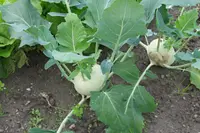
Cabbage in the strict botanical sense refers to several varieties of Brassica oleracea; Brassica oleracea var. gongylodes is the form known as kohlrabi. This cool-season vegetable forms a swollen, turnip-like stem above the soil with leaves radiating outward on slender petioles.
It originated in Europe and is now widely grown in temperate vegetable gardens. Plants stay relatively compact, which makes them suitable for smaller beds and raised planters.
Fast growth, preference for cool weather, and moderate nutrient needs make it straightforward for beginners who want to learn how to care for Cabbage in its various forms. It grows best in full sun, with consistent moisture and fertile, well-drained soil.

Care Difficulty
Moderate Care

Light Preference
Full Sun

Water Requirements
Regular Water

Temperature Preference
Cool Climate

Hardiness Zone
2–11

Soil Texture
Loamy, Sandy, Clay

Soil pH
Acidic (5.5–6.5), Slightly acidic (6.5–7.0)

Soil Drainage
Moist but well-drained

Fertilization
Moderate (every 2–4 weeks)
Scan your plant to receive care tips personalized for your specific plant
Available on iOS and Android
This cool-season crop needs consistent sun to form firm, sweet bulbs outdoors.
Brassica oleracea var. gongylodes prefers steadily moist, not soggy, soil for uniform bulb development.
This plant is a cool-season brassica that forms best bulbs in mild, stable temperatures.
Humidity is rarely a limiting factor for Brassica oleracea var. gongylodes in typical outdoor vegetable gardens.
This crop performs best in deep, loose, nutrient-rich mineral soil prepared before planting.
This species can be grown in containers if the pots are large and managed for stable, even moisture outdoors.
This cool-season brassica benefits from moderate, steady nutrition for best bulb development when growing Cabbage relatives like kohlrabi.
Pruning Brassica oleracea var. gongylodes is light and mainly hygiene-focused, helping maintain plant vigor and bulb quality.
This crop is usually transplanted from seedling trays to beds or larger containers rather than long-term repotting.
New Brassica oleracea var. gongylodes plants are most commonly raised from seed for uniform, fast crops.
This cool-season vegetable tolerates light frosts but benefits from simple measures in colder climates.

Plant Health Check
Not sure what's wrong with your plant? Check your plant's health inside the app.
Kohlrabi is grown mainly for its swollen stem, not its root, which expands just above the soil line into a crisp, bulb-like structure with a texture similar to broccoli stems or cabbage ribs.
This crop is adapted to cool conditions and tends to form the best-quality swollen stems at moderate temperatures, which is why it is often grown in spring and fall in temperate climates.
Kohlrabi cultivars occur in pale green and purple forms, yet both colors typically have pale interior flesh, as the pigment is concentrated mainly in the outer stem tissues.

Kohlrabi was developed through selective breeding from wild Brassica oleracea populations, representing a distinct domestication pathway where humans favored extreme thickening of the stem rather than leaves (as in cabbage) or flower buds (as in broccoli and cauliflower).
Browning leaves usually result from inconsistent moisture, excess heat, or foliar disease. Check soil drainage, avoid wetting foliage, remove damaged leaves, and improve air circulation. Mulch helps keep moisture stable and reduces stress on this plant.
Keep your plants happy and healthy with plant identification, disease detection, and easy care guidance.