Staggered Succession Sowing
Sow small batches every 10–14 days rather than one large planting to maintain uniform, harvestable foliage over a longer period and reduce the impact of any single pest or weather event on the whole crop.

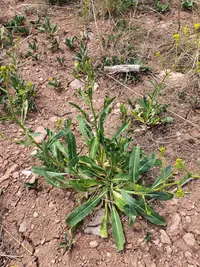
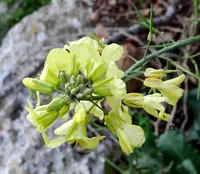
Brassica elongata subsp. integrifolia is a perennial wild mustard relative with an upright, clumping habit and narrow leaves, typically forming loose stands in open, sunny sites. It produces clusters of small yellow flowers on branched stems, giving it a delicate but distinctly brassica-like look.
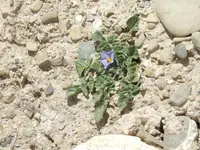
This subspecies is native to parts of Europe and western Asia, where it grows in dry grasslands, rocky slopes, and disturbed soils. It is generally resilient and can handle poor, well-drained ground, which makes it relatively undemanding once established.
Understanding how to care for Brassica elongata subsp. integrifolia starts with providing full sun, low to moderate moisture, and soil that does not stay wet for long periods.

Care Difficulty
Moderate Care

Light Preference
Full Sun

Water Requirements
Moderate Water

Temperature Preference
Cool Climate

Hardiness Zone
5–8

Soil Texture
Sandy, Loamy, Organic-rich

Soil pH
Slightly acidic (6.5–7.0), Neutral (7.0)

Soil Drainage
Well-drained

Fertilization
Minimal (feed rarely)
Scan your plant to receive care tips personalized for your specific plant
Available on iOS and Android
This subspecies prefers full sun but tolerates some light shade, especially in hot regions.
This plant prefers steady soil moisture with good drainage, not constant saturation.
This subspecies grows best in cool to mild conditions and dislikes extreme heat or hard freezes.
This subspecies grows best in relatively dry air and does not need elevated humidity.
This plant prefers mineral, well-drained soil that stays slightly moist but never waterlogged.
This species can be grown in containers if the pot is deep and drains rapidly.
This wild Brassica elongata subsp. integrifolia usually grows well in lean soils and needs only light feeding in cultivation.
Pruning Brassica elongata subsp. integrifolia is mainly about maintaining vigor and preventing crowding in garden settings.
This species is more often grown in open ground, so focus on careful transplanting rather than frequent repotting.
Propagation of Brassica elongata subsp. integrifolia is typically done from seed for straightforward, reliable establishment.
In most temperate regions this Brassica is fairly cold hardy and needs only minimal winter attention once established.

Plant Health Check
Not sure what's wrong with your plant? Check your plant's health inside the app.
This taxon is a long-lived perennial native to dry, sunny steppe and rocky grassland habitats in central and eastern Europe, showing strong adaptation to calcareous, nutrient-poor soils where many crop brassicas would struggle.
Plants develop a deep, woody taproot that allows them to access water stored well below the surface, which supports survival through periodic summer drought in open, wind-exposed sites.
Its scattered, often isolated populations in Europe are considered relicts of a formerly wider steppe flora, making it of interest to botanists studying post-glacial vegetation history and Brassica elongata subsp. integrifolia care instructions in naturalistic plantings.
Growth is moderately fast in fertile, well-drained soil, typically adding 20–40 cm of height in a season. Rate slows in poor soil, drought, or crowding. Regular feeding and timely thinning support steady, healthy development.
Keep your plants happy and healthy with plant identification, disease detection, and easy care guidance.