Staggered Succession Sowing
Sow small batches every 10–14 days rather than one large planting to avoid overcrowding and to keep a steady supply of uniform, tender leaves and stems for harvest.

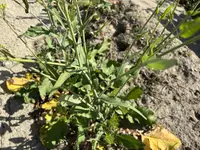
Field mustard, Brassica rapa subsp. chinensis, is a fast-growing annual or biennial plant grown mainly for its tender leaves and young flowering stems. It belongs to the cabbage family and shows the typical yellow crucifer flowers in loose clusters above leafy rosettes.
In the wild, it occurs in parts of Europe and Asia and has naturalized in many temperate regions, often appearing in fields, roadsides, and disturbed soils. Plants usually have upright, branching stems and can form dense stands in open, sunny areas.
Field mustard is generally easy to grow, as it tolerates cool weather and a range of soil types, provided the soil drains well and stays evenly moist. For anyone learning how to care for Field Mustard, its quick growth and clear response to good light and moisture make it a forgiving choice.

Care Difficulty
Moderate Care

Light Preference
Full Sun

Water Requirements
Regular Water

Temperature Preference
Cool Climate

Hardiness Zone
2–11

Soil Texture
Sandy, Loamy, Organic-rich

Soil pH
Acidic (5.5–6.5), Slightly acidic (6.5–7.0)

Soil Drainage
Moist but well-drained

Fertilization
Moderate (every 2–4 weeks)
Scan your plant to receive care tips personalized for your specific plant
Available on iOS and Android
Brassica rapa subsp. chinensis grows best with consistent, direct light in cool seasons.
Brassica rapa subsp. chinensis prefers evenly moist, well-drained soil without waterlogging.
This cool-season crop performs best in mild temperatures and struggles with both hard frost and strong heat.
This subspecies tolerates a wide humidity range and usually needs no special humidity control outdoors or in bright, cool indoor spots.
This plant prefers loose, moisture-retentive yet free-draining soil to support fast leafy growth.
This species grows well in containers when given enough root depth and fast drainage.
This cool-season leafy Brassica benefits from moderate, consistent nutrition during active growth.
Pruning Brassica rapa subsp. chinensis focuses on hygiene and harvesting rather than shaping.
This plant is usually grown as a short-lived crop, so transplanting timing and gentle handling matter more than repotting frequency.
Brassica rapa subsp. chinensis is most commonly propagated from seed for uniform, fast crops.
This cool-season Brassica tolerates light frosts but benefits from simple winter management in colder regions.

Plant Health Check
Not sure what's wrong with your plant? Check your plant's health inside the app.
This leafy vegetable was domesticated in China at least 1,500 years ago and selected into distinct landraces adapted to cool, short-season cropping, which is why it still performs well in spring and autumn plantings today.
Unlike many other Brassica rapa types, it maintains active leaf growth at relatively low temperatures and tolerates light frosts, a trait that makes growing Field Mustard feasible in cooler coastal and temperate regions.
Many cultivars reach harvestable baby-leaf size in about 25–30 days and full-size rosettes in roughly 45 days, reflecting strong selection for quick turnover in traditional small-scale and market-garden systems.

Genetic studies show that this subspecies carries alleles contributing to both leaf and stem traits used in breeding programs, so it serves as an important genetic bridge between leafy Asian brassicas and other Brassica rapa crops such as turnips and napa cabbage.
Yes, this species is edible. Young leaves, tender stems, flower buds, and seeds are used in salads, cooked dishes, or as a leafy vegetable. Use plants from clean, unsprayed areas and introduce gradually if you have digestive sensitivities.
Keep your plants happy and healthy with plant identification, disease detection, and easy care guidance.