Cabbage Care (Brassica oleracea var. alboglabra)

Also known as: Kale, Wild Cabbage, Chinese Broccoli, Chinese Kale, Gai Lan
Cabbage

About Cabbage

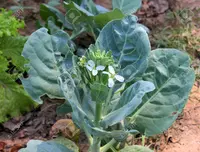
Cabbage, often called Chinese kale or Chinese broccoli in this form, is a leafy vegetable type of Brassica oleracea var. alboglabra. It is usually grown as an annual and valued for its tender leaves and thick, crunchy stems. Plants form upright clumps rather than tight heads, with smooth green foliage and small clusters of white flowers if allowed to bolt. Brassica oleracea var. alboglabra comes from cooler regions of Asia but is now widely grown in home gardens and small farms. It grows quickly and can be quite forgiving if given consistent moisture and reasonably fertile, well-drained soil. For gardeners learning how to care for Cabbage, its fast growth and clear visual cues of stress make it relatively straightforward to manage.

Main Plant Requirements

Care Difficulty

Moderate Care

Light Preference

Full Sun

Water Requirements

Regular Water

Temperature Preference

Cool Climate

Hardiness Zone

2–11

Soil Texture

Loamy, Sandy, Organic-rich

Soil pH

Acidic (5.5–6.5), Slightly acidic (6.5–7.0)

Soil Drainage

Moist but well-drained

Fertilization

Moderate (every 2–4 weeks)

Get Personalized Care Plan

Scan your plant to receive care tips personalized for your specific plant

Available on iOS and Android

How to Care for the Cabbage

This cool-season crop needs abundant direct light for compact, tender growth.

  • Provide 6–8 hours of direct sun daily; morning sun is ideal, with light afternoon shade in hotter regions.
  • Tolerates 3–4 hours of light shade, but heads and leafy shoots stay smaller and may elongate if light is too low.
  • In summer, protect from harsh west-facing exposure that can cause leaf scorch; in winter, use the brightest, unobstructed bed for caring for Cabbage.

Consistent soil moisture is essential for steady, tender shoot production.

  • Water when the top 3–5 cm of soil feels dry, aiming for evenly moist but not saturated soil around the root zone.
  • Use well-drained, loamy soil or raised beds so water does not pool, which reduces risk of root rot and yellowing lower leaves.
  • In cool, rainy periods, water less and monitor for limp, pale leaves from overwatering; in hot, dry spells, expect to water more often if leaves droop at midday and stay soft.

This plant is a cool-season vegetable that performs best in mild conditions.

  • Optimal growth occurs at 60–70°F (16–21°C), which supports steady leaf and stem development without stress.
  • Plants tolerate down to about 28°F (-2°C) for short periods, but hard frost below this can damage growing tips and reduce yield.
  • At temperatures above 80°F (27°C), Brassica oleracea var. alboglabra can bolt, so provide afternoon shade or plan main crops for spring and fall.

This cool-season brassica tolerates a wide humidity range and rarely needs special humidity management outdoors.

This vegetable prefers loose, moist, nutrient-rich soil that supports steady growth and root health.

  • Use a loamy, crumbly structure with plenty of organic matter to hold moisture without becoming dense or sticky.
  • Aim for slightly acidic to neutral pH around 6.0–7.0 for optimal nutrient availability and healthy foliage.
  • Blend garden soil with 25–40% compost and a small portion of coarse sand to improve fertility and drainage.
  • Avoid heavy, compacted, waterlogged, or very sandy mixes that either suffocate roots or dry out too quickly.

This species grows reliably in containers when given enough root space and stable moisture.

  • Choose a pot at least 25–30 cm deep so the taproot and lateral roots can spread without circling tightly.
  • Use a heavier material like ceramic or thick plastic to prevent tall leafy growth from tipping in wind.
  • Elevate the container on pot feet or bricks so drainage holes stay clear and excess water escapes quickly.

This fast-growing brassica benefits from steady nutrients for leafy production when growing Cabbage relatives for harvest.

  • Use a balanced NPK fertilizer (such as 10-10-10) or well-rotted compost in fertile, well-drained soil.
  • Apply fertilizer every 3–4 weeks during the active growing season, especially in poor or previously cropped soils.
  • Dilute liquid feeds to half strength to limit leaf burn and excess, weak growth.
  • Reduce or stop feeding in winter or during hot-summer slowdowns, focusing instead on maintaining moist, cool soil.

Pruning Brassica oleracea var. alboglabra is light and focused on hygiene and harvest management.

  • Cut individual stems cleanly with sharp scissors or pruners when harvesting, leaving lower buds to resprout.
  • Remove yellowing, diseased, or damaged leaves promptly to improve airflow and reduce pest and disease pressure.
  • Thin crowded side shoots so remaining stems are sturdy and productive, rather than tall and weak.
  • Disinfect tools when removing diseased material to avoid spreading fungal or bacterial problems between plants.

This plant is usually grown as a short-lived crop, so transplanting seedlings correctly matters more than long-term repotting cycles.

  • Transplant when seedlings have 3–4 true leaves and roots hold the plug together but are not circling tightly.
  • Aim to transplant in early spring or late summer for cool-season growth, avoiding extreme heat or hard frost.
  • Water seedlings well an hour before moving, then plant at the same depth into loose, fertile, well-drained soil.
  • Firm soil gently around roots, water thoroughly, and provide shade or row cover for a few days to reduce transplant shock.

Propagation of this crop is most practical from seed for uniform, vigorous plants.

  • Sow seeds in trays or cell packs in early spring or late summer, using a fine, sterile seed-starting mix.
  • Maintain 60–75°F and consistent moisture until germination, which typically occurs in 5–10 days.
  • Provide bright light immediately after emergence to prevent weak, stretched seedlings with thin stems.
  • Harden off young plants outdoors for 5–7 days before planting into the garden or final containers.

This brassica is cool-season and moderately frost tolerant but not suited to very hard freezes without help.

  • In mild climates, plants can overwinter outdoors, continuing to provide harvests in cool weather.
  • Apply a 5–8 cm mulch around the base to stabilize soil temperature and reduce freeze–thaw stress on roots.
  • Use row covers or fleece on freezing nights to shield foliage from ice damage and extend the harvest window.
  • Grow container plants in a sheltered spot and move them into an unheated garage or porch during severe cold spells.

Care Tips

Staggered Succession Sowing

Sow small batches every 2–3 weeks rather than all at once to keep a continuous supply of harvestable shoots instead of a single glut followed by a gap.

Cut-and-Come-Again Harvesting

Harvest by cutting main stems 10–15 cm below the growing tip and leave several lower leaves so the plant can quickly produce multiple side shoots for extended picking.

Targeted Pest Netting

Use fine insect mesh or row cover supported on hoops immediately after transplanting, sealing edges with soil to exclude cabbage white butterflies and flea beetles without relying solely on sprays.

Cool-Season Timing

Schedule sowing so plants mature in cooler weather, as heat stress leads to loose, bitter shoots, while steady cool conditions give thicker, sweeter stems.

Nutrient-Rich Strip Planting

Before planting, prepare a narrow, deeply enriched strip with compost or a balanced granular fertilizer along the row to support the heavy feeding habit typical when growing Cabbage relatives for repeated harvests.

Common Pests and Diseases

Flea beetles

These insects chew many tiny round holes in leaves, giving foliage a shot‑holed or lace‑like appearance and can stunt young plants.

Solution

Use floating row covers to exclude adults, keep beds weed‑free, and lightly water the soil surface to discourage beetles; in heavier infestations, apply a neem oil or spinosad spray directed to leaf surfaces in the early morning, following Brassica oleracea var. alboglabra care instructions on the label for edible crops.

Cabbage aphids

These pests cluster in dense gray‑green colonies on young shoots and leaf undersides, causing curling, distortion, and sticky honeydew that can attract sooty mold.

Solution

Spray colonies off with a strong but controlled stream of water, remove heavily infested leaves, and if needed use insecticidal soap or horticultural oil, making sure to fully wet leaf undersides and repeat at 5–7 day intervals as new aphids hatch.

Diamondback moth

This pest’s small green larvae feed on leaf tissue, creating irregular holes and window‑pane patches that reduce yield and quality.

Solution

Protect plants with fine mesh or floating row covers to block egg‑laying, hand‑pick larvae where practical, and encourage natural predators by avoiding broad‑spectrum insecticides; if damage is significant, use a Bacillus thuringiensis (Bt) product labeled for caterpillars in the late afternoon or evening.

Black rot

This disease causes yellow V‑shaped lesions starting at leaf edges, darkening veins, and eventual leaf wilt and plant decline under warm, wet conditions.

Solution

Remove and discard infected plants, avoid overhead watering, rotate Brassica crops for at least 3–4 years, and start with certified clean seed or transplants; keep foliage dry by watering at soil level and providing good spacing for airflow.

Downy mildew

Symptoms include pale yellow patches on upper leaf surfaces with a fuzzy white to gray growth underneath, leading to leaf blight in cool, humid weather.

Solution

Improve airflow with wider spacing, water at the base in the morning, and remove affected leaves promptly; in recurrent cases, use a copper‑based or other labeled fungicide as a preventive spray when cool, damp conditions are forecast.

Interesting Facts

Stem-eaten flowering shoots

This species is harvested for its thick, tender flowering stems and young leaves, which are eaten before the flower buds fully open, similar to how broccoli is used but with a more delicate texture and faster cooking time.

Heat-tolerant brassica

Compared with many other B. oleracea vegetables, Chinese kale tolerates warmer conditions and is widely grown in subtropical and tropical regions where classic heading cabbages and European kales often bolt or fail.

Distinct waxy leaf coating

Its bluish-green leaves have a noticeable waxy surface (a cuticular wax layer) that helps reduce water loss and gives the plant its characteristic glaucous appearance, making it easy to distinguish from many other Asian leafy greens.

Botan icon

Did you know?

Chinese kale likely originated in southern China and has been selectively bred for centuries specifically for its edible flowering stems, leading to numerous regional landraces that differ subtly in stem thickness, leaf size, and bud density even though they are sold under the same common name in markets.

FAQs about Cabbage

Yellowing leaves usually result from nutrient deficiency, especially lack of nitrogen or magnesium, or from waterlogged soil that limits root oxygen. Check drainage, avoid overwatering, and apply a balanced vegetable fertilizer according to label directions.

Grow Healthy Plants with Botan Care

Keep your plants happy and healthy with plant identification, disease detection, and easy care guidance.

Botan plant care app — identify plants on mobile

Explore More Plants