Firm Soil Mounding
As plants reach 20–30 cm tall, pull firm soil up around the stems to create a low mound, which stabilizes the plant and encourages strong sprout formation along the stalk.

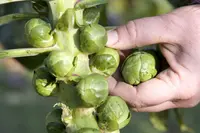
Cabbage, often referring to Brassica oleracea var. gemmifera, is a cool-season, leafy vegetable grown mainly for its dense, edible heads or compact buds. It belongs to the Brassicaceae family, the same group as kale, broccoli, and Brussels sprouts.
Plants typically form a low rosette of thick leaves, with heads or buds developing at the center or along a short, sturdy stem. In gardens and farms it is usually grown as an annual, even though the species is botanically biennial.
This crop prefers full sun, steady moisture, and fertile, well-drained soil. It is relatively easy to grow but can be prone to pests and nutrient problems, so learning how to care for Cabbage helps maintain healthy, productive plants.

Care Difficulty
Moderate Care

Light Preference
Full Sun

Water Requirements
Regular Water

Temperature Preference
Cool Climate

Hardiness Zone
2–11

Soil Texture
Loamy, Sandy, Organic-rich

Soil pH
Acidic (5.5–6.5), Slightly acidic (6.5–7.0)

Soil Drainage
Moist but well-drained

Fertilization
Moderate (every 2–4 weeks)
Scan your plant to receive care tips personalized for your specific plant
Available on iOS and Android
This cool-season crop needs consistent sun to form firm, well-shaped Brussels sprouts.
This plant prefers steady, moderate moisture in well-drained soil for reliable sprout development.
Brussels sprouts perform best in cool conditions and develop the best flavor in cold weather.
Humidity has little impact on Brassica oleracea var. gemmifera, which copes well in typical outdoor conditions.
Brassica oleracea var. gemmifera grows best in loose, moist, well-draining mineral soil with high organic matter.
This species can be grown in containers if the pot is large and stable enough for its tall, heavy growth.
Nutrient-hungry Brussels sprouts benefit from steady feeding to support strong leafy growth and tight sprout formation when caring for Cabbage relatives.
Brassica oleracea var. gemmifera benefits from light, functional pruning to support sprout size and plant health.
Brussels sprouts are usually started in containers then transplanted outdoors rather than kept potted long term.
Brussels sprouts are most reliably propagated from seed, which allows uniform crops and disease control.
Brussels sprouts are cold hardy and often improve in flavor after light frosts, so winter care is usually minimal in many regions.

Plant Health Check
Not sure what's wrong with your plant? Check your plant's health inside the app.
Each Brussels sprout is a compact head formed from a leaf axillary bud along the elongated stem, a growth pattern that distinguishes it from other cabbage relatives where the main bud forms a single head.
Exposure to light frosts triggers conversion of some starches to sugars in the sprouts, which is why harvests after cool weather often taste noticeably sweeter and less bitter.
Modern Brussels sprouts were developed by intensive selection around Brussels in present-day Belgium during the Middle Ages, from ancestral Brassica oleracea forms that originally bore only loose lateral buds.

Brussels sprouts plants can reach 60–120 cm in height and carry dozens of individual sprouts on one tall, upright stem, allowing a single plant to yield many separate mini-heads over an extended harvest period.
Yellowing leaves usually come from nitrogen deficiency, natural aging of outer leaves, or root problems caused by pests or waterlogged soil. Check for cabbage worms or aphids, improve drainage, and provide a balanced vegetable fertilizer if needed.
Keep your plants happy and healthy with plant identification, disease detection, and easy care guidance.